Classification and Changes in Matter
Explore the classification of matter and different types of changes it undergoes at a Grade 4 level.
Includes
Standards
Topics
Classification and Changes in Matter
Name:
Date:
Score:
Read each question carefully and answer to the best of your ability.
1. Which state of matter has a definite shape and a definite volume?
Liquid
Solid
Gas
Plasma
2. What happens to water when it freezes?
It turns into a gas.
It turns into a liquid.
It turns into a solid.
It disappears.
3. The process of a liquid turning into a gas is called .
4. When you tear a piece of paper, you are causing a change.
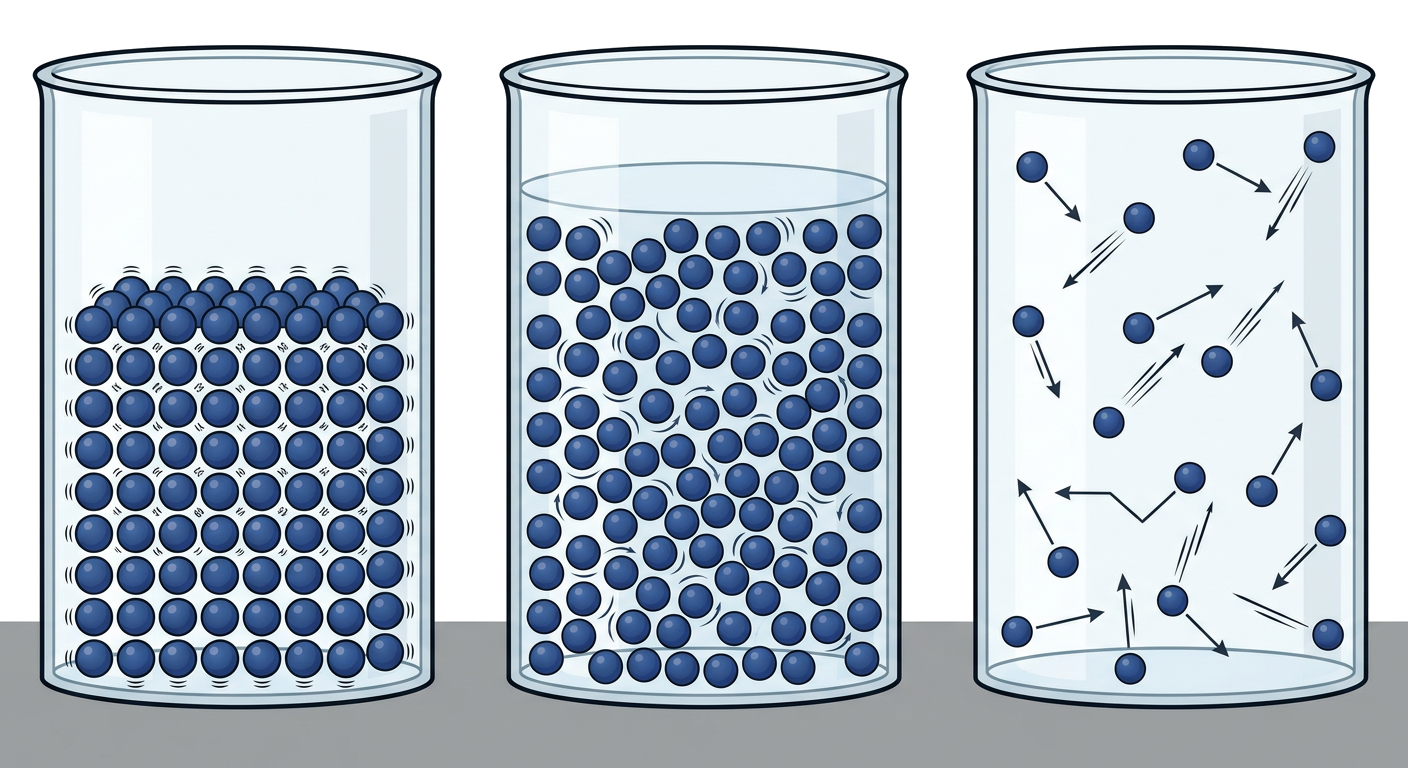
5. Look at the image below. Describe the three states of matter shown.
6. A physical change creates a new substance.
True
False
7. Burning wood is an example of a chemical change.
True
False
Match the type of change with its description.
8. Physical Change
a. A new substance is formed.
9. Chemical Change
b. No new substance is formed.
Related Worksheets
Compounds and Mixtures
Explore the basic concepts of compounds and mixtures with this engaging Grade 4 science worksheet.
Changes of State in Matter
Explore the different states of matter (solid, liquid, gas) and how they change from one state to another through heating and cooling.
Volcano Experiment Worksheet
Explore the science behind volcano eruptions with this engaging worksheet for Grade 4, covering parts of a volcano and the chemical reaction.
Chemical vs. Physical Properties
Explore the differences between chemical and physical properties of matter with this engaging Grade 4 science worksheet.
Atoms and Molecules Worksheet
An introductory science worksheet for Grade 4 students covering basic concepts of atoms and molecules.
Understanding Dissolving
A Grade 4 science worksheet exploring the concept of dissolving, solutes, solvents, and solutions.
Exploring Elements
A Grade 4 science worksheet introducing elements, their properties, and common examples.
Science Timeline Basics
A worksheet for Grade 4 students to learn about scientific timelines and significant discoveries.