All About Amphibians
Explore the fascinating world of amphibians with this Grade 5 science worksheet, covering their characteristics, life cycles, and habitats.
Includes
Standards
Topics
All About Amphibians
Name:
Date:
Score:
Read each question carefully and answer to the best of your ability. Good luck!
1. Which of the following is NOT a characteristic of most amphibians?
Live in water and on land
Lay eggs in water
Have warm blood
Go through metamorphosis
2. What is the skin of an amphibian like?
Dry and scaly
Thick and feathered
Moist and smooth
Covered in fur
1. Young amphibians, like tadpoles, breathe with .
2. The process of an amphibian changing from a larva to an adult is called .
1. Describe the main difference between a reptile and an amphibian.
Observe the image below and answer the question.
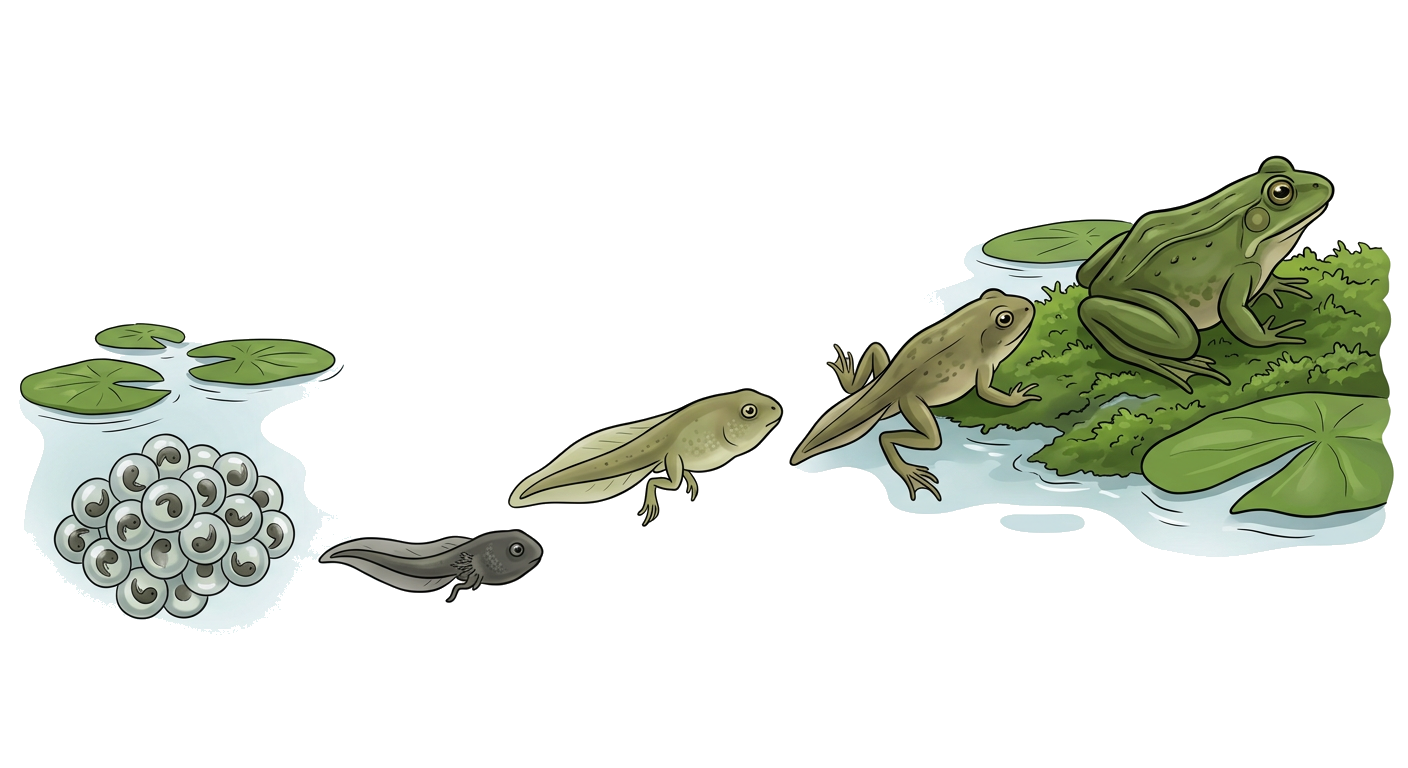
1. What is the correct order of the frog life cycle stages shown in the diagram?
Adult Frog
Tadpole with legs
Eggs
Tadpole
1. All amphibians have tails throughout their entire lives.
True
False
Related Worksheets
Prokaryotes and Eukaryotes Worksheet
Explore the fundamental differences between prokaryotic and eukaryotic cells with this Grade 5 science worksheet.
Animal Communication Worksheet
Explore how animals communicate through sounds, body language, and chemical signals with this Grade 5 science worksheet.
All About Trees
Explore the fascinating world of trees with this Grade 5 science worksheet, covering their parts, life cycle, and importance.