Great White Shark Exploration
A Grade 5 science worksheet exploring the characteristics, habitat, and diet of the Great White Shark.
Includes
Standards
Topics
Great White Shark Exploration
Name:
Date:
Score:
Read each question carefully and answer to the best of your ability. Good luck!
1. What is the scientific name for the Great White Shark?
Orcinus orca
Carcharodon carcharias
Galeocerdo cuvier
Rhincodon typus
2. What is the primary diet of a Great White Shark?
Small fish and plankton
Seals, sea lions, and small whales
Seaweed and algae
Crabs and lobsters
3. Great White Sharks are known for their powerful sense of .
4. The average lifespan of a Great White Shark is believed to be around years.
5. Great White Sharks are warm-blooded animals.
True
False
6. Great White Sharks are found in all of the world's oceans.
True
False
7. Describe two unique physical characteristics of the Great White Shark that help it as a predator.
Label the parts of the Great White Shark shown in the diagram below.
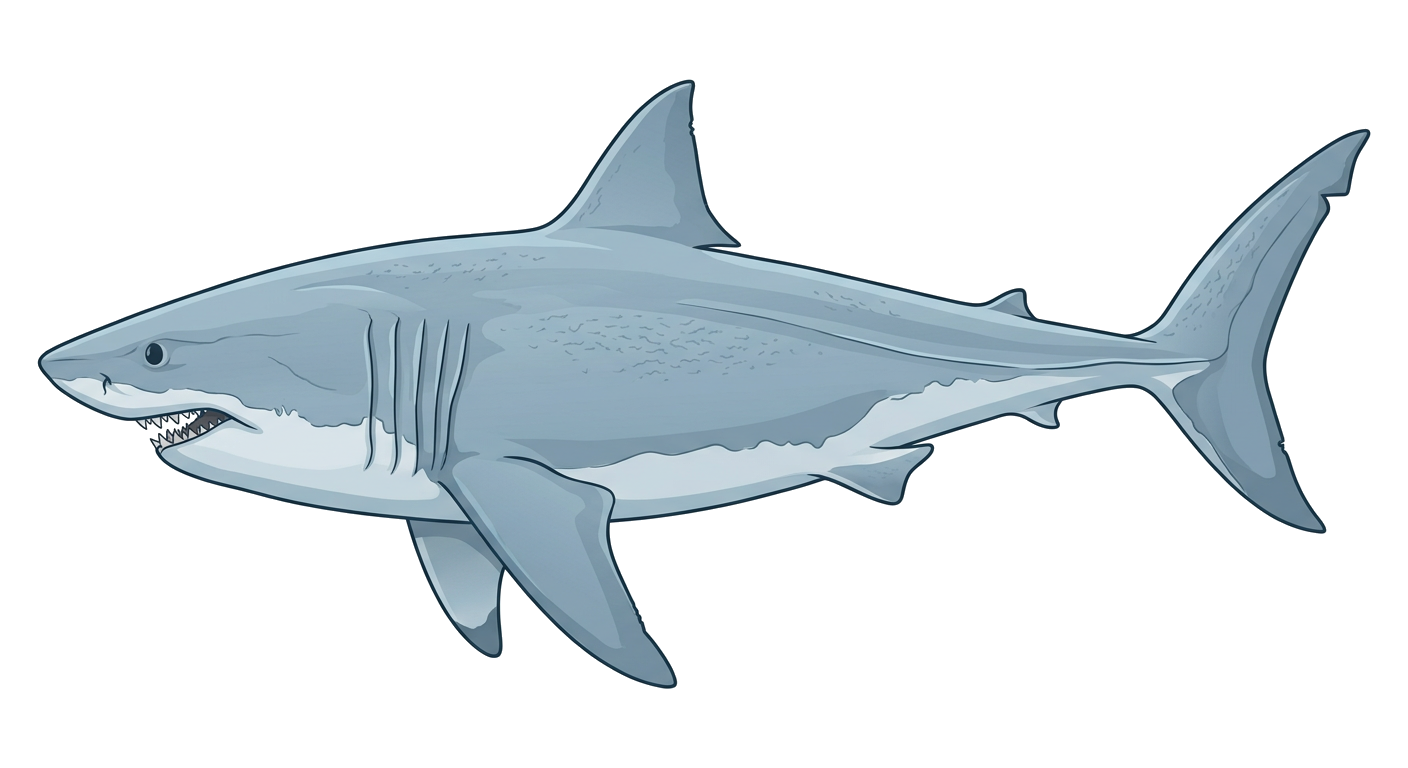
A:
B:
C:
D:
Related Worksheets
Prokaryotes and Eukaryotes Worksheet
Explore the fundamental differences between prokaryotic and eukaryotic cells with this Grade 5 science worksheet.
Animal Communication Worksheet
Explore how animals communicate through sounds, body language, and chemical signals with this Grade 5 science worksheet.
All About Trees
Explore the fascinating world of trees with this Grade 5 science worksheet, covering their parts, life cycle, and importance.