Ocean Animals Worksheet
Explore the diverse world of ocean animals with this engaging Grade 5 science worksheet, covering habitats, adaptations, and characteristics of marine life.
Includes
Standards
Ocean Animals
Name:
Date:
Score:
Read each question carefully and answer to the best of your ability.
1. Which ocean zone is known for having the most sunlight and a wide variety of marine life?
Abyssal Zone
Sunlight Zone
Midnight Zone
Twilight Zone
2. Which of the following is an adaptation that helps fish breathe underwater?
Lungs
Gills
Feathers
Fur
1. The largest animal on Earth, the blue whale, lives in the .
2. Coral reefs are important habitats for many ocean animals and are often called the "rainforests of the ."
3. Some deep-sea creatures produce their own light, a process called .
1. All ocean animals can survive in both fresh and saltwater.
True
False
2. Sharks are mammals.
True
False
1. Name two ways ocean animals are adapted to survive in their marine environment.
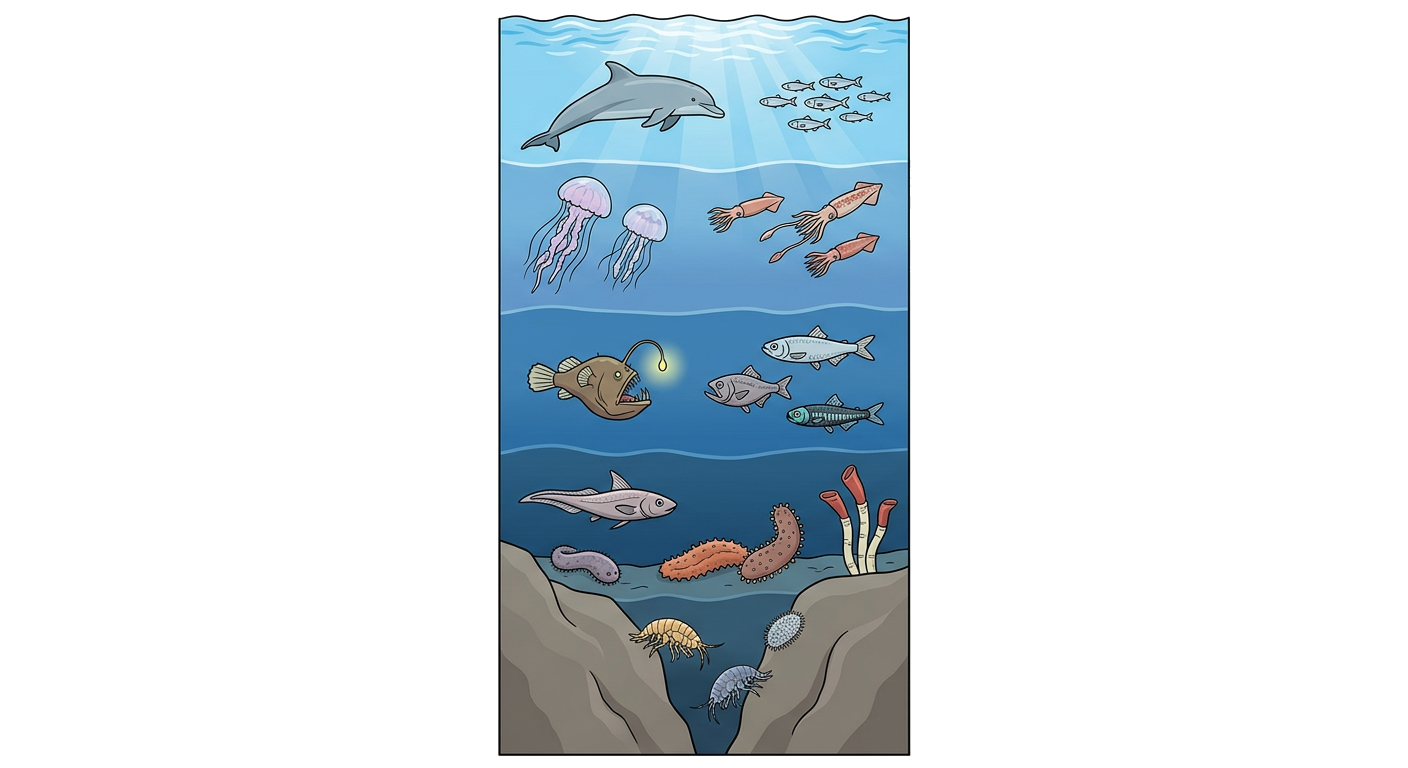
2. Look at the image below. What is this diagram showing about the ocean?
Related Worksheets
Prokaryotes and Eukaryotes Worksheet
Explore the fundamental differences between prokaryotic and eukaryotic cells with this Grade 5 science worksheet.
Animal Communication Worksheet
Explore how animals communicate through sounds, body language, and chemical signals with this Grade 5 science worksheet.
All About Trees
Explore the fascinating world of trees with this Grade 5 science worksheet, covering their parts, life cycle, and importance.