Plant Kingdom Exploration
Explore the fascinating world of the Plant Kingdom with this Grade 5 science worksheet. Learn about plant cells, photosynthesis, and different plant structures.
Includes
Standards
Topics
Plant Kingdom Exploration
Name:
Date:
Score:
Read each question carefully and answer to the best of your ability. Good luck!
1. Which part of a plant cell is responsible for photosynthesis?
Nucleus
Mitochondria
Chloroplast
Vacuole
2. What gas do plants release into the atmosphere during photosynthesis?
Carbon dioxide
Nitrogen
Oxygen
Hydrogen
3. Plants absorb water through their .
4. The process by which plants make their own food is called .
5. The green pigment found in plants that captures sunlight is called .
6. Look at the plant cell diagram below. Label three parts of the plant cell.
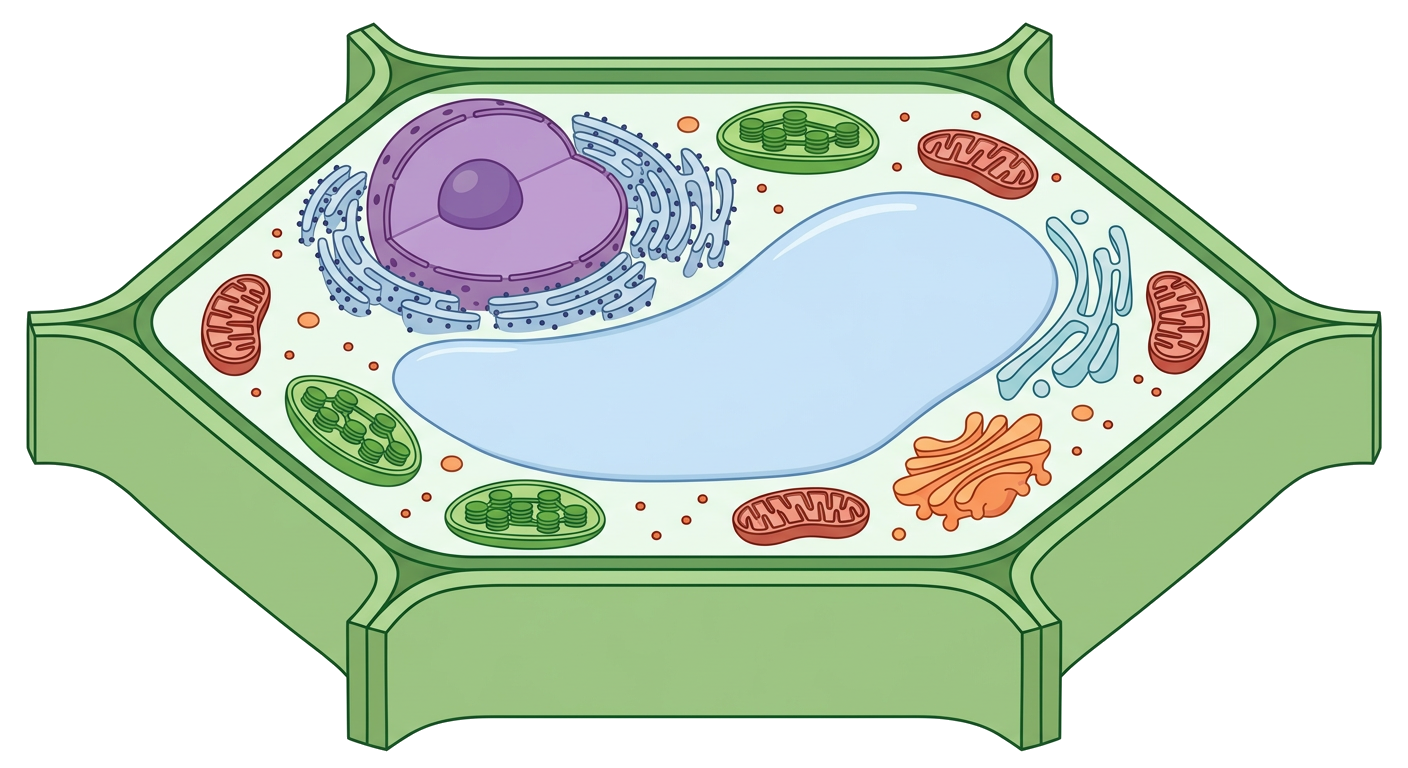
a.
b.
c.
7. All plants produce flowers.
True
False
8. Plants need sunlight, water, and carbon dioxide for photosynthesis.
True
False
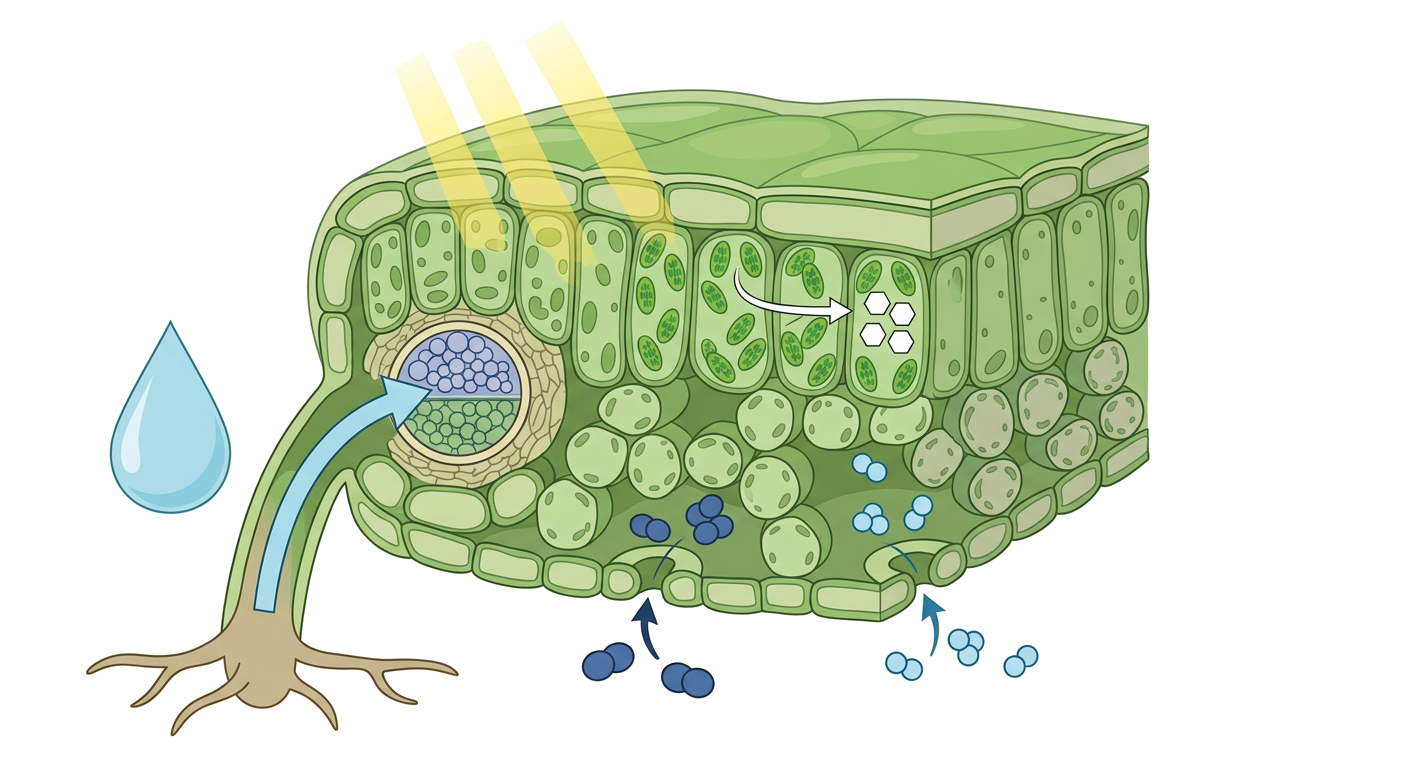
9. Describe the process of photosynthesis in your own words, using the diagram below to help you.
Related Worksheets
Prokaryotes and Eukaryotes Worksheet
Explore the fundamental differences between prokaryotic and eukaryotic cells with this Grade 5 science worksheet.
Animal Communication Worksheet
Explore how animals communicate through sounds, body language, and chemical signals with this Grade 5 science worksheet.
All About Trees
Explore the fascinating world of trees with this Grade 5 science worksheet, covering their parts, life cycle, and importance.