Introduction to Dissection
This worksheet introduces Grade 6 students to the basic concepts and tools used in dissection, focusing on safety and common procedures.
Includes
Standards
Topics
Introduction to Dissection
Name:
Date:
Score:
Read each question carefully and answer to the best of your ability. Pay close attention to safety guidelines when performing dissections.
1. What is the primary reason for performing a dissection in science class?
To play with dead animals
To learn about the internal structures of an organism
To see how sharp dissection tools are
To make a mess in the classroom
2. Which of the following is a vital safety rule to follow during a dissection?
Wear open-toed shoes
Eat snacks at your dissection station
Always wear safety goggles and gloves
Run around the lab with dissection tools
3. A tool used to hold down specimens in a dissection tray is called a .
4. Before and after any dissection, it is important to your hands thoroughly.
5. Dissection allows scientists to observe the of an organism.
6. Name two specific tools commonly used in a dissection and describe their function.
7. It is acceptable to touch your face or eyes during a dissection.
True
False
8. Dissection specimens are usually preserved in a chemical solution.
True
False
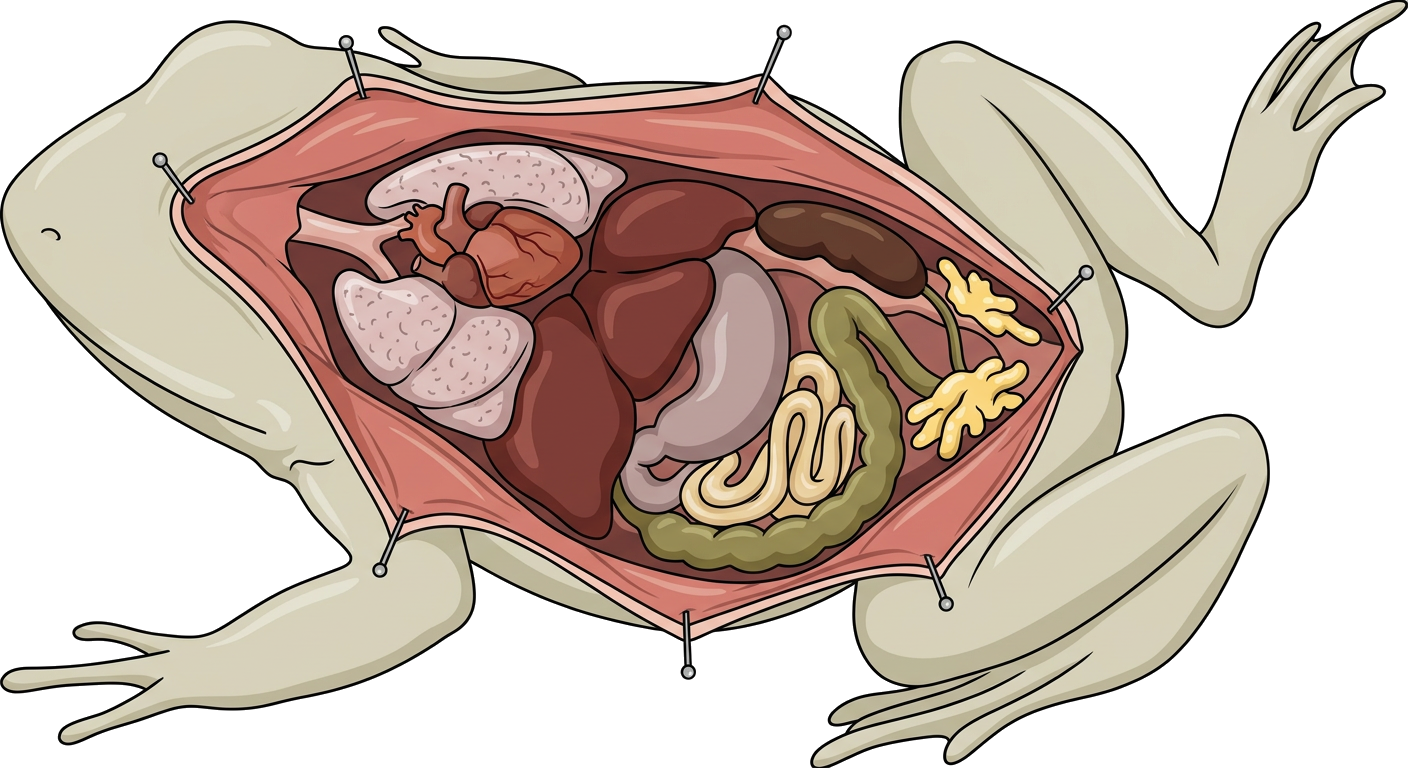
9. Identify the dissection tools shown in the image below.
A:
B:
C:
Related Worksheets
The Six Kingdoms of Life
Explore the characteristics and classification of organisms into the six kingdoms: Archaebacteria, Eubacteria, Protista, Fungi, Plantae, and Animalia.
Balance in Nature Worksheet
Explore the intricate balance within ecosystems, including food webs, predator-prey relationships, and the impact of environmental changes on natural balance.
Mitosis Worksheet
Explore the process of mitosis, including its stages and importance in cell division, for Grade 6 science students.
Fungi Fun Facts
Explore the amazing world of fungi with this interactive worksheet for Grade 6 science students.
Animal Cells: Exploring the Building Blocks of Life
This worksheet introduces 6th-grade students to the basic structure and functions of animal cells, including organelles like the nucleus, cytoplasm, and cell membrane.
The Excretory System
Explore the human excretory system with this worksheet for Grade 6 science students. Learn about the organs involved and their functions in waste removal.
Food Chain Fundamentals
Explore the basics of food chains, identifying producers, consumers, and decomposers, and understanding energy flow.
Grade 6 Circulatory System Worksheet
A worksheet for 6th graders to learn about the human circulatory system, including its components and functions.