Factors Affecting Photosynthesis
Explore the key environmental factors that influence the rate of photosynthesis in plants, including light intensity, carbon dioxide concentration, and temperature.
Includes
Standards
Factors Affecting Photosynthesis
Name:
Date:
Score:
Read each question carefully and answer to the best of your ability. This worksheet will test your knowledge about the factors that influence photosynthesis.
Understanding Photosynthesis
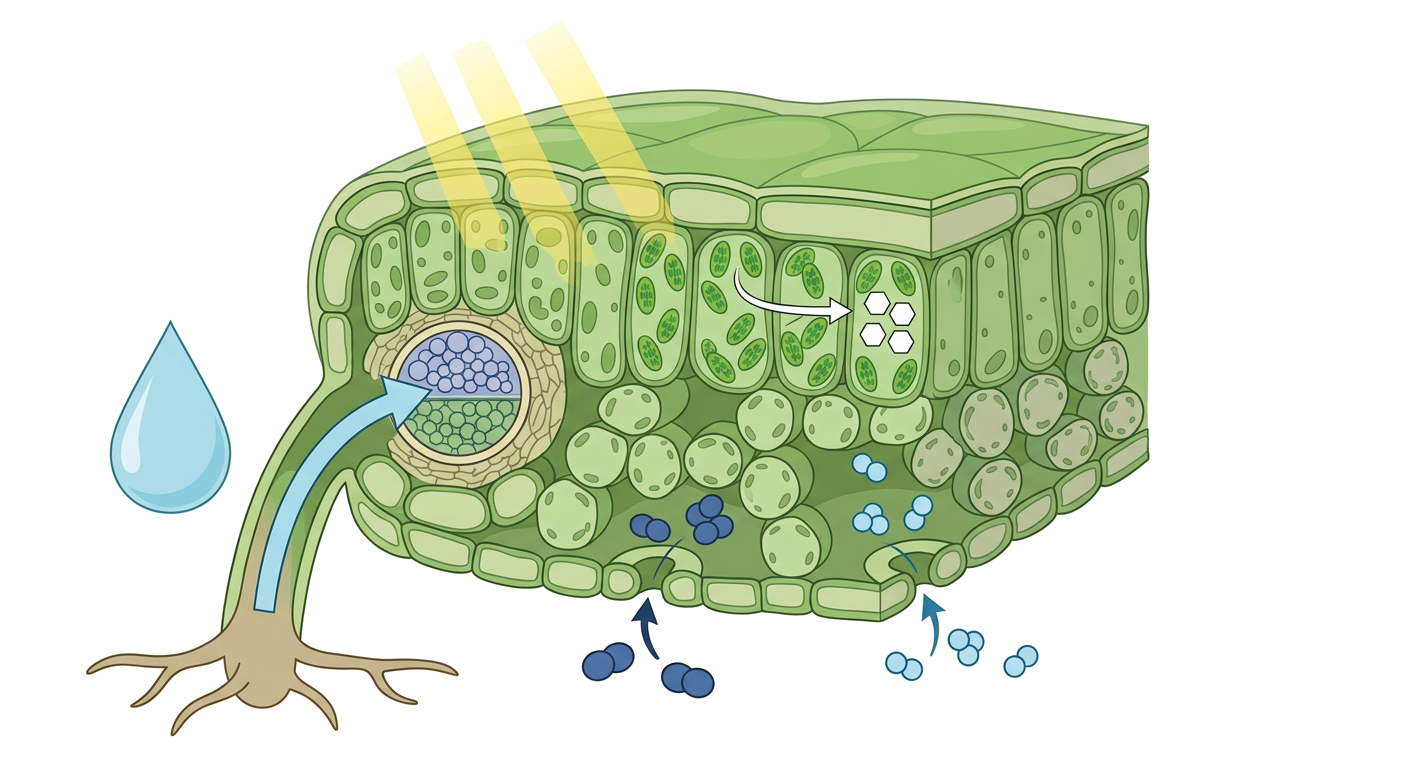
Photosynthesis is the process by which green plants and some other organisms use sunlight to synthesize foods with the help of chlorophyll. This process converts light energy into chemical energy, which is stored in glucose. The main ingredients for photosynthesis are carbon dioxide and water, and the byproducts are oxygen and glucose.
1. Which of the following is NOT a necessary ingredient for photosynthesis?
Sunlight
Oxygen
Carbon Dioxide
Water
2. What is the primary energy source for photosynthesis?
Heat
Light
Chemicals
Electricity
1. The green pigment in plants that absorbs sunlight is called .
2. Plants take in from the atmosphere for photosynthesis.
3. The sugar produced during photosynthesis is called .
1. Increasing light intensity always increases the rate of photosynthesis.
True
False
2. Photosynthesis can occur in the dark if all other conditions are met.
True
False
1. Explain how increasing carbon dioxide concentration affects the rate of photosynthesis. What happens if there is too little CO2?
2. Describe the effect of temperature on the rate of photosynthesis. Why is there an optimal temperature range?
Use the words below to complete the sentences.
1. The rate of photosynthesis increases with light intensity up to a certain point, after which another might be restricting the rate.
2. Plants produce as their food source during photosynthesis.
3. The best temperature for photosynthesis is called the temperature.
Related Worksheets
The Six Kingdoms of Life
Explore the characteristics and classification of organisms into the six kingdoms: Archaebacteria, Eubacteria, Protista, Fungi, Plantae, and Animalia.
Balance in Nature Worksheet
Explore the intricate balance within ecosystems, including food webs, predator-prey relationships, and the impact of environmental changes on natural balance.
Mitosis Worksheet
Explore the process of mitosis, including its stages and importance in cell division, for Grade 6 science students.
Fungi Fun Facts
Explore the amazing world of fungi with this interactive worksheet for Grade 6 science students.
Animal Cells: Exploring the Building Blocks of Life
This worksheet introduces 6th-grade students to the basic structure and functions of animal cells, including organelles like the nucleus, cytoplasm, and cell membrane.
The Excretory System
Explore the human excretory system with this worksheet for Grade 6 science students. Learn about the organs involved and their functions in waste removal.
Food Chain Fundamentals
Explore the basics of food chains, identifying producers, consumers, and decomposers, and understanding energy flow.
Grade 6 Circulatory System Worksheet
A worksheet for 6th graders to learn about the human circulatory system, including its components and functions.