Fossil Dating Fundamentals
Explore the basics of fossil dating, including relative and absolute dating methods, with this engaging worksheet for 6th graders.
Includes
Standards
Topics
Fossil Dating Fundamentals
Name:
Date:
Score:
Read each question carefully and answer to the best of your ability. Good luck!
1. What is the process of determining the age of a fossil called?
Fossilization
Dating
Excavation
Classification
2. Which dating method compares the position of fossils in rock layers?
Absolute dating
Relative dating
Carbon dating
Stratigraphy
1. The deeper a fossil is found in rock layers, the it usually is.
2. Absolute dating uses the decay of elements to determine a fossil's age.
3. The Law of states that in undisturbed rock layers, the oldest layers are at the bottom.
1. Relative dating gives an exact numerical age for a fossil.
True
False
2. Carbon-14 dating can be used to date very old fossils, millions of years old.
True
False
1. Briefly explain the difference between relative dating and absolute dating.
Observe the image below, which shows different rock layers and fossils.
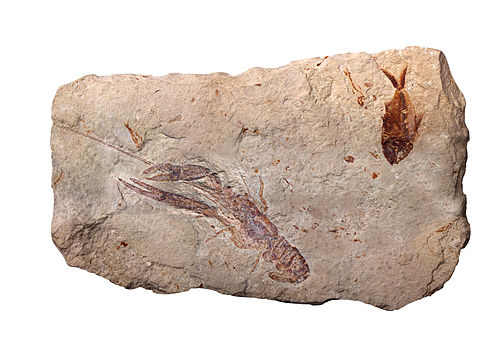
Based on the principle of relative dating, which fossil would be considered the oldest?
Related Worksheets
The Six Kingdoms of Life
Explore the characteristics and classification of organisms into the six kingdoms: Archaebacteria, Eubacteria, Protista, Fungi, Plantae, and Animalia.
Balance in Nature Worksheet
Explore the intricate balance within ecosystems, including food webs, predator-prey relationships, and the impact of environmental changes on natural balance.
Mitosis Worksheet
Explore the process of mitosis, including its stages and importance in cell division, for Grade 6 science students.
Fungi Fun Facts
Explore the amazing world of fungi with this interactive worksheet for Grade 6 science students.
Animal Cells: Exploring the Building Blocks of Life
This worksheet introduces 6th-grade students to the basic structure and functions of animal cells, including organelles like the nucleus, cytoplasm, and cell membrane.
The Excretory System
Explore the human excretory system with this worksheet for Grade 6 science students. Learn about the organs involved and their functions in waste removal.
Food Chain Fundamentals
Explore the basics of food chains, identifying producers, consumers, and decomposers, and understanding energy flow.
Grade 6 Circulatory System Worksheet
A worksheet for 6th graders to learn about the human circulatory system, including its components and functions.