Long Bone Anatomy Worksheet
Explore the structure and function of long bones with this Grade 6 science worksheet, covering key components and their roles.
Includes
Standards
Topics
Long Bone Anatomy Worksheet
Name:
Date:
Score:
Read each question carefully and answer to the best of your ability. Refer to the diagram provided for assistance.
Observe the diagram of a long bone cross-section below:
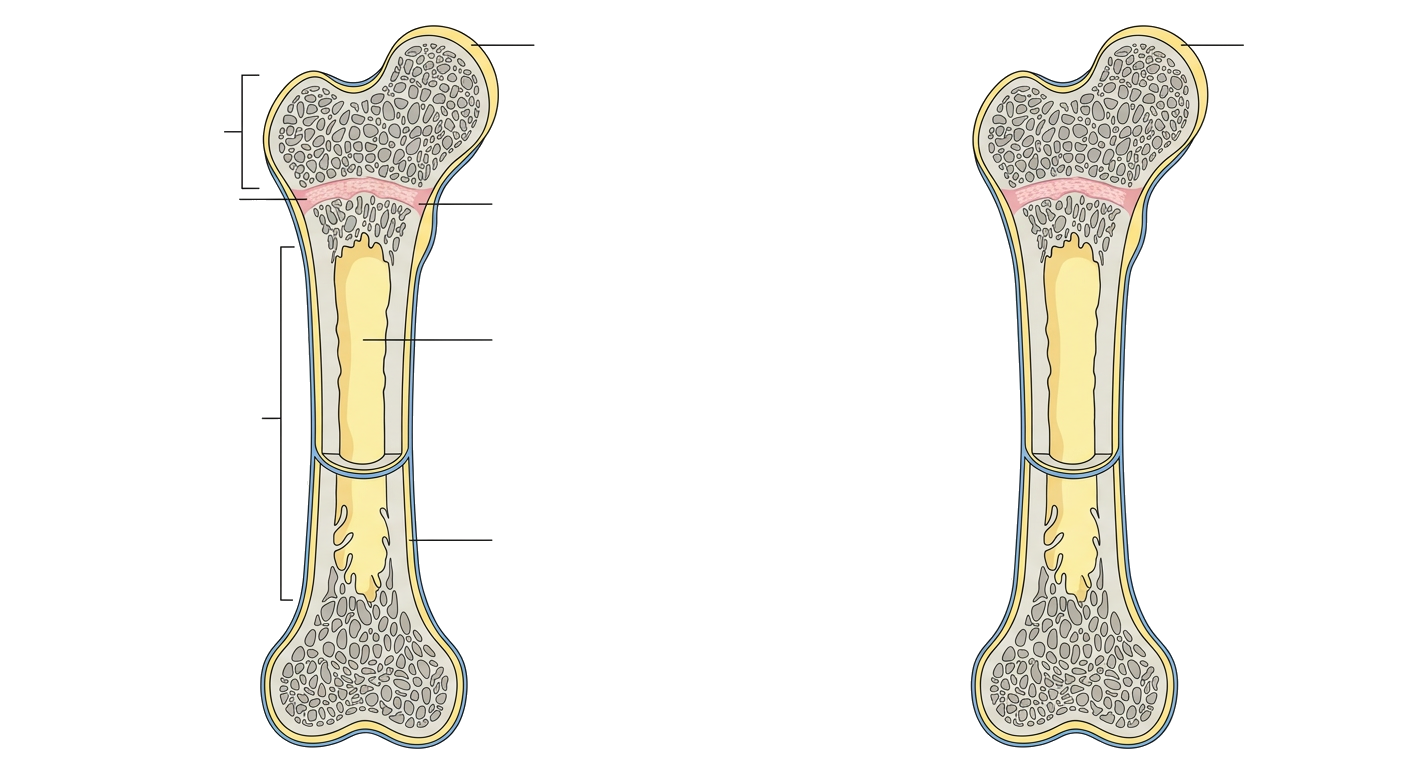
1. Which part of the long bone is primarily responsible for producing blood cells?
Compact bone
Marrow cavity
Periosteum
Articular cartilage
2. What is the main function of compact bone?
Storing fat
Providing strength and support
Producing hormones
Protecting joints
3. The tough, fibrous membrane that covers the outer surface of a long bone is called the .
4. Red bone marrow is found in the of long bones and is responsible for making blood cells.
5. Spongy bone is denser and stronger than compact bone.
True
False
6. Articular cartilage reduces friction at the joints.
True
False
7. Describe the difference between yellow bone marrow and red bone marrow in terms of their primary functions.
Related Worksheets
The Six Kingdoms of Life
Explore the characteristics and classification of organisms into the six kingdoms: Archaebacteria, Eubacteria, Protista, Fungi, Plantae, and Animalia.
Balance in Nature Worksheet
Explore the intricate balance within ecosystems, including food webs, predator-prey relationships, and the impact of environmental changes on natural balance.
Mitosis Worksheet
Explore the process of mitosis, including its stages and importance in cell division, for Grade 6 science students.
Fungi Fun Facts
Explore the amazing world of fungi with this interactive worksheet for Grade 6 science students.
Animal Cells: Exploring the Building Blocks of Life
This worksheet introduces 6th-grade students to the basic structure and functions of animal cells, including organelles like the nucleus, cytoplasm, and cell membrane.
The Excretory System
Explore the human excretory system with this worksheet for Grade 6 science students. Learn about the organs involved and their functions in waste removal.
Food Chain Fundamentals
Explore the basics of food chains, identifying producers, consumers, and decomposers, and understanding energy flow.
Grade 6 Circulatory System Worksheet
A worksheet for 6th graders to learn about the human circulatory system, including its components and functions.