Microscope Exploration
Explore the parts and functions of a microscope with this interactive worksheet for grade 6 science students.
Includes
Standards
Topics
Microscope Exploration
Name:
Date:
Score:
Read each question carefully and answer to the best of your knowledge. Refer to the diagram of the microscope as needed.
Label the parts of the microscope using the word bank below.
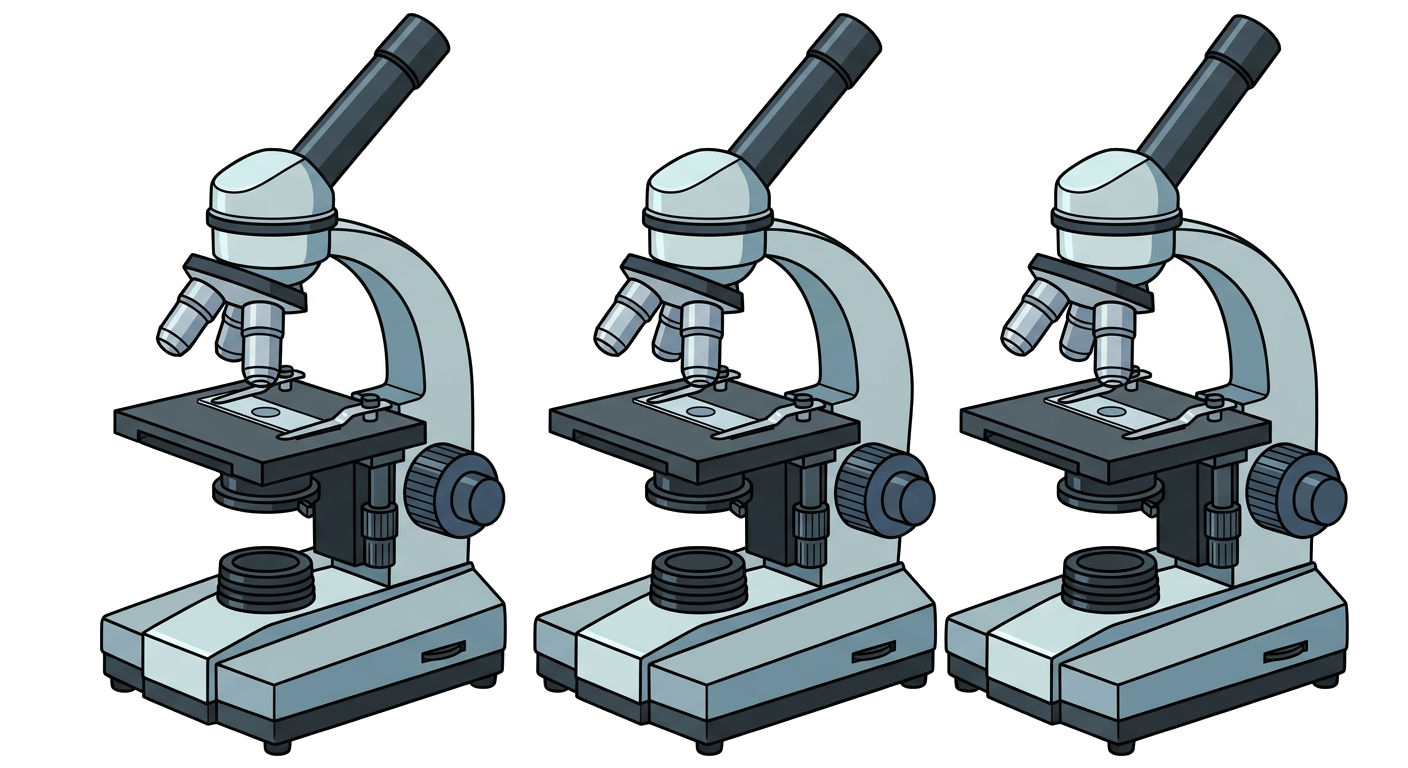
1. The part of the microscope you look through is called the .
2. The holds the slide in place.
3. To make large adjustments to focus, you use the .
4. The provides light to view the specimen.
1. Which part of the microscope allows you to change the magnification?
Eyepiece
Base
Objective Lenses
Stage Clips
2. When carrying a microscope, how should you hold it?
By the eyepiece
With one hand on the arm and one on the base
By the light source
By the stage
1. You should always start focusing with the highest power objective lens.
True
False
2. The diaphragm controls the amount of light passing through the specimen.
True
False
1. Why is it important to use both the coarse and fine adjustment knobs when focusing a microscope?
2. Name two types of specimens you might view under a microscope.
Related Worksheets
The Six Kingdoms of Life
Explore the characteristics and classification of organisms into the six kingdoms: Archaebacteria, Eubacteria, Protista, Fungi, Plantae, and Animalia.
Balance in Nature Worksheet
Explore the intricate balance within ecosystems, including food webs, predator-prey relationships, and the impact of environmental changes on natural balance.
Mitosis Worksheet
Explore the process of mitosis, including its stages and importance in cell division, for Grade 6 science students.
Fungi Fun Facts
Explore the amazing world of fungi with this interactive worksheet for Grade 6 science students.
Animal Cells: Exploring the Building Blocks of Life
This worksheet introduces 6th-grade students to the basic structure and functions of animal cells, including organelles like the nucleus, cytoplasm, and cell membrane.
The Excretory System
Explore the human excretory system with this worksheet for Grade 6 science students. Learn about the organs involved and their functions in waste removal.
Food Chain Fundamentals
Explore the basics of food chains, identifying producers, consumers, and decomposers, and understanding energy flow.
Grade 6 Circulatory System Worksheet
A worksheet for 6th graders to learn about the human circulatory system, including its components and functions.