Movement at Joints
Explore the different types of joints in the human body and how they allow for various movements.
Includes
Standards
Topics
Movement at Joints
Name:
Date:
Score:
Read each question carefully and answer to the best of your ability.
1. What type of joint allows movement in many directions, such as your shoulder?
Hinge joint
Ball-and-socket joint
Pivot joint
Fixed joint
2. Which of the following is an example of a hinge joint?
Hip
Skull
Knee
Wrist
3. A joint is a place where two or more meet.
4. The type of joint that allows you to turn your head from side to side is a joint.
5. Fixed joints allow a wide range of motion.
True
False
6. Cartilage is a tough, elastic tissue that covers the ends of bones at a joint.
True
False
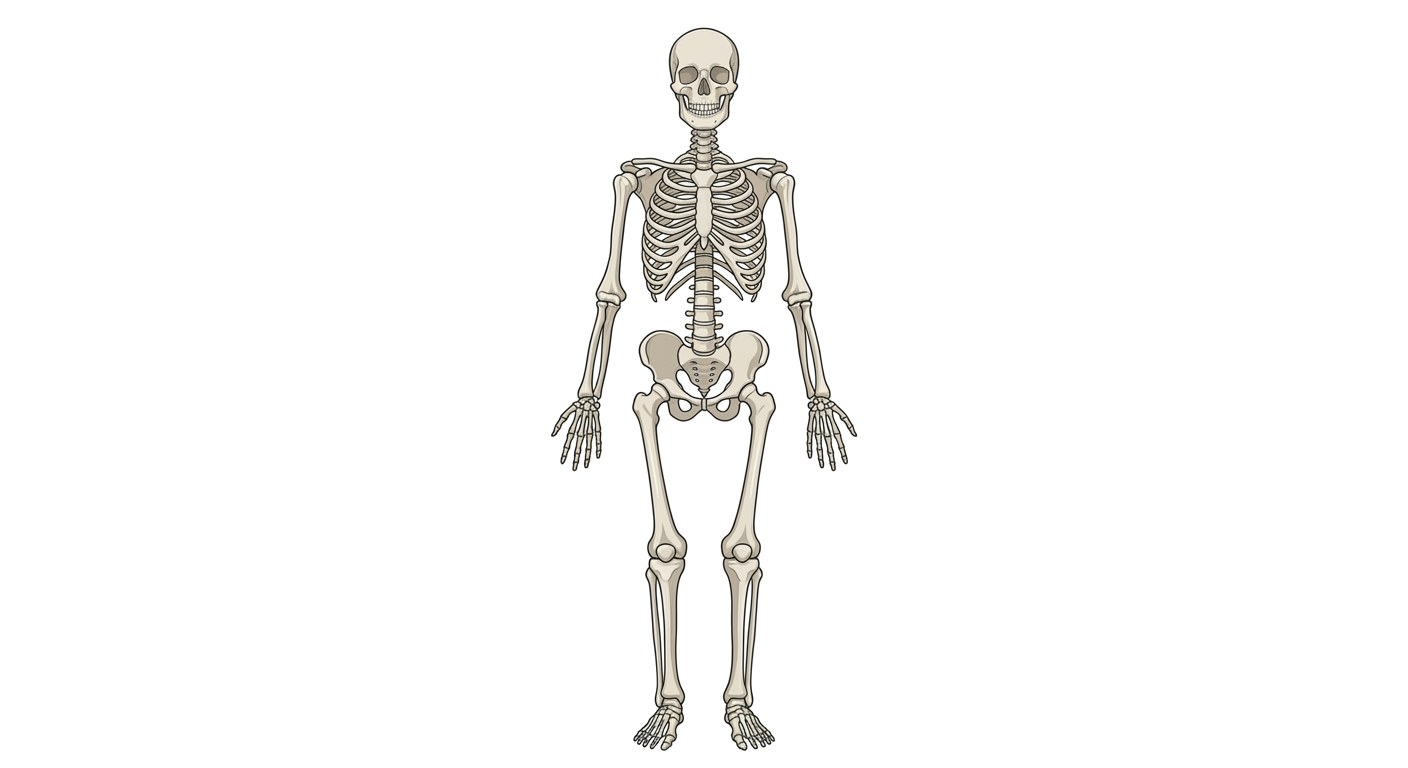
7. Look at the human skeleton diagram. Identify two different types of joints and give an example of where each can be found.
Match each joint type with its description.
8. Ball-and-socket joint
a. Allows movement in one direction
9. Hinge joint
b. Allows rotational movement
10. Pivot joint
c. Allows movement in many directions
Related Worksheets
The Six Kingdoms of Life
Explore the characteristics and classification of organisms into the six kingdoms: Archaebacteria, Eubacteria, Protista, Fungi, Plantae, and Animalia.
Balance in Nature Worksheet
Explore the intricate balance within ecosystems, including food webs, predator-prey relationships, and the impact of environmental changes on natural balance.
Mitosis Worksheet
Explore the process of mitosis, including its stages and importance in cell division, for Grade 6 science students.
Fungi Fun Facts
Explore the amazing world of fungi with this interactive worksheet for Grade 6 science students.
Animal Cells: Exploring the Building Blocks of Life
This worksheet introduces 6th-grade students to the basic structure and functions of animal cells, including organelles like the nucleus, cytoplasm, and cell membrane.
The Excretory System
Explore the human excretory system with this worksheet for Grade 6 science students. Learn about the organs involved and their functions in waste removal.
Food Chain Fundamentals
Explore the basics of food chains, identifying producers, consumers, and decomposers, and understanding energy flow.
Grade 6 Circulatory System Worksheet
A worksheet for 6th graders to learn about the human circulatory system, including its components and functions.