Plant Reproduction Worksheet
Explore the fascinating process of plant reproduction with this comprehensive Grade 6 science worksheet, covering pollination, fertilization, and seed dispersal.
Includes
Standards
Topics
Plant Reproduction
Name:
Date:
Score:
Read each question carefully and answer to the best of your ability. Use the provided image to help you answer questions.
Observe the diagram below showing the plant life cycle:
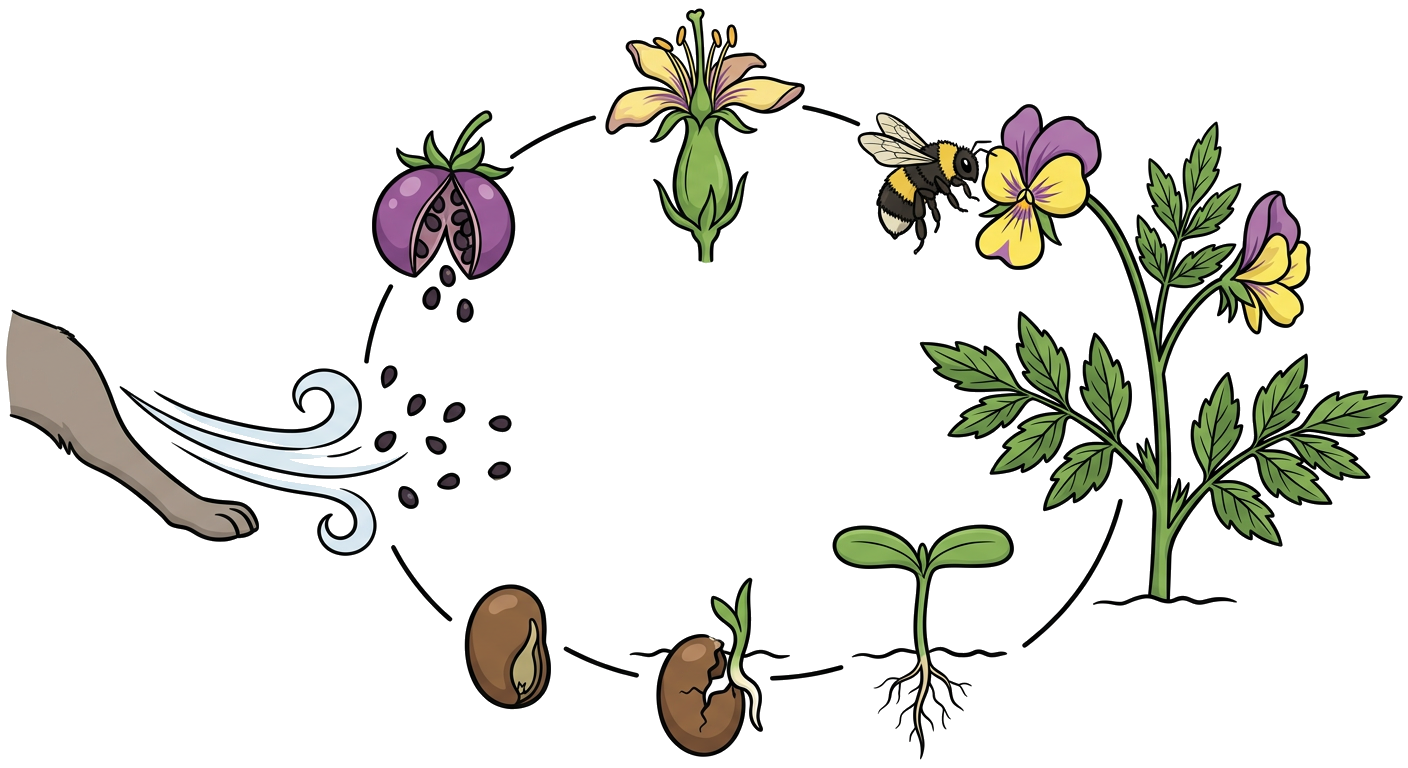
1. What is the main purpose of a flower in the plant life cycle?
2. Which of the following is responsible for carrying pollen from one flower to another?
Roots
Leaves
Pollinators (e.g., bees, wind)
Stems
3. What is the process called when pollen combines with an ovule to form a seed?
Germination
Photosynthesis
Fertilization
Respiration
4. The male part of a flower that produces pollen is called the .
5. Seeds are often dispersed by wind, water, or .
6. All plants reproduce using flowers and seeds.
True
False
7. Pollination is the transfer of pollen from the anther to the stigma.
True
False
8. Describe one way that plants can reproduce asexually.
Related Worksheets
The Six Kingdoms of Life
Explore the characteristics and classification of organisms into the six kingdoms: Archaebacteria, Eubacteria, Protista, Fungi, Plantae, and Animalia.
Balance in Nature Worksheet
Explore the intricate balance within ecosystems, including food webs, predator-prey relationships, and the impact of environmental changes on natural balance.
Mitosis Worksheet
Explore the process of mitosis, including its stages and importance in cell division, for Grade 6 science students.
Fungi Fun Facts
Explore the amazing world of fungi with this interactive worksheet for Grade 6 science students.
Animal Cells: Exploring the Building Blocks of Life
This worksheet introduces 6th-grade students to the basic structure and functions of animal cells, including organelles like the nucleus, cytoplasm, and cell membrane.
The Excretory System
Explore the human excretory system with this worksheet for Grade 6 science students. Learn about the organs involved and their functions in waste removal.
Food Chain Fundamentals
Explore the basics of food chains, identifying producers, consumers, and decomposers, and understanding energy flow.
Grade 6 Circulatory System Worksheet
A worksheet for 6th graders to learn about the human circulatory system, including its components and functions.