Population Ecology Worksheet
Explore the basics of population ecology, including population size, density, distribution, and factors affecting population growth for Grade 6 science students.
Includes
Standards
Topics
Population Ecology
Name:
Date:
Score:
Read each question carefully and answer to the best of your ability. Use complete sentences for short answer questions.
1. What is a group of individuals of the same species living in the same area at the same time called?
Community
Ecosystem
Population
Biome
2. Which of these is a limiting factor for a population?
Unlimited food
Enough space
Plenty of water
Predators
3. The number of individuals in a population per unit area is called .
4. When a population grows too large for its environment to support, it has exceeded its .
5. A decrease in birth rate will cause a population to grow.
True
False
6. Immigration is when individuals move out of a population.
True
False
7. Describe two factors that can cause a population to decrease.
8. Explain the difference between population density and population distribution.
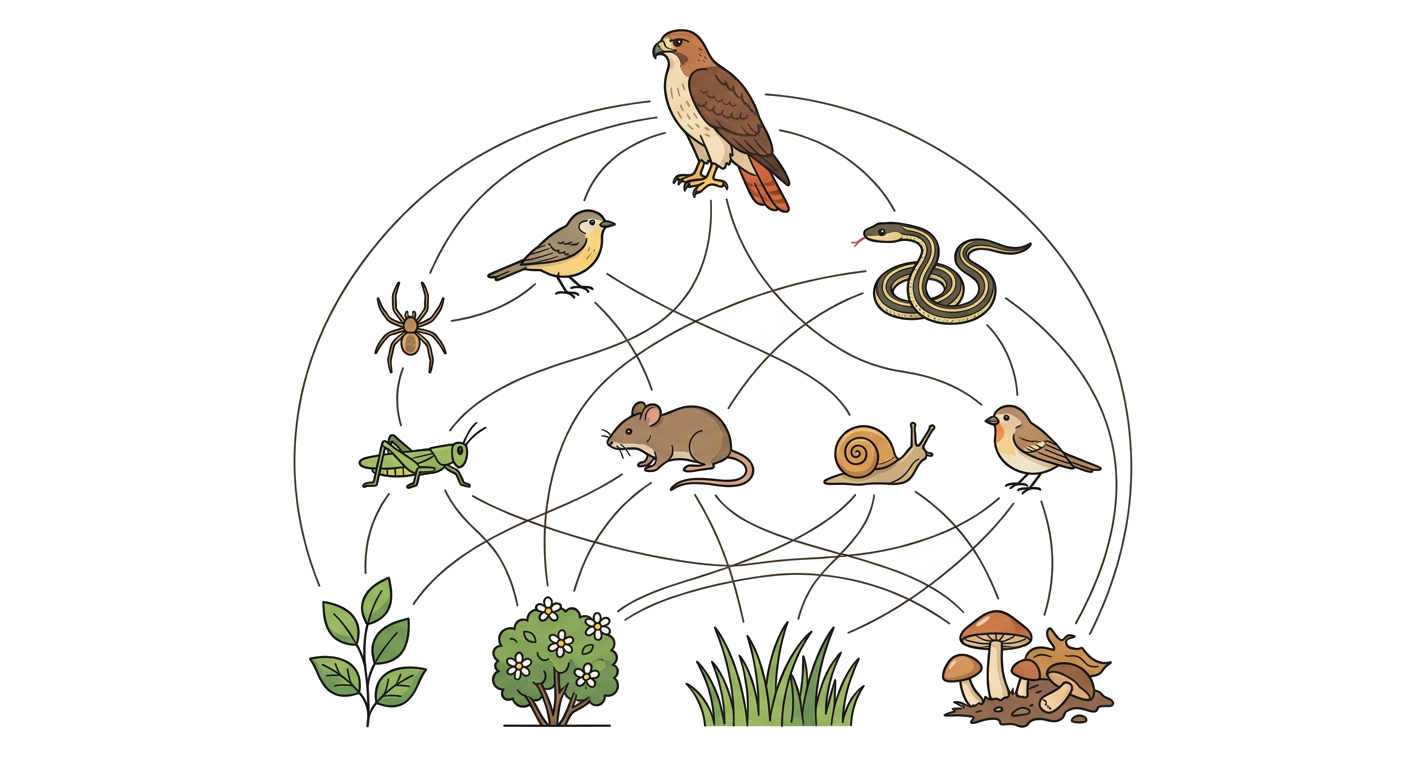
9. Look at the food web below. If the population of rabbits suddenly decreased, what might happen to the population of foxes and grass?
Related Worksheets
The Six Kingdoms of Life
Explore the characteristics and classification of organisms into the six kingdoms: Archaebacteria, Eubacteria, Protista, Fungi, Plantae, and Animalia.
Balance in Nature Worksheet
Explore the intricate balance within ecosystems, including food webs, predator-prey relationships, and the impact of environmental changes on natural balance.
Mitosis Worksheet
Explore the process of mitosis, including its stages and importance in cell division, for Grade 6 science students.
Fungi Fun Facts
Explore the amazing world of fungi with this interactive worksheet for Grade 6 science students.
Animal Cells: Exploring the Building Blocks of Life
This worksheet introduces 6th-grade students to the basic structure and functions of animal cells, including organelles like the nucleus, cytoplasm, and cell membrane.
The Excretory System
Explore the human excretory system with this worksheet for Grade 6 science students. Learn about the organs involved and their functions in waste removal.
Food Chain Fundamentals
Explore the basics of food chains, identifying producers, consumers, and decomposers, and understanding energy flow.
Grade 6 Circulatory System Worksheet
A worksheet for 6th graders to learn about the human circulatory system, including its components and functions.