Exploring Symbiosis
This worksheet introduces Grade 6 students to the concept of symbiosis and its different types through engaging questions and examples.
Includes
Standards
Topics
Exploring Symbiosis
Name:
Date:
Score:
Read each question carefully and answer to the best of your ability. This worksheet will test your understanding of symbiotic relationships in nature.
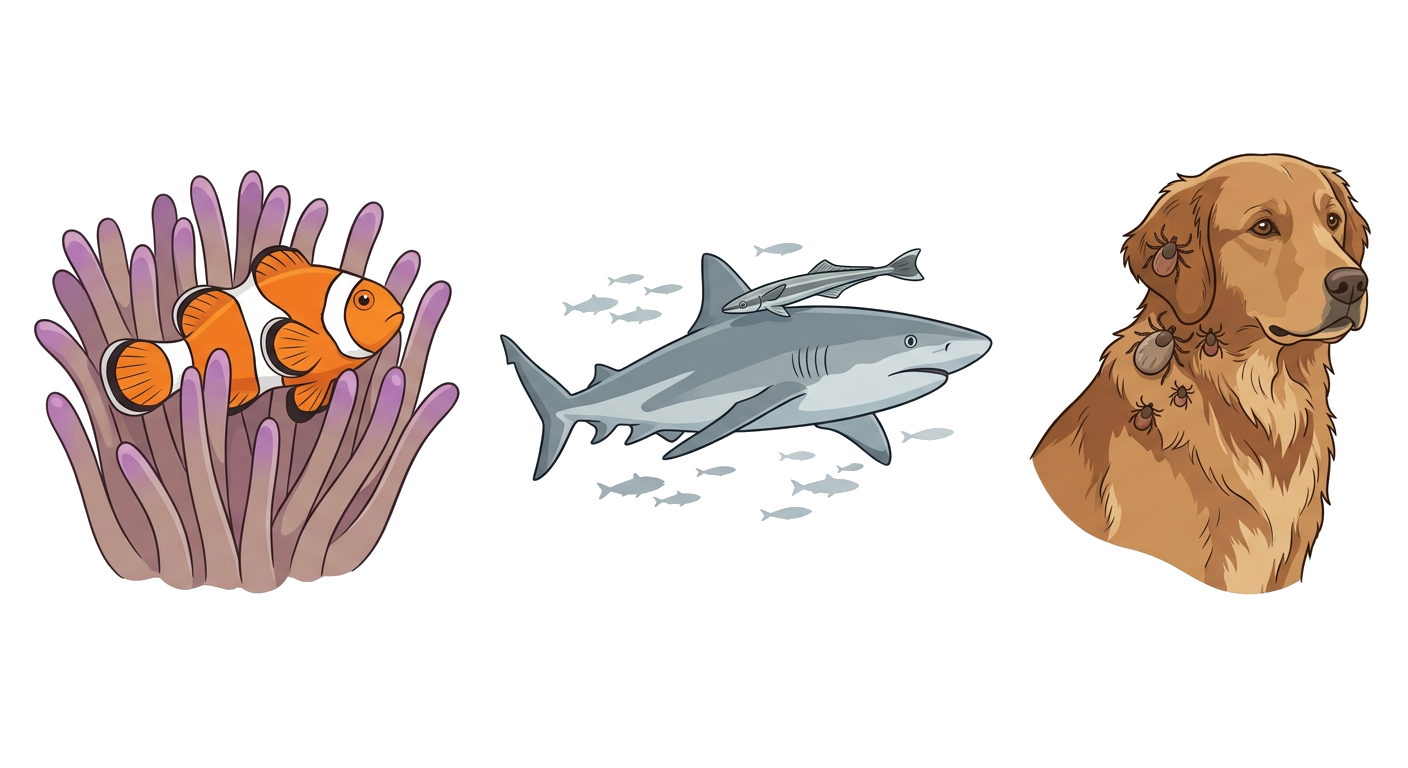
Symbiosis is a close and long-term interaction between two different biological organisms. These interactions can be beneficial, harmful, or neutral to one or both organisms.
1. What is the definition of symbiosis?
Organisms fighting each other
A close relationship between two different species
Animals eating plants
Plants growing in a garden
2. Which type of symbiotic relationship benefits both organisms?
Parasitism
Commensalism
Mutualism
Predation
3. In a parasitic relationship, one organism benefits while the other is .
4. A clownfish living in a sea anemone is an example of because the clownfish gets protection and the anemone is not harmed.
5. All symbiotic relationships are beneficial to both organisms involved.
True
False
6. Mutualism is when one organism benefits and the other is neither harmed nor helped.
True
False
7. Describe an example of a mutualistic relationship. Explain why it is mutualism.
Match each symbiotic relationship with its description.
8. Mutualism
a. One organism benefits, the other is harmed
9. Commensalism
b. Both organisms benefit
10. Parasitism
c. One organism benefits, the other is unaffected
Related Worksheets
The Six Kingdoms of Life
Explore the characteristics and classification of organisms into the six kingdoms: Archaebacteria, Eubacteria, Protista, Fungi, Plantae, and Animalia.
Balance in Nature Worksheet
Explore the intricate balance within ecosystems, including food webs, predator-prey relationships, and the impact of environmental changes on natural balance.
Mitosis Worksheet
Explore the process of mitosis, including its stages and importance in cell division, for Grade 6 science students.
Fungi Fun Facts
Explore the amazing world of fungi with this interactive worksheet for Grade 6 science students.
Animal Cells: Exploring the Building Blocks of Life
This worksheet introduces 6th-grade students to the basic structure and functions of animal cells, including organelles like the nucleus, cytoplasm, and cell membrane.
The Excretory System
Explore the human excretory system with this worksheet for Grade 6 science students. Learn about the organs involved and their functions in waste removal.
Food Chain Fundamentals
Explore the basics of food chains, identifying producers, consumers, and decomposers, and understanding energy flow.
Grade 6 Circulatory System Worksheet
A worksheet for 6th graders to learn about the human circulatory system, including its components and functions.