Eclipses: Solar and Lunar
Explore the phenomena of solar and lunar eclipses with this Grade 6 science worksheet, covering key definitions, causes, and characteristics.
Includes
Standards
Topics
Eclipses: Solar and Lunar
Name:
Date:
Score:
Read each question carefully and answer to the best of your ability. Some questions may require you to refer to diagrams.
1. What is an eclipse?
When the moon blocks the sun's light.
When one celestial body blocks the light from another.
When the Earth casts a shadow on the moon.
All of the above.
2. During a solar eclipse, what is the correct alignment of celestial bodies?
Sun, Earth, Moon
Earth, Moon, Sun
Sun, Moon, Earth
Moon, Sun, Earth
3. It is safe to look directly at the sun during a partial solar eclipse without special eye protection.
True
False
4. A lunar eclipse occurs when the passes directly behind the Earth and into its shadow.
5. The darkest part of a shadow during an eclipse is called the .
6. Briefly explain the difference between a total solar eclipse and a partial solar eclipse.
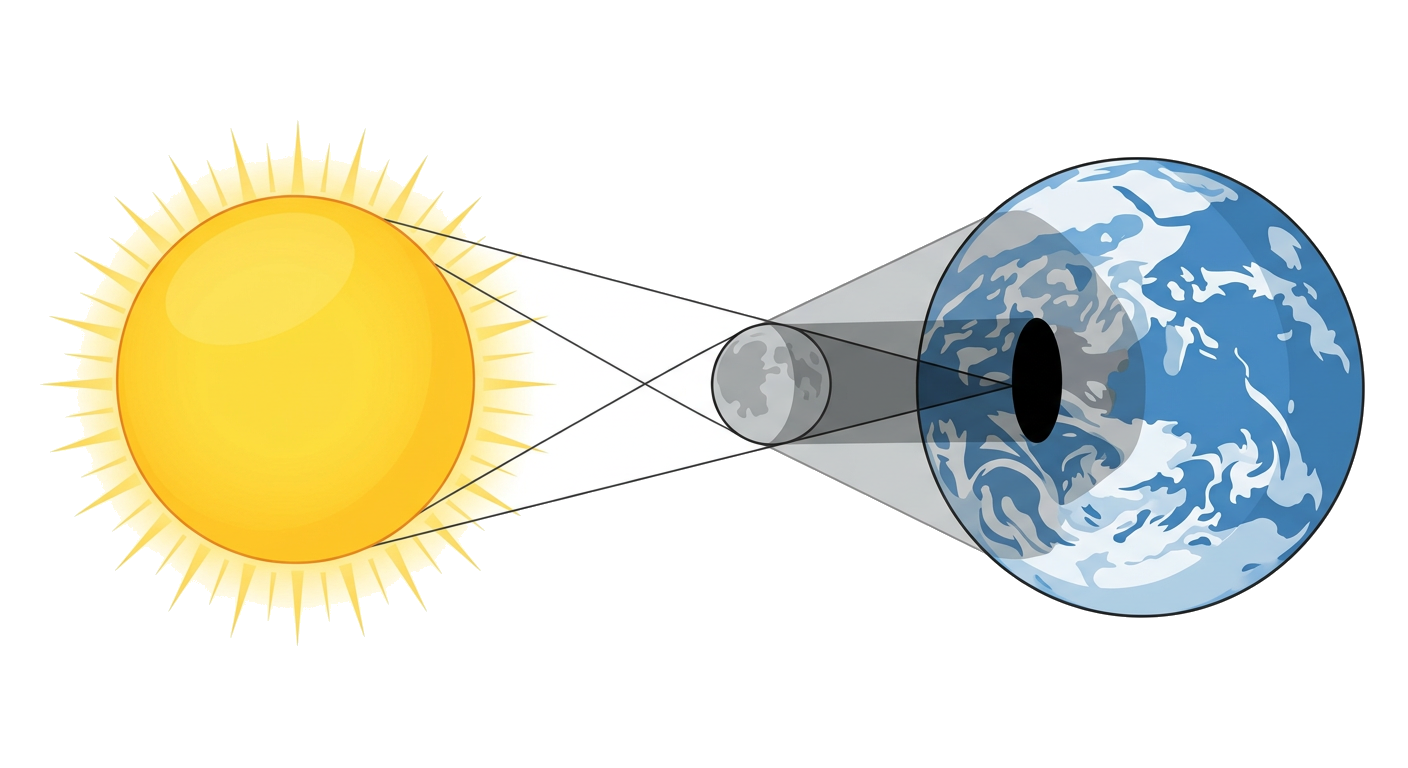
7. Look at the diagram of the solar eclipse. What part of the Earth experiences a total solar eclipse, and what part experiences a partial solar eclipse?
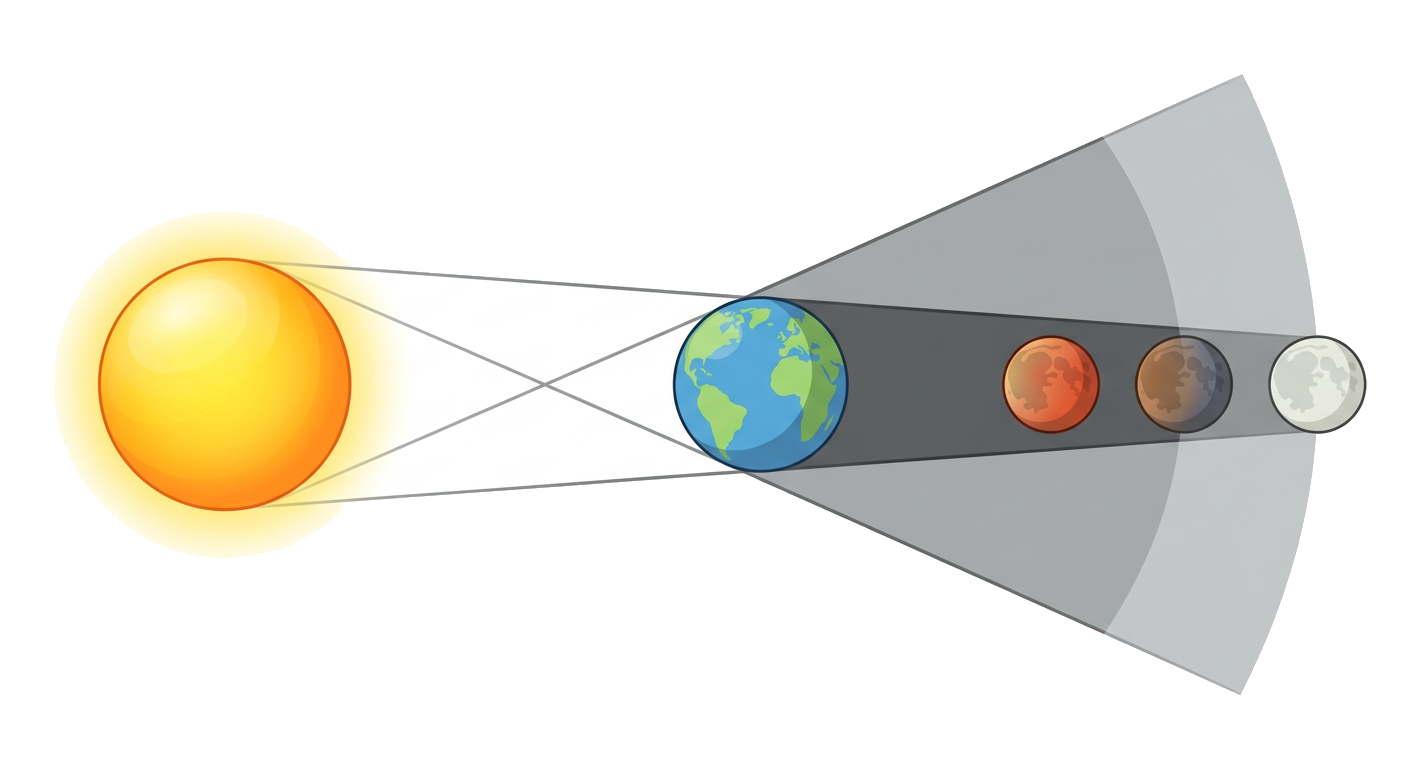
8. Observe the diagram of the lunar eclipse. Why does the moon sometimes appear reddish during a total lunar eclipse?
Related Worksheets
Earth's Spin and Orbit
Explore the concepts of Earth's rotation and revolution, their causes, and their effects on day/night cycles and seasons.
Planets of Our Solar System
Explore the planets in our solar system with this interactive worksheet, covering key characteristics and facts.
Moon Phases Worksheet
Explore the different phases of the Moon and understand the science behind them with this Grade 6 worksheet.
Weather and Climate Worksheet
Explore the fundamentals of weather and climate, including the water cycle, atmospheric conditions, and factors influencing climate patterns.
Earthquakes and Volcanoes
Explore the forces that shape our planet with this Grade 6 science worksheet on earthquakes and volcanoes, covering their causes, effects, and related terminology.
The Carbon Cycle
An educational worksheet for 6th graders to learn about the carbon cycle, its components, and its importance in Earth's systems.
Land and Sea Breeze Worksheet
Explore the concepts of land breeze and sea breeze, understanding their causes and effects on coastal weather patterns.
Earth's Systems Worksheet
Explore the interconnected systems of Earth: atmosphere, hydrosphere, geosphere, and biosphere.