Science Safety Equipment Worksheet
A Grade 6 science worksheet focusing on identifying and understanding the use of various safety equipment in a laboratory or classroom setting.
Includes
Standards
Topics
Science Safety Equipment
Name:
Date:
Score:
Read each question carefully and answer to the best of your ability. This worksheet will test your knowledge of common science safety equipment and their uses.
1. What is the primary purpose of wearing safety goggles in a science lab?
To look fashionable
To protect your eyes from chemicals and debris
To help you see better in the dark
To keep your hair out of your face
2. Which of the following should NOT be worn during a lab experiment?
Closed-toe shoes
Long pants
Loose clothing and dangling jewelry
Hair tied back
3. If a chemical splashes into your eye, you should immediately go to the .
4. A fire is used to put out small fires in the lab.
5. Why is it important to know the location of the first-aid kit in the classroom?
6. It is safe to eat and drink in the science laboratory.
True
False
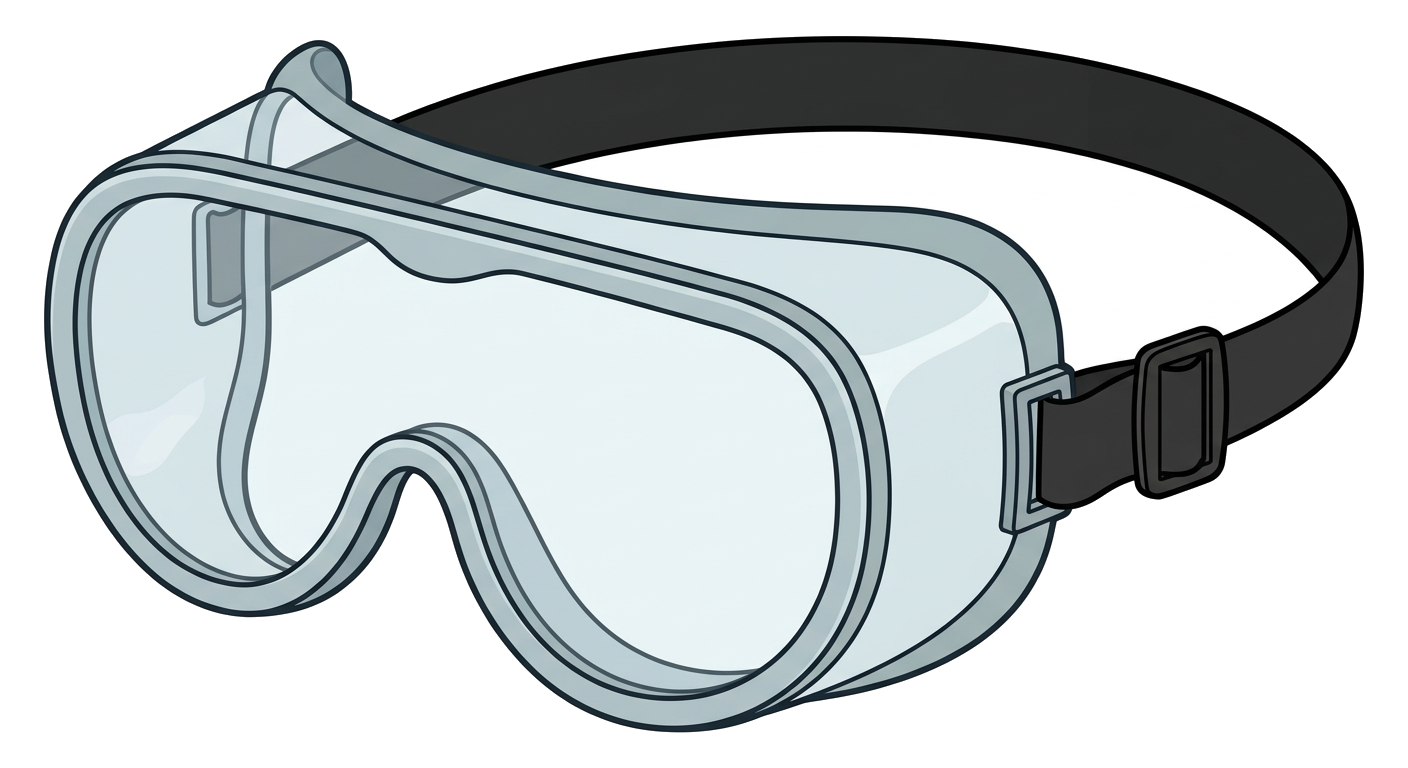
7. Identify the safety equipment shown in the image below and explain its use.
Name:
Use:
Related Worksheets
Understanding the Hypothesis
This worksheet helps sixth-grade students understand what a hypothesis is, how to formulate one, and its role in the scientific method.
Understanding Scientific Principles
This worksheet helps sixth-grade students understand the differences between a hypothesis, a scientific theory, and a scientific law.
Science Safety Rules and Symbols
A Grade 6 science worksheet covering essential safety rules and common safety symbols used in laboratory and classroom settings.
Controls and Variables in Science
Explore the concepts of independent, dependent, and controlled variables in scientific experiments for Grade 6 science.
Understanding the Independent Variable
This worksheet helps 6th-grade students understand and identify the independent variable in scientific experiments.
Claim, Evidence, Reasoning (CER) Practice
A Grade 6 science worksheet focusing on Claim, Evidence, and Reasoning to analyze scientific phenomena.