Introduction to Animal Biology
A Grade 6 science worksheet covering basic animal biology concepts including cell structure, classification, and life processes.
Includes
Standards
Topics
Introduction to Animal Biology
Name:
Date:
Score:
Read each question carefully and answer to the best of your ability. Good luck!
1. Which of the following is NOT typically found in an animal cell?
Nucleus
Cell wall
Mitochondria
Cytoplasm
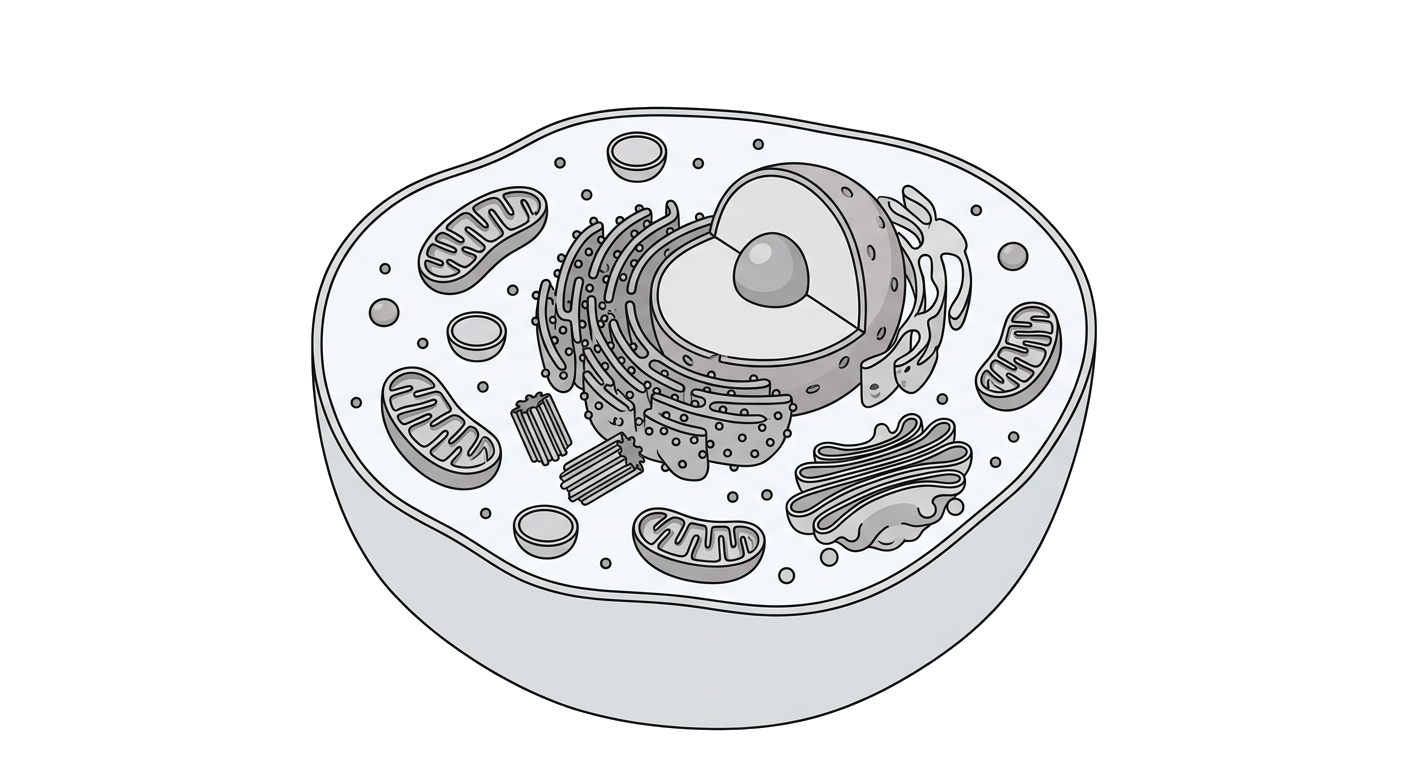
2. The image below shows a diagram of an animal cell. Which part controls the cell's activities?
Cell membrane
Cytoplasm
Nucleus
Mitochondria
3. Animals that have a backbone are called .
4. Animals that do not have a backbone are called .
5. Name three essential life processes that all animals carry out to survive.
6. All animals are capable of producing their own food through photosynthesis.
True
False
Related Worksheets
Grade 6 Health Science Worksheet: Human Body Systems
Explore the fascinating world of human body systems with this Grade 6 science worksheet, covering key functions and components.
Natural Selection and Adaptations
Explore the concepts of natural selection and adaptations with this Grade 6 science worksheet. Learn how organisms evolve to survive in their environment.
Ear Notching: Pig Identification
This worksheet introduces sixth-grade students to the concept and importance of ear notching as a method of identifying pigs in agriculture.
Owl Pellet Dissection
Explore the diet of owls by dissecting an owl pellet and identifying prey remains.
Growth and Repair in Living Organisms
This worksheet explores the fundamental processes of growth and repair in living organisms, focusing on cell division and its importance.
Reptile Wonders: Grade 6 Science Worksheet
Explore the fascinating world of reptiles with this engaging worksheet for 6th graders, covering their characteristics, habitats, and behaviors.
Grade 6 Health Worksheet: The Human Body
This worksheet covers essential concepts about the human body and health for 6th-grade science students.
The Amazing Human Eye
Explore the structure and function of the human eye and how we see.