Workers' Rights Basics
Explore the fundamental rights of workers, historical context, and the importance of fair labor practices.
Includes
Standards
Topics
Workers' Rights Basics
Name:
Date:
Score:
Read each question carefully and answer to the best of your ability. For multiple-choice questions, circle the correct option. For fill-in-the-blanks, write your answer on the line provided. For short-answer questions, write your response in the space provided.
1. Which of the following is NOT a basic right of a worker?
Safe working conditions
Fair wages
Unlimited vacation days
Protection against discrimination
2. What is the main purpose of a labor union?
To organize company picnics
To represent workers' interests
To help employers save money
To set product prices
3. The right to a safe workplace is protected by laws like those enforced by (OSHA).
4. Child labor laws prevent children from working in jobs that are or interfere with their education.
5. Employers can legally pay different wages to people doing the same job based on their gender or race.
True
False
6. Workers have the right to join a union if they choose to.
True
False
7. Why is it important for workers to have rights?
8. Give an example of a worker's right and explain why it is important.
The image above shows a historical photograph of a mother and her children during a difficult economic time. Many workers in the past faced harsh conditions and had few rights.
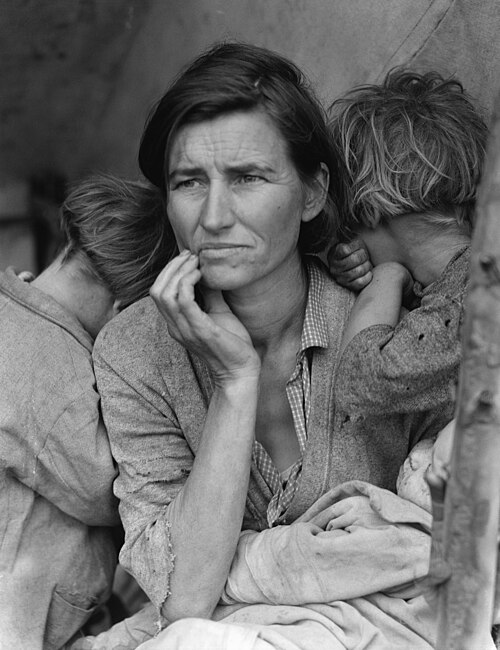
9. How do you think the conditions shown in the image relate to the development of workers' rights?