Understanding Negative Thinking Patterns
A worksheet for 6th graders to identify and understand common negative thinking patterns and their impact on emotions and behavior.
Includes
Standards
Topics
Understanding Negative Thinking Patterns
Name:
Date:
Score:
Read each question carefully and answer to the best of your ability. This worksheet will help you learn about different types of negative thinking patterns.
1. Which of the following is an example of 'all-or-nothing thinking'?
I did well on my math test.
Since I got one question wrong, I'm a total failure.
I'm okay at drawing.
I like playing soccer sometimes.
2. 'Catastrophizing' means:
Thinking about all the good things that could happen.
Imagining the worst possible outcome for every situation.
Focusing only on facts and evidence.
Always being optimistic.
3. When you only focus on the negative aspects of a situation and ignore the positive, it's called mental .
4. Labeling yourself or others with negative terms (e.g., "I'm a loser") is a negative thinking pattern called .
5. It is healthy to always blame yourself when something goes wrong, even if it wasn't your fault.
True
False
6. Recognizing negative thinking patterns is the first step to changing them.
True
False
7. Describe a time when you or someone you know experienced 'mind reading' (assuming you know what someone else is thinking without evidence).
Our brains are constantly working! Different parts of our brain help us think, feel, and make decisions. Understanding how our thoughts work can help us manage negative patterns.
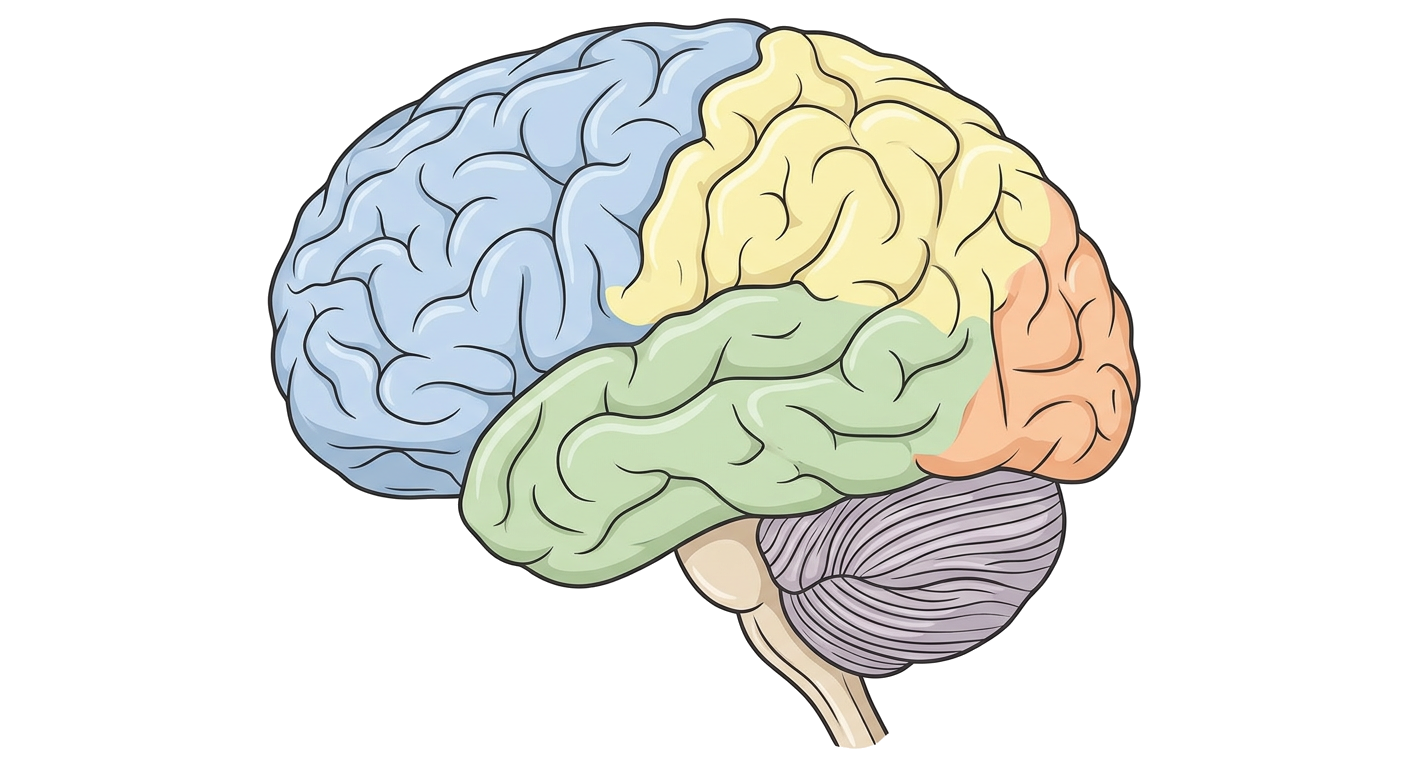
8. How do you think negative thoughts can affect your brain and body?
Use the words below to complete the sentences.
9. When you make a broad conclusion based on a single event, you are doing .
10. Our thoughts often influence our .