Grade 7 Cell Transport Worksheet
Explore cell transport mechanisms including diffusion, osmosis, active transport, and passive transport with this comprehensive worksheet for Grade 7 science students.
Includes
Standards
Topics
Cell Transport Mechanisms
Name:
Date:
Score:
Read each question carefully and answer to the best of your ability. This worksheet covers different ways substances move in and out of cells.
1. Which process involves the movement of water across a selectively permeable membrane from an area of high water concentration to an area of low water concentration?
Diffusion
Osmosis
Active Transport
Facilitated Diffusion
2. The cell membrane is described as selectively permeable. What does this mean?
It allows all substances to pass through.
It blocks all substances from passing through.
It chooses which substances can pass through.
It only allows large molecules to pass through.
3. Which type of transport requires energy (ATP) to move substances across the cell membrane?
Passive Transport
Diffusion
Osmosis
Active Transport
1. The movement of molecules from an area of high concentration to an area of low concentration is called .
2. When a cell needs to move substances against their concentration gradient, it uses transport, which requires energy.
3. The controls what enters and leaves the cell.
1. Passive transport requires the cell to expend energy.
True
False
2. Osmosis is a special type of diffusion that involves the movement of solutes.
True
False
1. Briefly explain the difference between diffusion and osmosis.
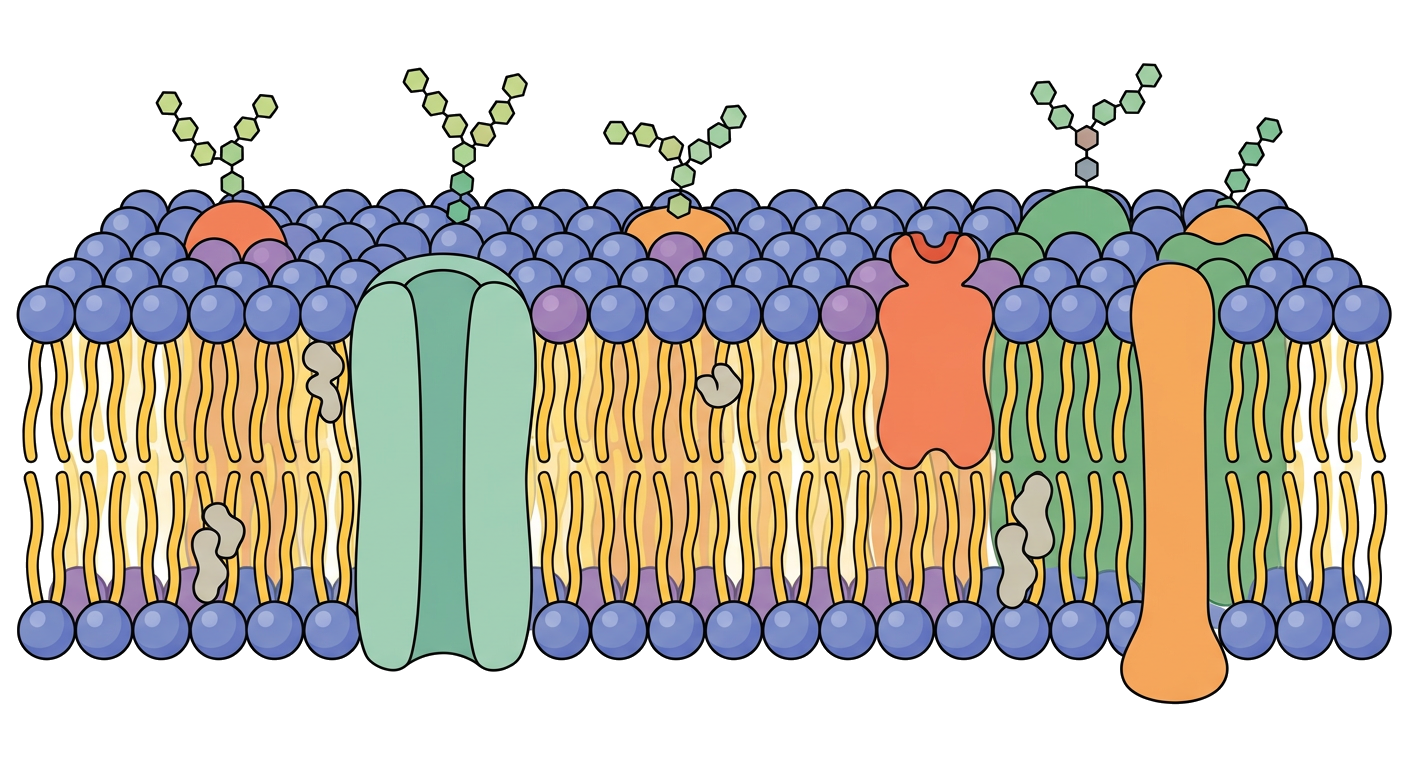
2. Look at the image below of a cell membrane. Describe its main function.
Match each term with its correct description.
1. Solute
a. The substance that dissolves another substance
2. Solvent
b. The substance that is dissolved in a solution
3. Solution
c. A mixture where one substance is dissolved in another
Related Worksheets
Muscles of the Leg Worksheet
A Grade 7 science worksheet focusing on the major muscles of the human leg, their functions, and identification.
Six Kingdoms of Life Worksheet
Explore the characteristics and classification of the six kingdoms of life with this engaging worksheet for Grade 7 science students.
Six Kingdoms of Life Worksheet
Explore the characteristics and classification of the six kingdoms of life with this engaging worksheet for Grade 7 science students.
Human Decomposition: The Science of Decay
Explore the stages of human decomposition, the factors that influence it, and the roles of scavengers and microorganisms in this Grade 7 Science worksheet.
Feedback Loops in Science
Explore the concepts of positive and negative feedback loops in biological and environmental systems.
Humerus Bone Worksheet
Explore the anatomy and function of the humerus bone with this Grade 7 science worksheet.
Invertebrate Animals Worksheet
Explore the fascinating world of invertebrate animals with this worksheet, covering their characteristics, classifications, and examples.
Frog Dissection Worksheet
A worksheet covering the external and internal anatomy of a frog for grade 7 science students.