Feedback Loops in Science
Explore the concepts of positive and negative feedback loops in biological and environmental systems.
Includes
Standards
Topics
Feedback Loops in Science
Name:
Date:
Score:
Read each question carefully and answer to the best of your ability. Some questions may require you to think about real-world examples.
Feedback loops are mechanisms that regulate systems. They can be either positive or negative, depending on how they influence the system's output.
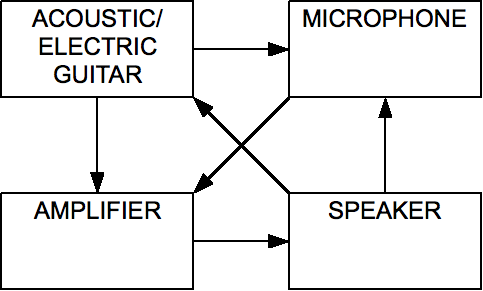
1. Which type of feedback loop works to maintain a stable internal environment (homeostasis)?
Positive feedback loop
Negative feedback loop
Both A and B
Neither A nor B
2. An example of a positive feedback loop in the human body is:
Regulation of body temperature
Blood sugar regulation
Childbirth contractions
Maintaining blood pressure
3. In a feedback loop, the output of a system enhances the original stimulus.
4. The process by which the body maintains a relatively stable internal environment is called .
5. A negative feedback loop the effect of a stimulus.
6. Positive feedback loops are more common in biological systems than negative feedback loops.
True
False
7. When your body sweats to cool down, it is an example of a negative feedback loop.
True
False
8. Describe one difference between a positive and a negative feedback loop.
9. Give a real-world example of a negative feedback loop and explain how it works.
Match the term on the left with its definition on the right.
10. Homeostasis
a. A loop that amplifies the original stimulus
11. Positive Feedback
b. Maintaining a stable internal environment
12. Negative Feedback
c. A loop that reduces the effect of the original stimulus