Fossil Dating Worksheet
Explore the methods and principles of fossil dating, including relative and absolute dating techniques, for Grade 7 Science.
Includes
Standards
Topics
Fossil Dating: Uncovering Earth's Past
Name:
Date:
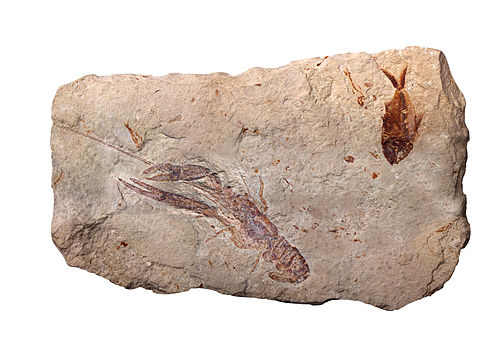
Score:
Read each question carefully and answer to the best of your ability. This worksheet will test your knowledge of fossil dating methods and their importance in understanding Earth's history.
1. Which dating method estimates the age of a fossil by comparing its position in rock layers to other fossils?
Absolute dating
Radiometric dating
Relative dating
Carbon-14 dating
2. What is the half-life of a radioactive isotope?
The time it takes for an organism to decay
The time it takes for half of the radioactive atoms in a sample to decay
The time it takes for a fossil to form
The time it takes for a rock layer to form
3. The principle of states that in undisturbed rock layers, the oldest layers are at the bottom and the youngest are at the top.
4. Carbon-14 dating is a type of dating used for relatively young organic materials.
5. Relative dating provides an exact numerical age for a fossil.
True
False
6. Index fossils are useful for relative dating because they lived for a long period of time and were found in many different locations.
True
False
7. Briefly explain the difference between relative dating and absolute dating.
8. Observe the image of the fossil below. Based on its appearance, what can you infer about the environment where this organism might have lived?