Photosynthesis and Cellular Respiration
Explore the fundamental processes of photosynthesis and cellular respiration, understanding their inputs, outputs, and significance in living organisms.
Includes
Standards
Topics
Photosynthesis and Cellular Respiration
Name:
Date:
Score:
Carefully read each question and provide your answer in the space provided. For multiple-choice questions, circle the correct option.
1. What is the primary purpose of photosynthesis?
To release energy from food
To produce food (glucose) for plants
To break down water molecules
To absorb oxygen from the atmosphere
2. Which of the following is NOT an input for photosynthesis?
Sunlight
Carbon dioxide
Oxygen
Water
3. The green pigment in plants that captures sunlight is called .
4. What is the main goal of cellular respiration?
To produce glucose for energy storage
To release oxygen into the atmosphere
To break down food to release energy (ATP)
To absorb sunlight
5. Which gas is a product of cellular respiration and an input for photosynthesis?
Oxygen
Carbon Dioxide
Nitrogen
Hydrogen
6. Cellular respiration occurs in the of eukaryotic cells.
Match each term on the left with its correct definition or description on the right.
7. Chlorophyll
a. The process by which plants use sunlight to make food.
8. Glucose
b. The green pigment in plants that absorbs light energy.
9. Photosynthesis
c. The sugar produced during photosynthesis, used as energy.
10. Cellular Respiration
d. The process by which cells break down food to release energy.
11. Explain the relationship between photosynthesis and cellular respiration. How are they interconnected?
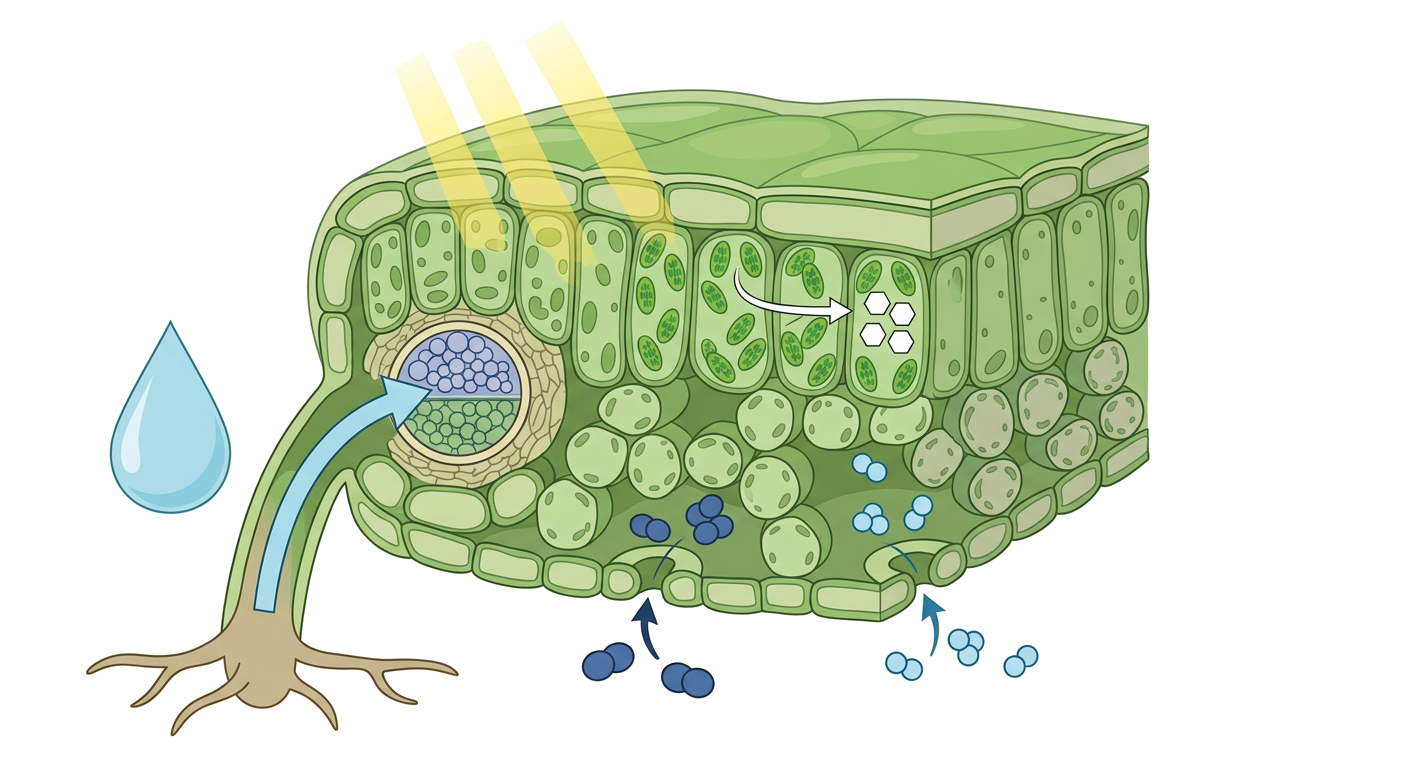
12. Label the inputs and outputs of photosynthesis in the diagram below.
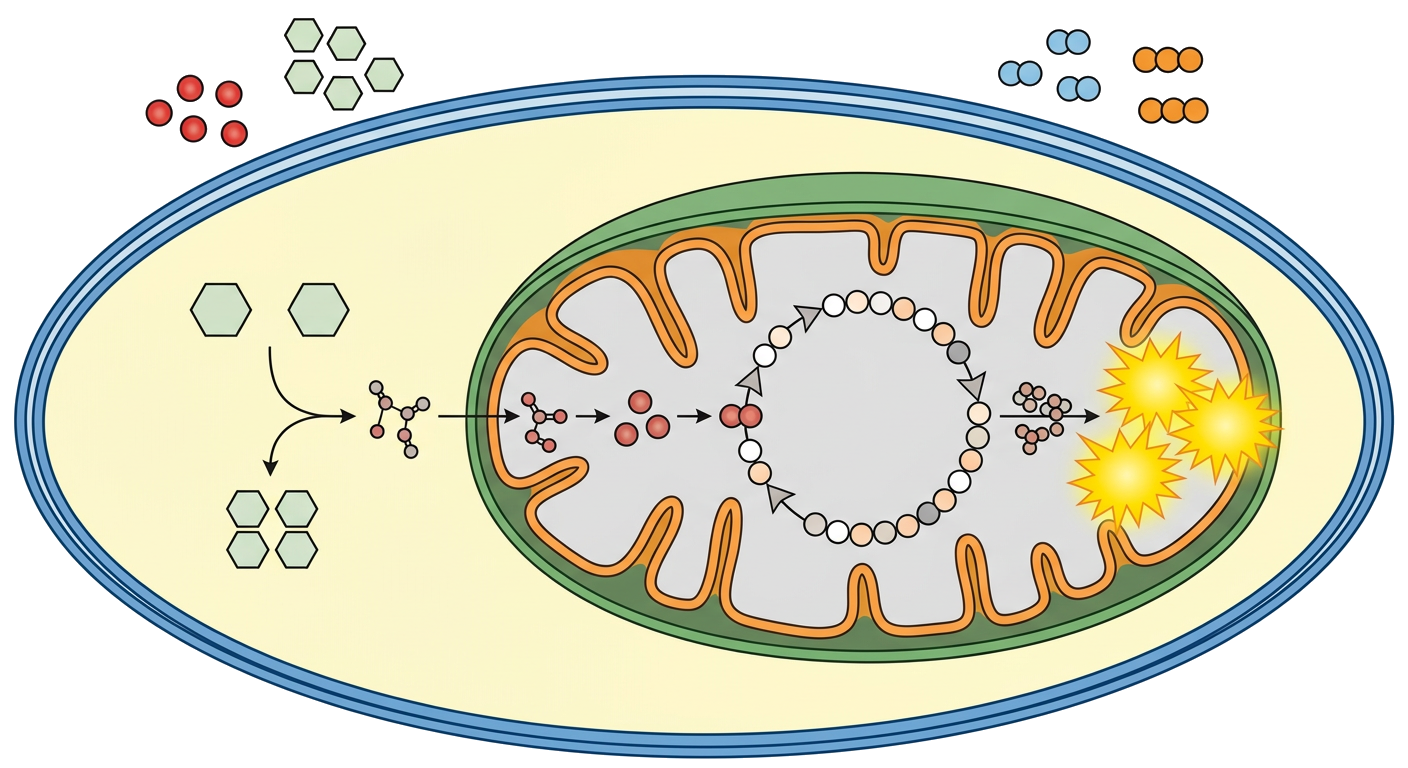
13. Label the inputs and outputs of cellular respiration in the diagram below.
14. Photosynthesis occurs only in plant cells, while cellular respiration occurs only in animal cells.
True
False
15. Both photosynthesis and cellular respiration produce ATP (energy).
True
False
Related Worksheets
Six Kingdoms of Life Worksheet
Explore the characteristics and classification of the six kingdoms of life with this engaging worksheet for Grade 7 science students.
Pathogenic Microorganisms
This worksheet covers different types of pathogenic microorganisms, their characteristics, and how they cause diseases.
The Menstrual Cycle
A Grade 7 Science worksheet covering the stages, hormones, and key terms of the human menstrual cycle.
Human Decomposition: The Science of Decay
Explore the stages of human decomposition, the factors that influence it, and the roles of scavengers and microorganisms in this Grade 7 Science worksheet.
Invertebrate Animals Worksheet
Explore the fascinating world of invertebrate animals with this worksheet, covering their characteristics, classifications, and examples.
Frog Dissection Worksheet
A worksheet covering the external and internal anatomy of a frog for grade 7 science students.
Grade 7 Digestion Worksheet
A science worksheet for Grade 7 students covering the human digestive system, its organs, and processes.
Factors Affecting Photosynthesis
Explore the key environmental factors that influence the rate of photosynthesis in plants.