History of Atomic Models
Explore the evolution of atomic theory from early ideas to modern quantum models.
Includes
Standards
Topics
History of Atomic Models
Name:
Date:
Score:
Read each question carefully and answer to the best of your ability. Show all your work for calculations.
1. Which ancient Greek philosopher proposed that matter is composed of indivisible particles called 'atomos'?
Aristotle
Plato
Democritus
Socrates
2. John Dalton's atomic theory stated that atoms of the same element are:
Always different
Identical in mass and properties
Composed of smaller particles
Easily divisible
1. J.J. Thomson's model of the atom is often called the model.
2. Ernest Rutherford's gold foil experiment led to the discovery of the atomic .
3. In the Bohr model, electrons orbit the nucleus in specific energy .
1. Dalton believed that atoms could be created or destroyed.
True
False
2. The Bohr model accurately describes the exact path of electrons around the nucleus.
True
False
Match each scientist with the atomic model they are best known for.
1. John Dalton
a. Planetary Model
2. J.J. Thomson
b. Solid Sphere Model
3. Ernest Rutherford
c. Plum Pudding Model
4. Niels Bohr
d. Solar System Model
1. Briefly describe the main difference between the Plum Pudding model and the Rutherford model of the atom.
2. What did the Bohr model introduce that was a significant improvement over Rutherford's model?
Observe the image below, which represents an atomic model.
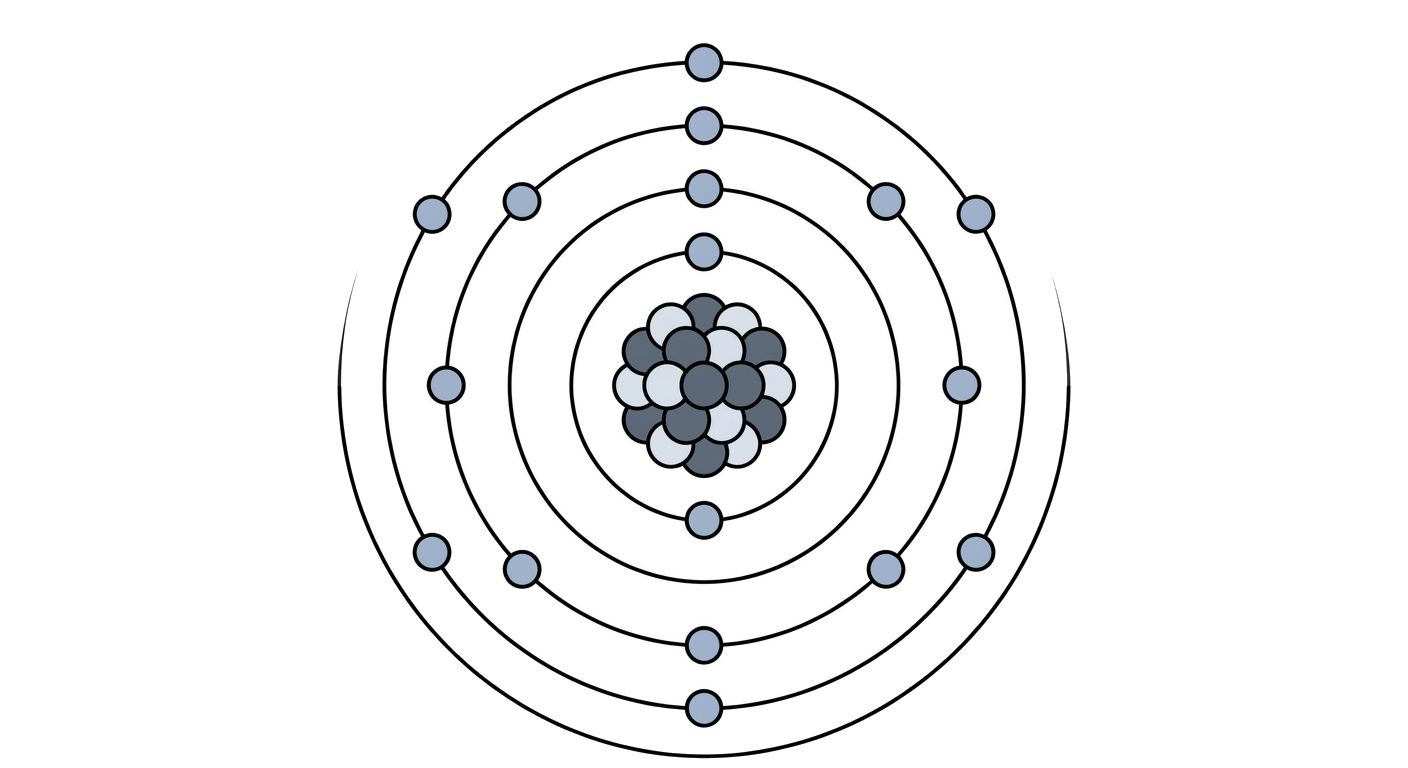
3. Based on its characteristics, which atomic model does this image most closely represent?
4. What are the central particles in this model called?