Naming Ionic and Covalent Bonds
Explore the fundamental differences between ionic and covalent bonds and practice naming common compounds formed by each bond type at a Grade 7 level.
Includes
Standards
Topics
Naming Ionic and Covalent Bonds
Name:
Date:
Score:
Read each question carefully and follow the instructions to determine whether a bond is ionic or covalent, and then write the correct name for the compound.
Chemical bonds are forces that hold atoms together to form compounds. There are two main types of bonds we will be focusing on: ionic bonds and covalent bonds.
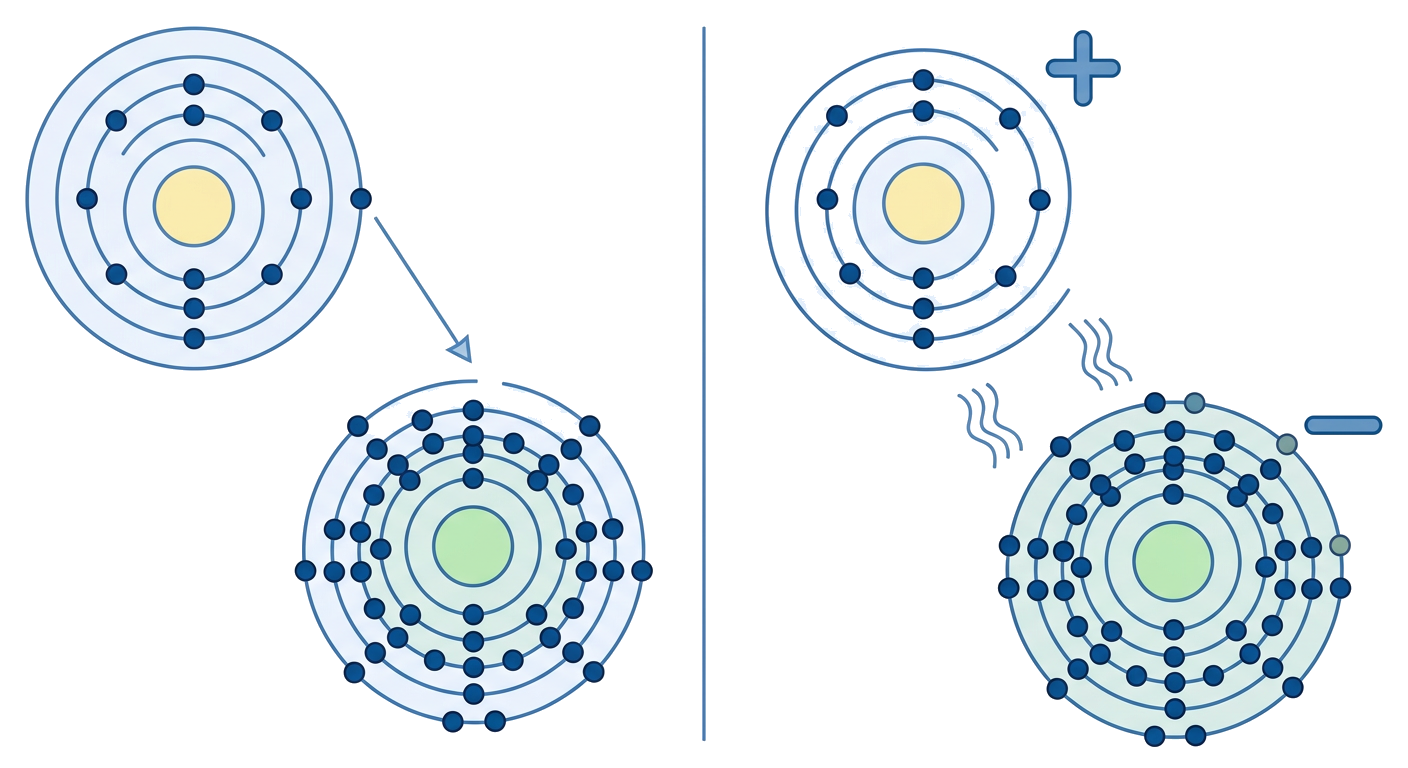
Ionic bonds usually form between a metal and a nonmetal, where electrons are transferred from one atom to another. This creates charged ions that attract each other.
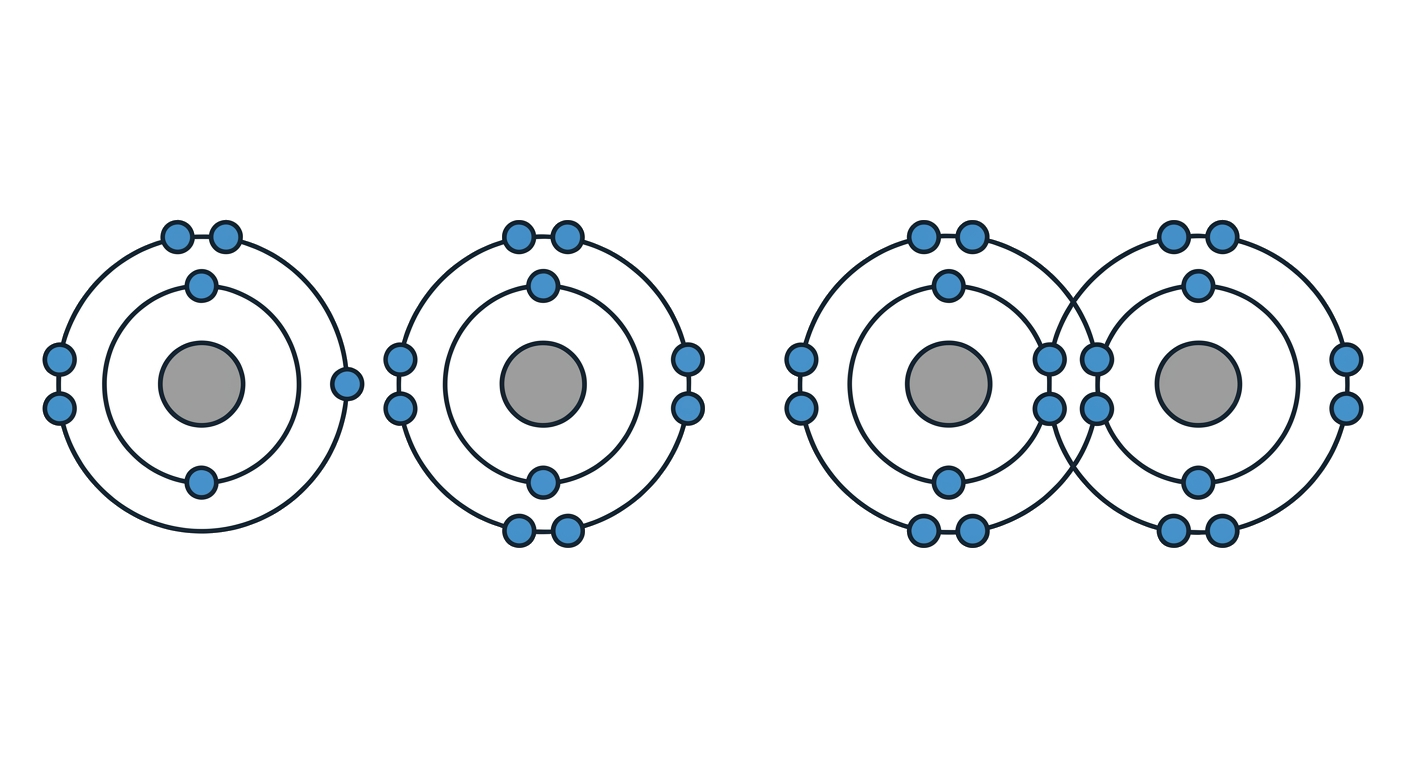
Covalent bonds usually form between two nonmetals, where electrons are shared between atoms.
1. Which type of bond involves the sharing of electrons between atoms?
Ionic bond
Covalent bond
Metallic bond
Hydrogen bond
2. Which type of bond typically forms between a metal and a nonmetal?
Covalent bond
Ionic bond
Metallic bond
Hydrogen bond
Fill in the blanks to correctly name the following ionic compounds:
3. NaCl is named .
4. MgCl₂ is named .
5. Al₂O₃ is named .
Fill in the blanks to correctly name the following covalent compounds:
6. CO₂ is named .
7. H₂O is named .
8. N₂O₄ is named .
9. Explain the main difference between how electrons are involved in ionic bonding versus covalent bonding.
10. Give an example of a compound with an ionic bond and a compound with a covalent bond, and explain why each is classified that way.
11. When naming ionic compounds, prefixes (like 'di-', 'tri-') are used to indicate the number of atoms.
True
False
12. Covalent compounds are typically formed between two nonmetal elements.
True
False