Relative Atomic Mass Worksheet
Explore the concept of relative atomic mass, isotopes, and how to calculate average atomic mass for grade 7 science students.
Includes
Standards
Topics
Relative Atomic Mass
Name:
Date:
Score:
Read each question carefully and answer to the best of your ability. Show all your work for calculations.
1. What does the 'relative atomic mass' of an element refer to?
The mass of a single atom of the element.
The average mass of all isotopes of an element, relative to carbon-12.
The total mass of all protons in an atom.
The number of electrons in an atom.
2. What are isotopes?
Atoms of different elements with the same number of protons.
Atoms of the same element with different numbers of neutrons.
Atoms of the same element with different numbers of electrons.
Atoms of different elements with the same atomic mass.
3. The standard used to define relative atomic mass is the isotope.
4. The number of in an atom determines its atomic number and element identity.
5. Explain why the relative atomic mass of an element is usually not a whole number.
6. Observe the image below. It represents a general atomic structure.
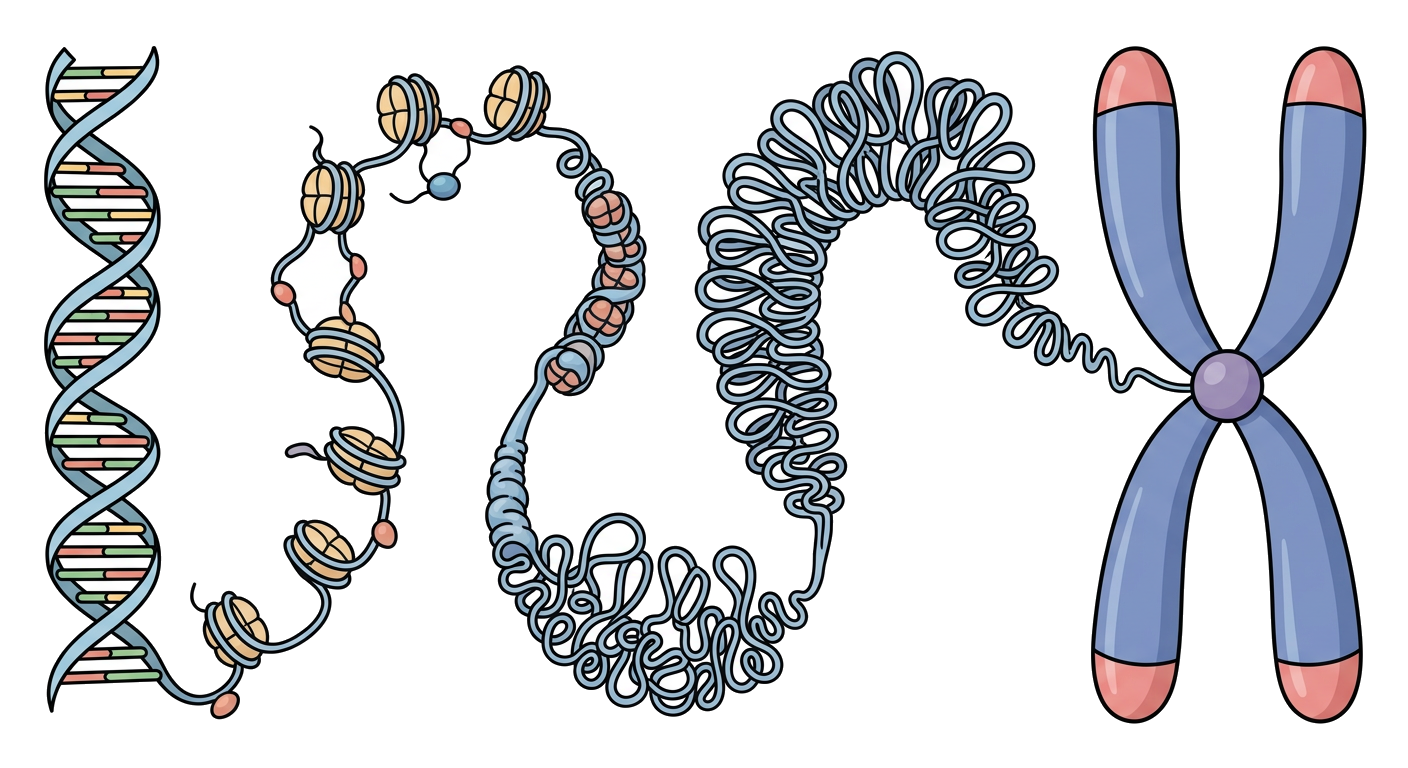
While the image above shows chromosome structure, imagine it represents a generic atom. If the central part represents the nucleus, and the outer parts represent electrons, what subatomic particles would be found in the 'nucleus'?
7. All atoms of the same element have the exact same mass.
True
False
8. Chlorine has two main isotopes: Chlorine-35 (75.77% abundance) and Chlorine-37 (24.23% abundance). Calculate the average relative atomic mass of Chlorine. Show your work.