Daylight Saving Time Explained
Explore the reasons behind Daylight Saving Time, its effects on daily life, and the science of Earth's rotation and tilt.
Includes
Standards
Topics
Daylight Saving Time Explained
Name:
Date:
Score:
Read each question carefully and answer to the best of your ability. Some questions may require you to think critically about the effects of Daylight Saving Time.
1. What is the primary purpose of Daylight Saving Time?
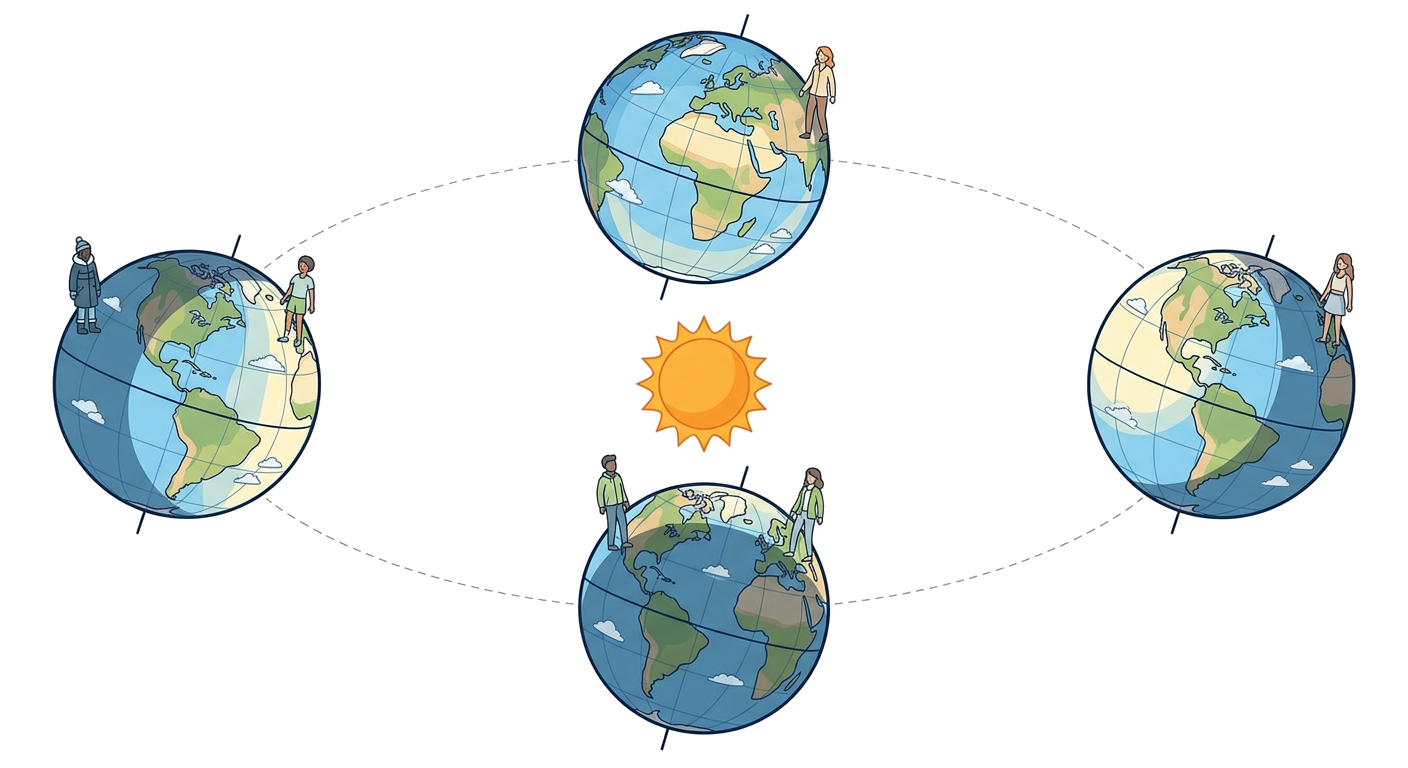
To confuse people about what time it is.
To save energy by extending daylight into the evening.
To make the days shorter in the summer.
To synchronize clocks with the moon phases.
2. When do most regions that observe Daylight Saving Time 'spring forward'?
First Sunday in October
Last Sunday in November
Second Sunday in March
First Sunday in January
3. Daylight Saving Time typically begins in the and ends in the .
4. The tilt of the Earth's axis is responsible for the changing throughout the year.
5. Explain how Daylight Saving Time aims to conserve energy.
6. All countries around the world observe Daylight Saving Time.
True
False
7. When observing Daylight Saving Time, we move our clocks back one hour in the spring.
True
False
Match each term with its correct definition.
8. Equinox
a. The longest day of the year
9. Solstice
b. When day and night are of equal length
10. Axial Tilt
c. The reason for seasons
11. Observe the diagram below showing Earth's tilt and revolution around the sun. Explain how this tilt influences the amount of daylight different regions receive throughout the year, leading to the concept of Daylight Saving Time.