Vestigial Structures Worksheet
Explore vestigial structures in organisms, understanding their evolutionary significance and examples.
Includes
Standards
Topics
Vestigial Structures: Traces of the Past
Name:
Date:
Score:
Read each question carefully and answer to the best of your ability. This worksheet will test your knowledge of vestigial structures and their importance in understanding evolution.
1. A vestigial structure is an anatomical feature that has lost its original over time through evolution.
2. The presence of vestigial structures provides evidence for .
3. The human appendix is considered a vestigial structure because it no longer serves a significant role.
4. Whales have tiny pelvic bones that are vestigial structures, remnants from their ancestors.
1. Which of the following is an example of a vestigial structure in humans?
Heart
Brain
Tailbone (coccyx)
Lungs
2. What does the existence of vestigial structures suggest about a species?
The species is poorly adapted to its environment.
The species has recently evolved new functions for these structures.
The species evolved from ancestors who used the structure.
The species is undergoing rapid mutation.
1. Vestigial structures always completely disappear from an organism.
True
False
2. Wisdom teeth in humans are an example of a vestigial structure.
True
False
1. Explain how vestigial structures provide evidence for evolution.
2. Give an example of a vestigial structure in an animal (other than humans) and describe its ancestral function.
Consider the image of a whale skeleton below.
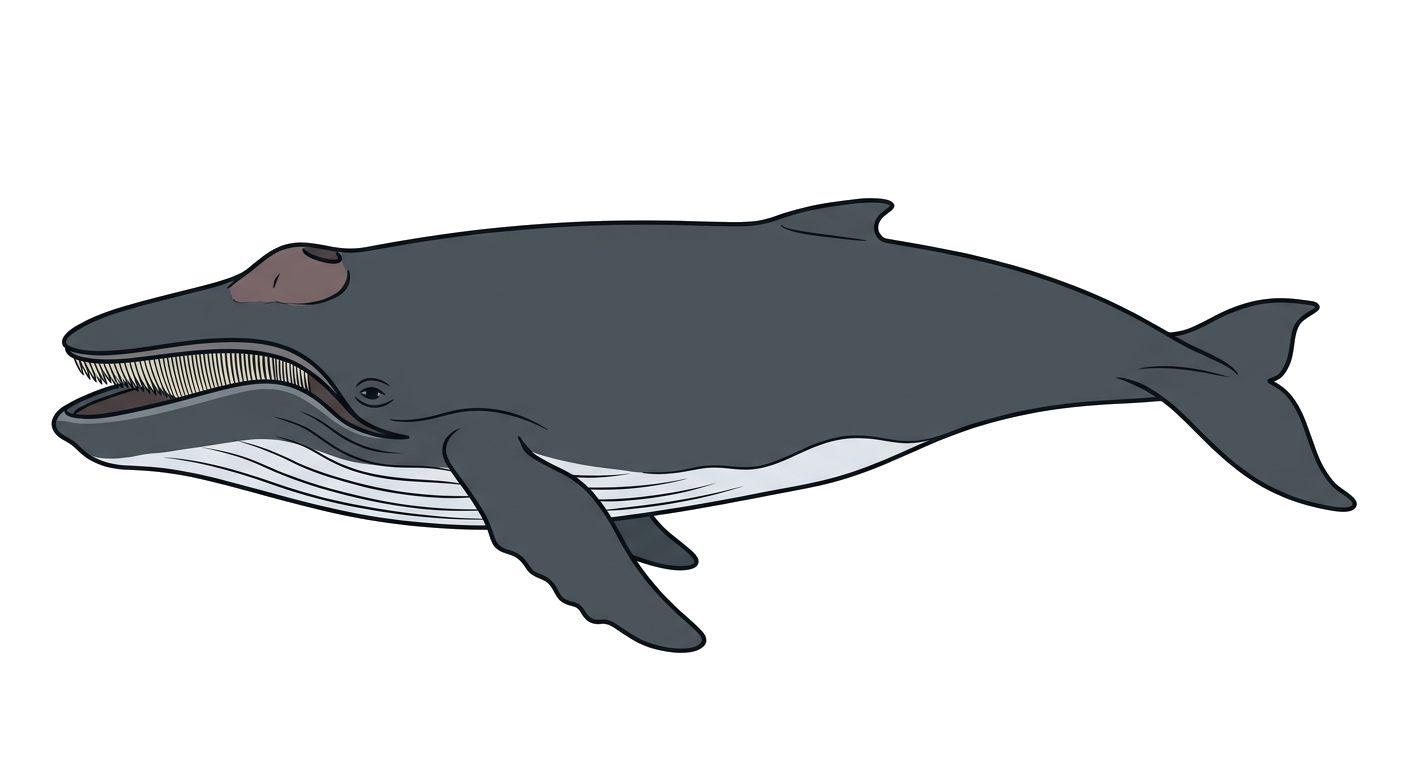
3. Locate the small, seemingly useless bones near the tail end of the whale skeleton. What are these bones, and what do they suggest about the whale's evolutionary past?
Related Worksheets
Muscles of the Leg Worksheet
A Grade 7 science worksheet focusing on the major muscles of the human leg, their functions, and identification.
Six Kingdoms of Life Worksheet
Explore the characteristics and classification of the six kingdoms of life with this engaging worksheet for Grade 7 science students.
Six Kingdoms of Life Worksheet
Explore the characteristics and classification of the six kingdoms of life with this engaging worksheet for Grade 7 science students.
Human Decomposition: The Science of Decay
Explore the stages of human decomposition, the factors that influence it, and the roles of scavengers and microorganisms in this Grade 7 Science worksheet.
Feedback Loops in Science
Explore the concepts of positive and negative feedback loops in biological and environmental systems.
Humerus Bone Worksheet
Explore the anatomy and function of the humerus bone with this Grade 7 science worksheet.
Invertebrate Animals Worksheet
Explore the fascinating world of invertebrate animals with this worksheet, covering their characteristics, classifications, and examples.
Frog Dissection Worksheet
A worksheet covering the external and internal anatomy of a frog for grade 7 science students.