Artificial Selection: Shaping Life
Explore the principles and impacts of artificial selection with this comprehensive worksheet for Grade 8 science students.
Includes
Standards
Topics
Artificial Selection: Shaping Life
Name:
Date:
Score:
Read each question carefully and answer to the best of your ability. Use complete sentences for short answer questions.
1. What is the primary characteristic that distinguishes artificial selection from natural selection?
Artificial selection occurs randomly.
Artificial selection is driven by human intervention.
Artificial selection always leads to stronger organisms.
Artificial selection only happens in plants.
2. Which of the following is an example of artificial selection?
Bacteria developing resistance to antibiotics.
Finches on the Galapagos Islands adapting to different food sources.
Farmers breeding cows for increased milk production.
Polar bears evolving thick fur in cold climates.
1. Artificial selection has been used by humans for thousands of years.
True
False
2. All traits selected through artificial selection are beneficial to the organism in a natural environment.
True
False
1. Artificial selection is also known as .
2. Humans choose organisms with desirable to breed.
3. The vast diversity of dog breeds is a prime example of .
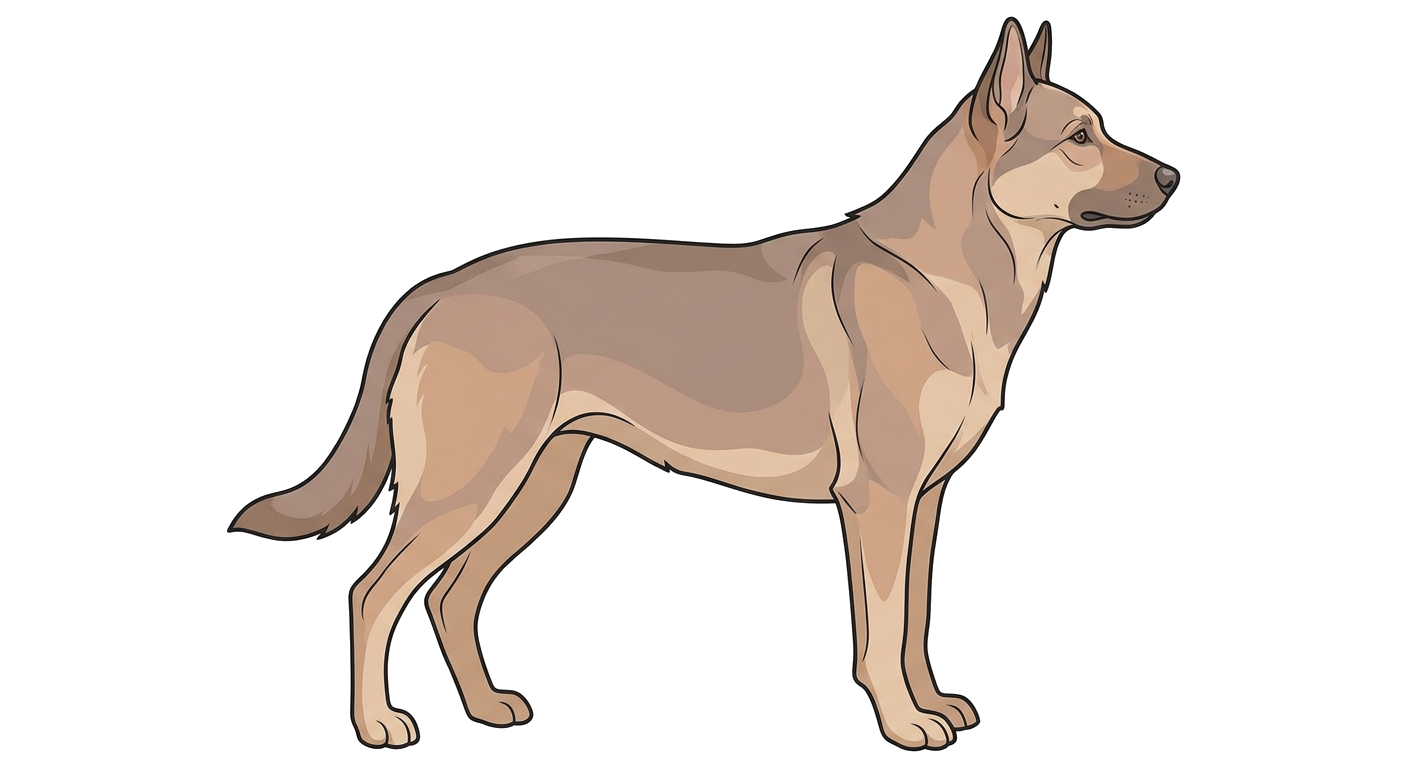
1. Explain how artificial selection has led to the wide variety of dog breeds we see today. Use the image below to help you answer.
2. Describe one potential negative consequence of artificial selection.
Match the term on the left with its definition on the right.
1. Artificial Selection
a. The process by which organisms better adapted to their environment tend to survive and produce more offspring.
2. Natural Selection
b. The intentional breeding of plants and animals by humans to produce desirable traits.
3. Trait
c. A distinguishing quality or characteristic, typically one belonging to a person.
Related Worksheets
The Human Reproductive System
Explore the structures and functions of the male and female reproductive systems, including key hormones and processes.
Grade 8 Fungi Worksheet
Explore the fascinating world of fungi with this Grade 8 science worksheet covering their characteristics, reproduction, and ecological roles.
Interactions in an Ecosystem
Explore the complex relationships and interactions within ecosystems, including food webs, energy flow, and symbiotic relationships, for Grade 8 Science.
Immune System Basics
An introductory worksheet on the human immune system for 8th-grade science students.
Grade 8 Science: The Human Eye
Explore the anatomy and function of the human eye, including its parts, how vision works, and common eye conditions.
Ecological Relationships Worksheet
Explore ecological relationships including predation, competition, mutualism, commensalism, and parasitism with this Grade 8 Science worksheet.
Grade 8 Taxonomy Worksheet
Explore the principles of biological classification with this Grade 8 Science worksheet on Taxonomy, covering hierarchical ranks, binomial nomenclature, and the characteristics of different kingdoms.
Energy Flow in Ecosystems
Explore the concepts of energy flow, food chains, food webs, and ecological pyramids in ecosystems.