Feedback Loops in Science
Explore the concepts of positive and negative feedback loops and their roles in biological and environmental systems.
Includes
Standards
Topics
Feedback Loops in Science
Name:
Date:
Score:
Read each question carefully and answer to the best of your ability. For multiple-choice questions, select the best option. For short answer, write your responses in the space provided.
1. Which type of feedback loop works to maintain stability and bring a system back to its set point?
Positive feedback loop
Negative feedback loop
Neutral feedback loop
Open feedback loop
2. An example of a positive feedback loop in the human body is:
Regulation of body temperature
Blood sugar regulation
Blood clotting
Maintaining blood pressure
3. A feedback loop where the output of a system causes a decrease in the input is called a feedback loop.
4. The process of shivering when you are cold is an example of a feedback loop in the human body.
5. Positive feedback loops always lead to a stable equilibrium.
True
False
6. The melting of Arctic ice, leading to more absorption of sunlight and further warming, is an example of a negative feedback loop.
True
False
7. Describe the main difference between a positive and a negative feedback loop. Provide an example for each.
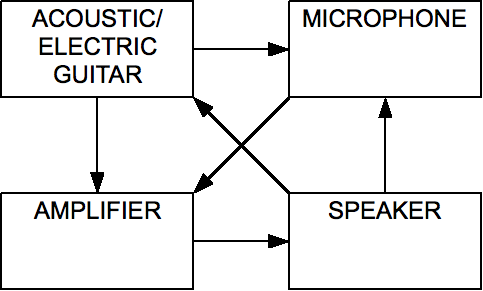
8. Observe the diagram below, which illustrates a general feedback loop. Identify the components labeled 'Input', 'Output', and 'Feedback'.
Input:
Output:
Feedback: