Feedback Loops in Science
Explore the concepts of positive and negative feedback loops and their roles in biological and environmental systems.
Includes
Standards
Topics
Feedback Loops in Science
Name:
Date:
Score:
Read each question carefully and answer to the best of your ability. For multiple-choice questions, select the best option. For short answer, write your responses in the space provided.
1. Which type of feedback loop works to maintain stability and bring a system back to its set point?
Positive feedback loop
Negative feedback loop
Neutral feedback loop
Open feedback loop
2. An example of a positive feedback loop in the human body is:
Regulation of body temperature
Blood sugar regulation
Blood clotting
Maintaining blood pressure
3. A feedback loop where the output of a system causes a decrease in the input is called a feedback loop.
4. The process of shivering when you are cold is an example of a feedback loop in the human body.
5. Positive feedback loops always lead to a stable equilibrium.
True
False
6. The melting of Arctic ice, leading to more absorption of sunlight and further warming, is an example of a negative feedback loop.
True
False
7. Describe the main difference between a positive and a negative feedback loop. Provide an example for each.
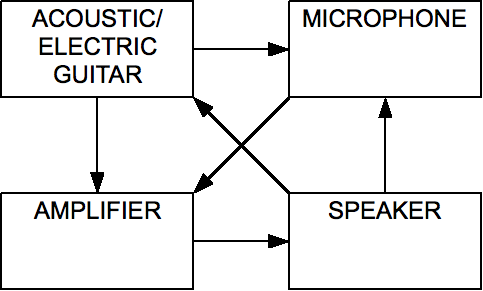
8. Observe the diagram below, which illustrates a general feedback loop. Identify the components labeled 'Input', 'Output', and 'Feedback'.
Input:
Output:
Feedback:
Related Worksheets
The Human Reproductive System
Explore the structures and functions of the male and female reproductive systems, including key hormones and processes.
Grade 8 Fungi Worksheet
Explore the fascinating world of fungi with this Grade 8 science worksheet covering their characteristics, reproduction, and ecological roles.
Interactions in an Ecosystem
Explore the complex relationships and interactions within ecosystems, including food webs, energy flow, and symbiotic relationships, for Grade 8 Science.
Immune System Basics
An introductory worksheet on the human immune system for 8th-grade science students.
Grade 8 Science: The Human Eye
Explore the anatomy and function of the human eye, including its parts, how vision works, and common eye conditions.
Ecological Relationships Worksheet
Explore ecological relationships including predation, competition, mutualism, commensalism, and parasitism with this Grade 8 Science worksheet.
Grade 8 Taxonomy Worksheet
Explore the principles of biological classification with this Grade 8 Science worksheet on Taxonomy, covering hierarchical ranks, binomial nomenclature, and the characteristics of different kingdoms.
Energy Flow in Ecosystems
Explore the concepts of energy flow, food chains, food webs, and ecological pyramids in ecosystems.