Ionic and Covalent Compounds Worksheet
Explore the fundamental differences between ionic and covalent compounds, including their formation, properties, and examples.
Includes
Standards
Topics
Ionic and Covalent Compounds
Name:
Date:
Score:
Read each question carefully and answer to the best of your ability. Use the provided space for your responses.
1. Which type of bond involves the transfer of electrons between atoms?
Covalent bond
Ionic bond
Metallic bond
Hydrogen bond
2. Which of the following compounds is formed by sharing electrons?
NaCl (Sodium Chloride)
H₂O (Water)
MgO (Magnesium Oxide)
KCl (Potassium Chloride)
3. Ionic bonds typically form between a metal and a .
4. Covalent bonds typically form between two .
5. In an ionic bond, one atom loses electrons to become a positive ion, called a , and another atom gains electrons to become a negative ion, called an .
6. Ionic compounds generally have high melting and boiling points.
True
False
7. Covalent compounds are good conductors of electricity in their solid state.
True
False
8. Describe the main difference between how ionic bonds and covalent bonds are formed.
9. Provide an example of an ionic compound and a covalent compound, and explain why each is classified that way.
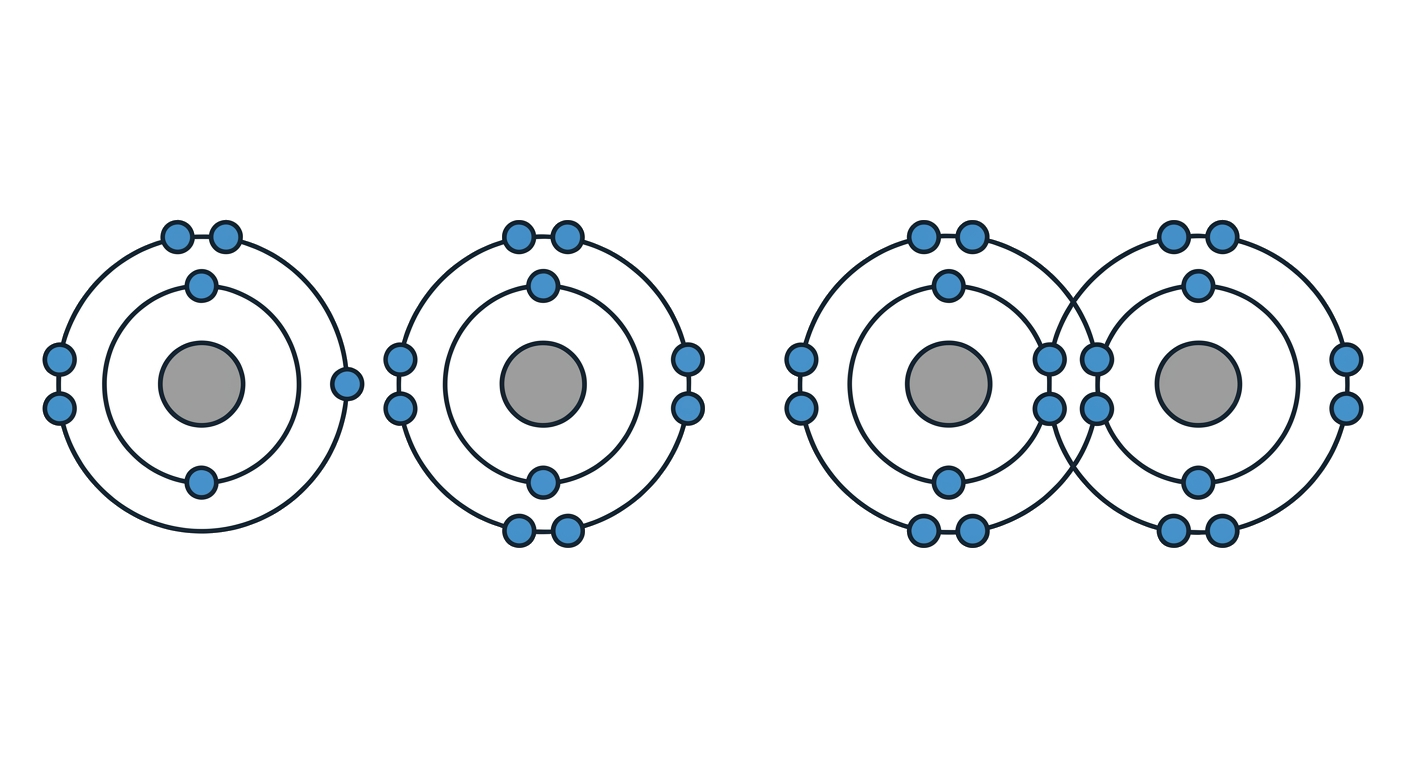
Observe the diagrams below showing bond formation. Identify whether each represents an ionic or covalent bond.
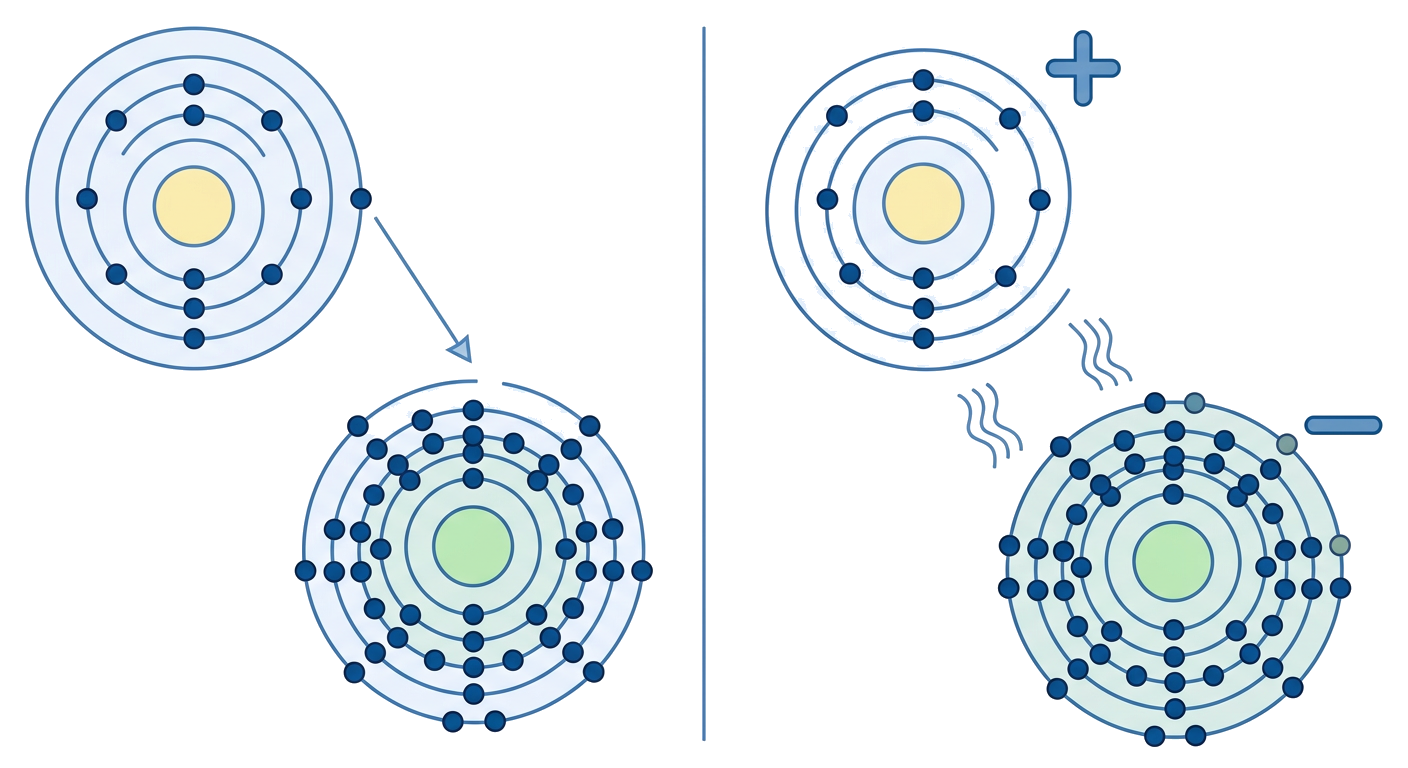
10. The first diagram shows a(n) bond.
11. The second diagram shows a(n) bond.