Law of Conservation of Mass Worksheet
Explore the Law of Conservation of Mass through various exercises, including multiple choice, true/false, fill-in-the-blanks, and short answer questions.
Includes
Standards
Topics
Law of Conservation of Mass
Name:
Date:
Score:
Read each question carefully and answer to the best of your ability.
1. The Law of Conservation of Mass states that mass cannot be created or destroyed during a chemical reaction. What does this mean for the total mass of reactants and products?
The total mass of products is always greater than the total mass of reactants.
The total mass of reactants is always greater than the total mass of products.
The total mass of reactants equals the total mass of products.
Mass is always lost during a chemical reaction.
2. If 10 grams of hydrogen react completely with 80 grams of oxygen to form water, what is the total mass of water produced?
10 grams
80 grams
90 grams
70 grams
1. The Law of Conservation of Mass applies to both physical and chemical changes.
True
False
2. When wood burns, the total mass of the ashes is equal to the original mass of the wood.
True
False
1. In a closed system, the total mass of the before a chemical reaction must equal the total mass of the after the reaction.
2. Antoine Lavoisier is often credited with formally stating the Law of of Mass.
1. Explain why the mass of an ice cube is the same as the mass of the water it melts into, according to the Law of Conservation of Mass.
2. Describe an experiment that could demonstrate the Law of Conservation of Mass.
Observe the illustration below. Imagine the scales are perfectly balanced with reactants on one side and products on the other after a chemical reaction.
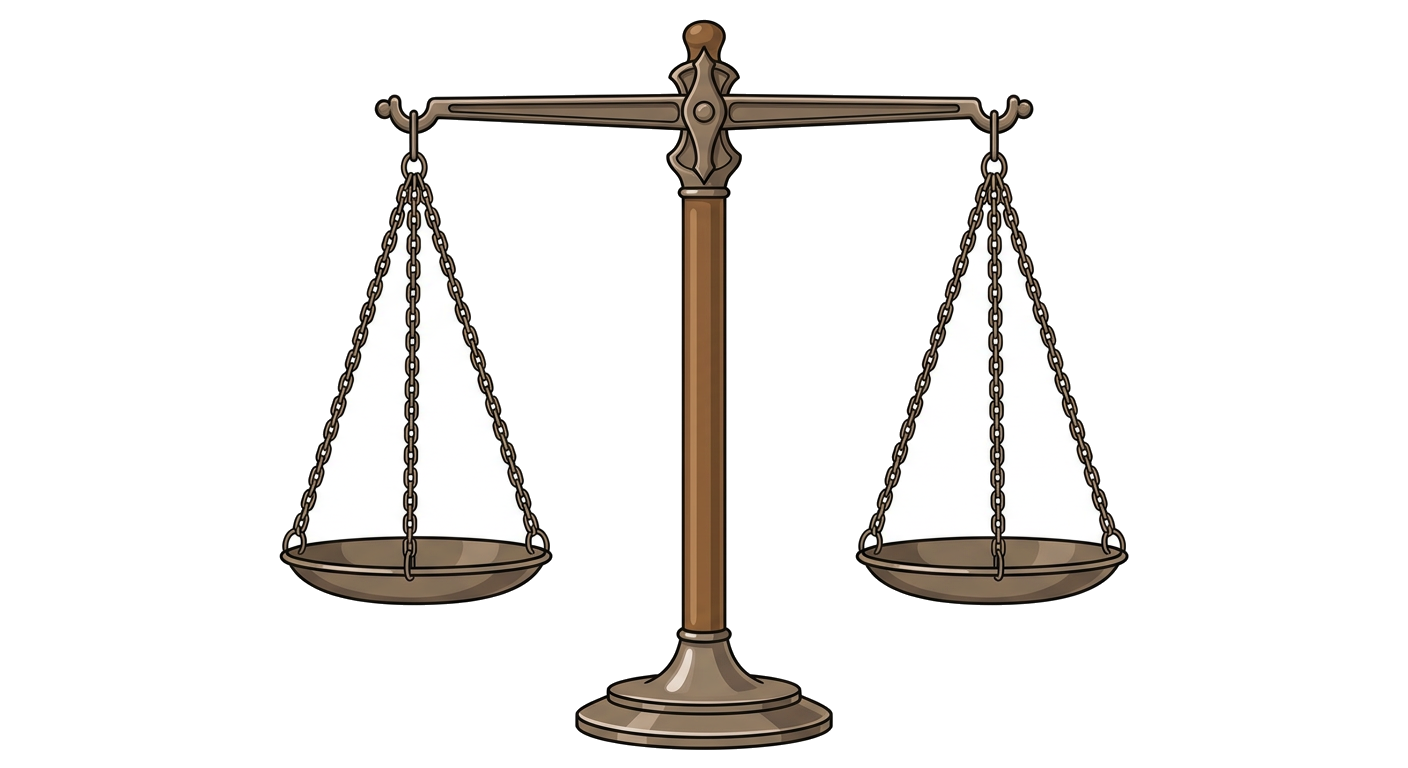
What does this illustration imply about the mass of the reactants compared to the mass of the products in a chemical reaction, according to the Law of Conservation of Mass?