Grade 9 Science: Active Transport
This worksheet covers key concepts related to active transport, including its definition, mechanisms, and importance in biological systems.
Includes
Standards
Topics
Active Transport Worksheet
Name:
Date:
Score:
Read each question carefully and answer to the best of your ability. This worksheet will assess your understanding of active transport in cells.
1. Which of the following best describes active transport?
Movement of substances down their concentration gradient without energy.
Movement of water across a semi-permeable membrane.
Movement of substances against their concentration gradient using energy.
Movement of substances through protein channels without energy.
2. What is the primary energy source for active transport?
Sunlight
Glucose
ATP
Oxygen
3. Active transport requires to move substances from an area of lower concentration to an area of higher concentration.
4. The protein structures embedded in the cell membrane that facilitate active transport are called .
5. Active transport can move substances both into and out of a cell.
True
False
6. Facilitated diffusion is a type of active transport.
True
False
7. Briefly explain why cells need active transport.
8. Describe one real-world example of active transport in a living organism.
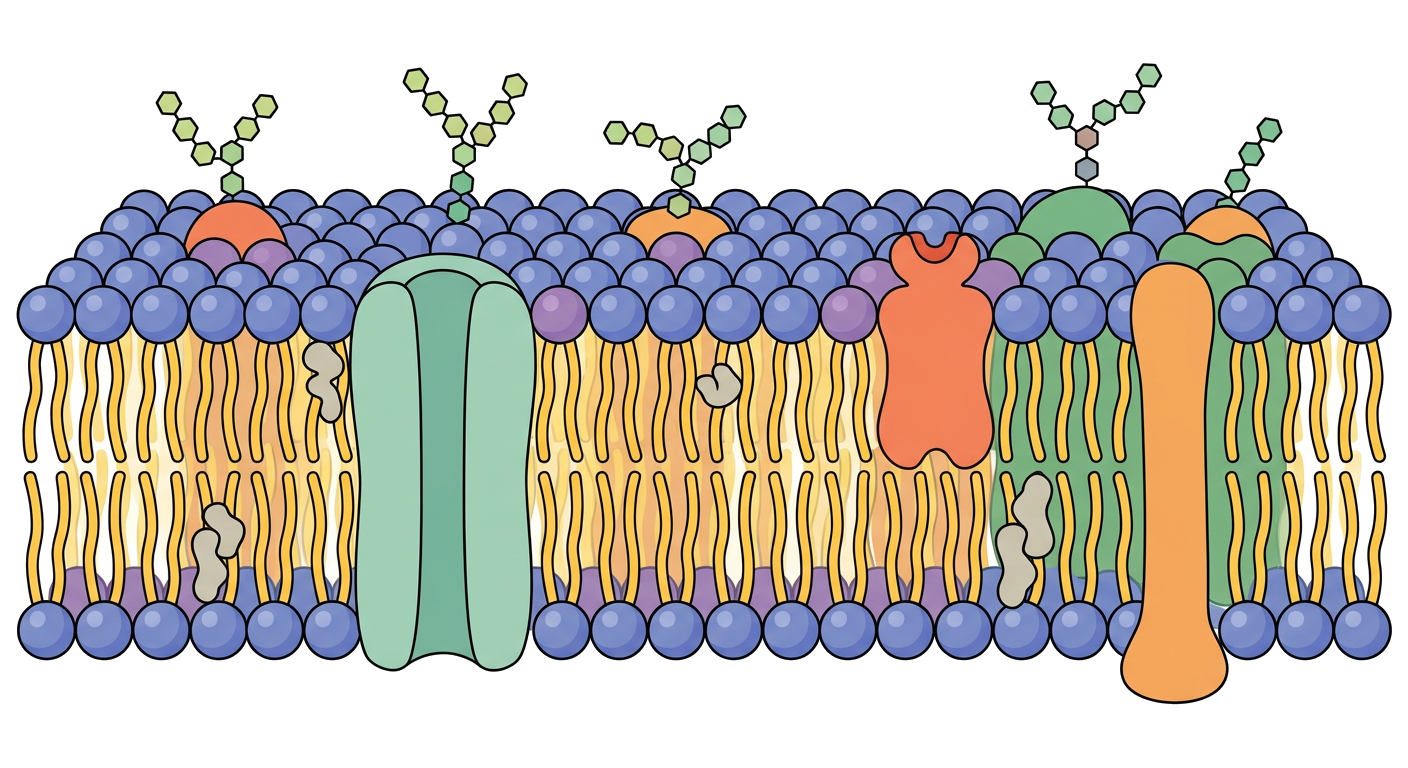
9. Observe the diagram of a cell membrane below, illustrating active transport. Label the following components: ATP, Carrier Protein, Substance being transported, and Low Concentration Area.