Central Dogma of Molecular Biology
Explore the fundamental processes of the Central Dogma, including replication, transcription, and translation, for Grade 9 science students.
Includes
Standards
Topics
Central Dogma of Molecular Biology
Name:
Date:
Score:
Read each question carefully and provide the best answer based on your understanding of the Central Dogma of Molecular Biology.
1. What is the main purpose of the Central Dogma of Molecular Biology?
To explain how energy is produced in cells.
To describe the flow of genetic information from DNA to RNA to protein.
To illustrate the process of cell division.
To outline the structure of the cell membrane.
2. Which of the following processes involves the synthesis of an RNA molecule from a DNA template?
Replication
Translation
Transcription
Mutation
1. The process by which DNA makes a copy of itself is called .
2. Proteins are synthesized during the process of .
3. The genetic code is read in groups of three nucleotides called .
1. Describe the role of mRNA in protein synthesis.
2. Explain the difference between transcription and translation.
Match each term on the left with its correct definition on the right.
1. DNA
a. The process of synthesizing RNA from DNA
2. RNA
b. The process of synthesizing proteins from RNA
3. Transcription
c. A double-stranded nucleic acid that carries genetic information
4. Translation
d. A single-stranded nucleic acid involved in protein synthesis
Observe the diagram of a DNA double helix below and answer the questions.
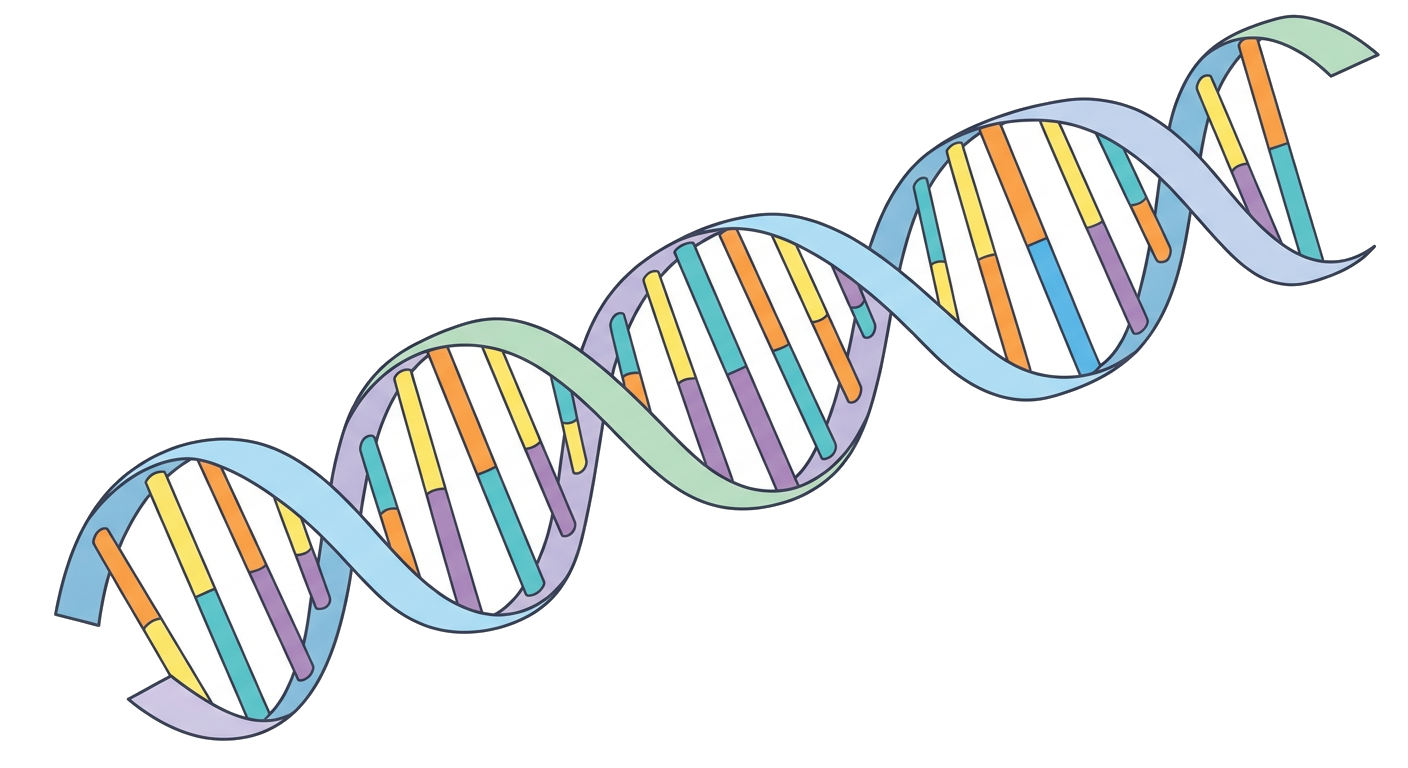
1. What are the repeating units that make up the DNA molecule shown?
2. What type of bond holds the two strands of the DNA double helix together?
Examine the diagram of a ribosome and identify its primary function.
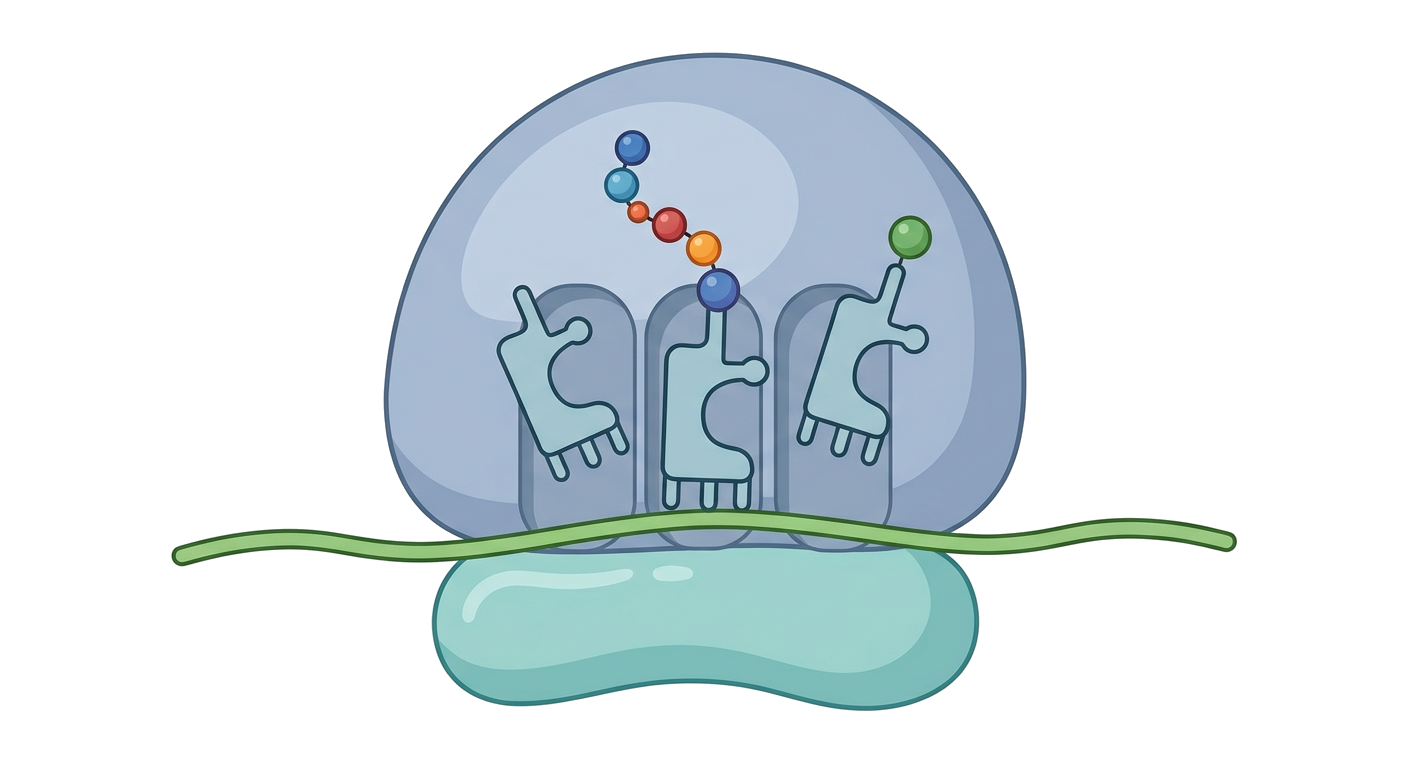
1. What is the main function of the ribosome in the Central Dogma?