Prokaryotes and Eukaryotes
Explore the fundamental differences and similarities between prokaryotic and eukaryotic cells with this comprehensive worksheet.
Includes
Standards
Topics
Prokaryotes and Eukaryotes
Name:
Date:
Score:
Read each question carefully and answer to the best of your ability. This worksheet covers the characteristics and differences between prokaryotic and eukaryotic cells.
1. Which of the following is a key distinguishing feature of eukaryotic cells?
Absence of a nucleus
Presence of membrane-bound organelles
Smaller cell size
Circular DNA
2. Bacteria are examples of which type of cell?
Eukaryotic
Prokaryotic
Animal
Plant
3. The genetic material in a prokaryotic cell is found in a region called the .
4. Eukaryotic cells are generally (larger/smaller) than prokaryotic cells.
5. The process by which prokaryotic cells reproduce is called .
6. All prokaryotic cells have a cell wall.
True
False
7. Ribosomes are present in both prokaryotic and eukaryotic cells.
True
False
8. Briefly explain the endosymbiotic theory and its relevance to eukaryotic cells.
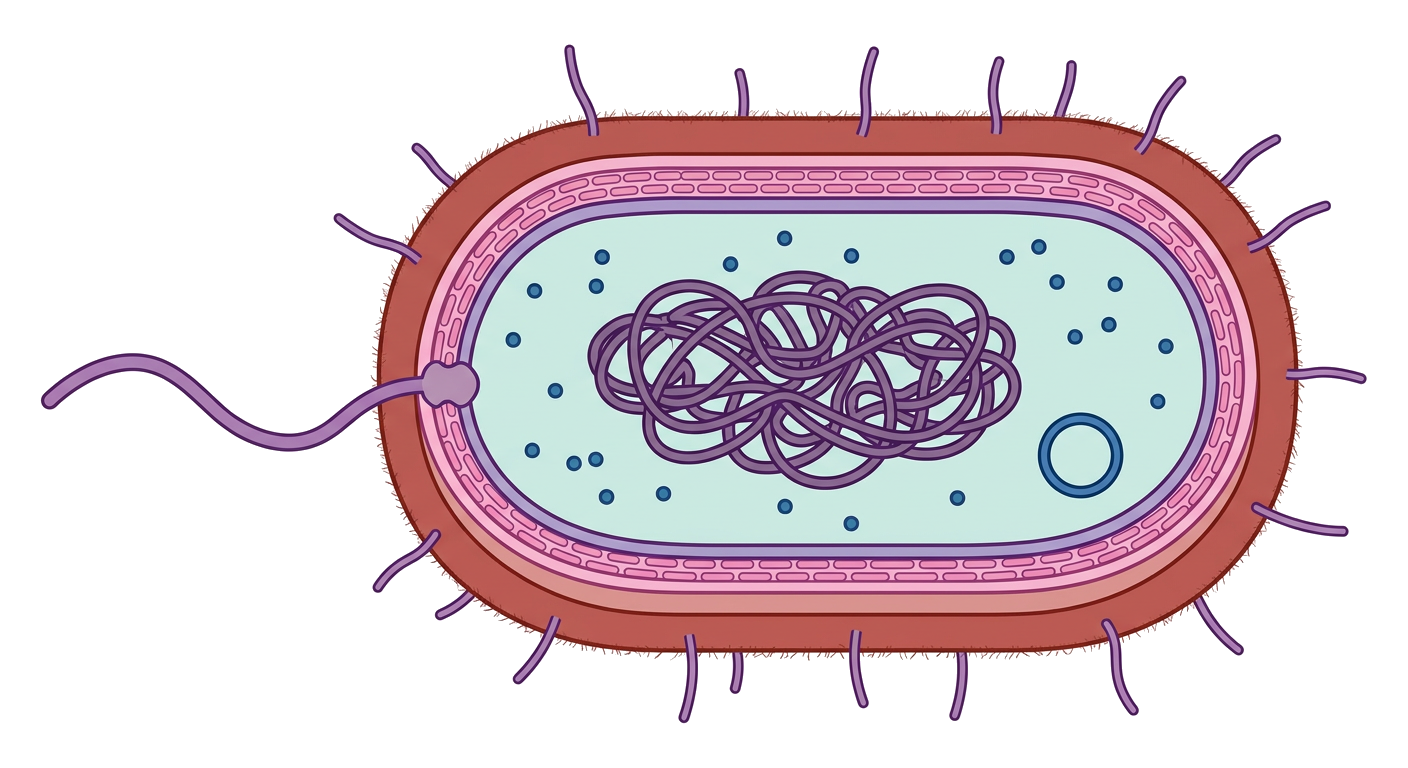
9. Observe the image of the bacterial cell below. What type of cell is it, and what are two structures visible that are characteristic of this cell type?
Match each term with its correct description.
10. Nucleoid
a. Contains DNA in prokaryotes
11. Mitochondria
b. Site of cellular respiration in eukaryotes
12. Plasmid
c. Small, circular DNA in prokaryotes
Related Worksheets
Chemistry of Life Worksheet
Explore the fundamental chemical building blocks of life with this Grade 9 science worksheet on the Chemistry of Life, covering macromolecules, enzymes, and nucleic acids.
Radioactivity and Wildlife Worksheet
Explore the effects of radioactivity on wildlife and ecosystems with this Grade 9 science worksheet, covering radiation types, exposure, and environmental impact.
Blood Glucose Regulation Worksheet
A Grade 9 Science worksheet focusing on the mechanisms of blood glucose regulation, including the roles of insulin and glucagon, and the organs involved.
Biological Molecules Worksheet
Explore the four major classes of biological molecules: carbohydrates, lipids, proteins, and nucleic acids, and their roles in living organisms.
Enzyme Activity Worksheet
Explore the factors affecting enzyme activity, including temperature, pH, and substrate concentration, with this Grade 9 science worksheet.
Human Skull Anatomy Worksheet
A Grade 9 science worksheet on the anatomy and functions of the human skull, covering its bones, protective role, and key features.
Glucose Regulation Worksheet
A Grade 9 Science worksheet focusing on the biological processes of glucose regulation, including the roles of insulin, glucagon, and the pancreas.
Fermentation Fundamentals
Explore the basic principles of fermentation, including its types, processes, and applications in this Grade 9 science worksheet.