Viruses and Bacteria: Grade 9 Science
Explore the fundamental differences and similarities between viruses and bacteria, their structures, modes of reproduction, and impact on living organisms.
Includes
Standards
Topics
Viruses and Bacteria
Name:
Date:
Score:
Read each question carefully and answer to the best of your ability. Use the provided diagrams to help you understand the structures of viruses and bacteria.
1. Which of the following is NOT a characteristic of a virus?
Contains genetic material (DNA or RNA)
Has a protein coat (capsid)
Can reproduce independently
Requires a host cell to replicate
2. Bacteria are classified as:
Eukaryotes
Prokaryotes
Multicellular organisms
Parasites only
1. All bacteria are harmful to humans.
True
False
2. Viruses are considered living organisms because they can reproduce.
True
False
1. Viruses are obligate intracellular , meaning they must infect a host cell to replicate.
2. The process by which bacteria reproduce asexually is called .
Match each term with its correct definition.
1. Capsid
a. Genetic material of a virus
2. Plasmid
b. Circular DNA molecule in bacteria
3. Viral Envelope
c. Protein coat of a virus
1. Describe two key differences between the structure of a typical virus and a bacterium.
2. Explain why antibiotics are effective against bacterial infections but not viral infections.
Examine the diagrams below and answer the questions.
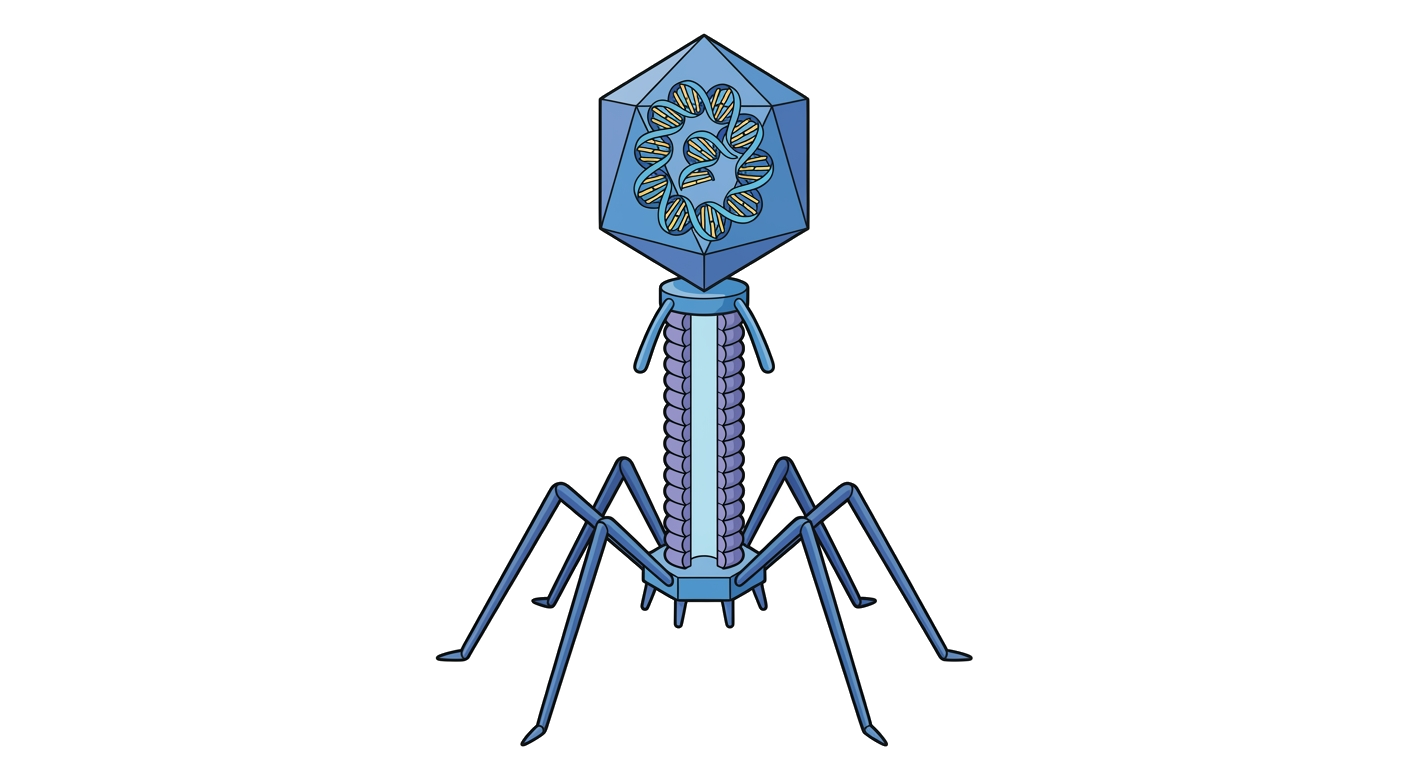
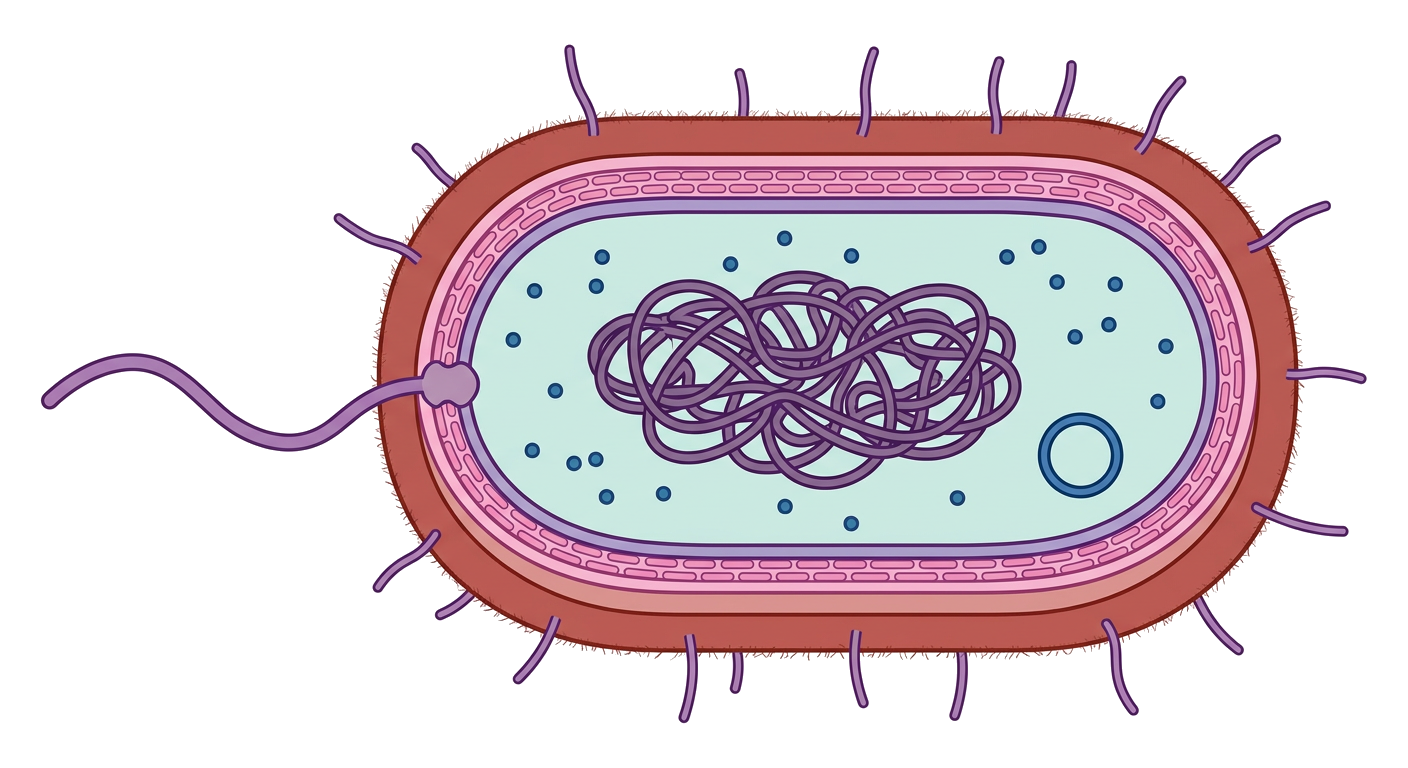
1. Identify the labeled structures in the bacteriophage diagram that are also found in the bacterial cell.
2. Which of these organisms is capable of independent metabolism and reproduction? Justify your answer.