Introduction to Viruses
Explore the basic structure, reproduction, and impact of viruses on living organisms at a Grade 9 level.
Includes
Standards
Topics
Introduction to Viruses
Name:
Date:
Score:
Read each question carefully and answer to the best of your knowledge. This worksheet will assess your understanding of basic viral structure, function, and impact.
1. Which of the following is NOT a characteristic of viruses?
Contain genetic material (DNA or RNA)
Are obligate intracellular parasites
Are composed of cells
Have a protein coat (capsid)
2. What is the primary function of the capsid in a virus?
Energy production
Protecting the genetic material
Cellular respiration
Waste excretion
1. Viruses are considered because they can only reproduce inside a host cell.
2. The genetic material of a virus can be either DNA or .
3. A virus that infects bacteria is called a .
1. Briefly explain the lytic cycle of viral reproduction. What is the outcome for the host cell?
2. Look at the image of the bacteriophage below. Label the capsid and the genetic material.
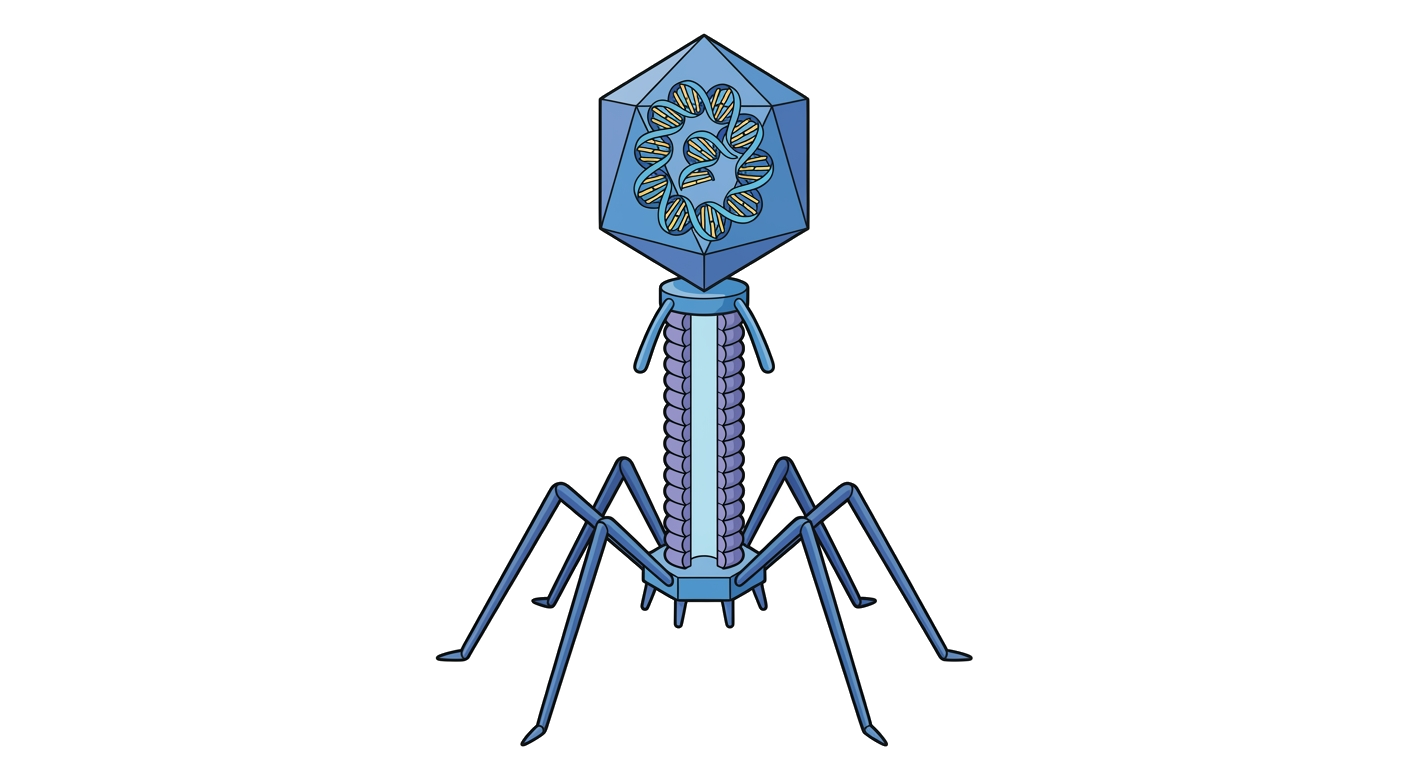
A:
B:
1. All viruses contain both DNA and RNA.
True
False
2. Viruses are capable of independent metabolism.
True
False
Use the words below to complete the sentences.
1. Viruses are often referred to as because they cause disease.
2. The process by which viruses make copies of themselves inside a cell is called .
3. A specific organism that a virus infects is known as its .
4. are used to prevent viral infections by stimulating the immune system.