Chemical Bonding Basics
Explore the fundamental concepts of chemical bonding, including ionic and covalent bonds, their properties, and examples.
Includes
Standards
Topics
Chemical Bonding Basics
Name:
Date:
Score:
Read each question carefully and answer to the best of your ability. Show all your work for calculations.
1. Which type of bond involves the transfer of electrons between atoms?
Covalent bond
Ionic bond
Metallic bond
Hydrogen bond
2. In a covalent bond, electrons are:
Transferred
Shared
Lost
Gained
3. An ionic bond typically forms between a metal and a .
4. The force of attraction between oppositely charged ions is called an bond.
5. Covalent compounds generally have high melting and boiling points.
True
False
6. In an ionic bond, atoms achieve a stable electron configuration by sharing electrons.
True
False
7. Explain the difference between an ionic bond and a covalent bond.
8. Describe how an atom achieves a stable electron configuration by forming chemical bonds.
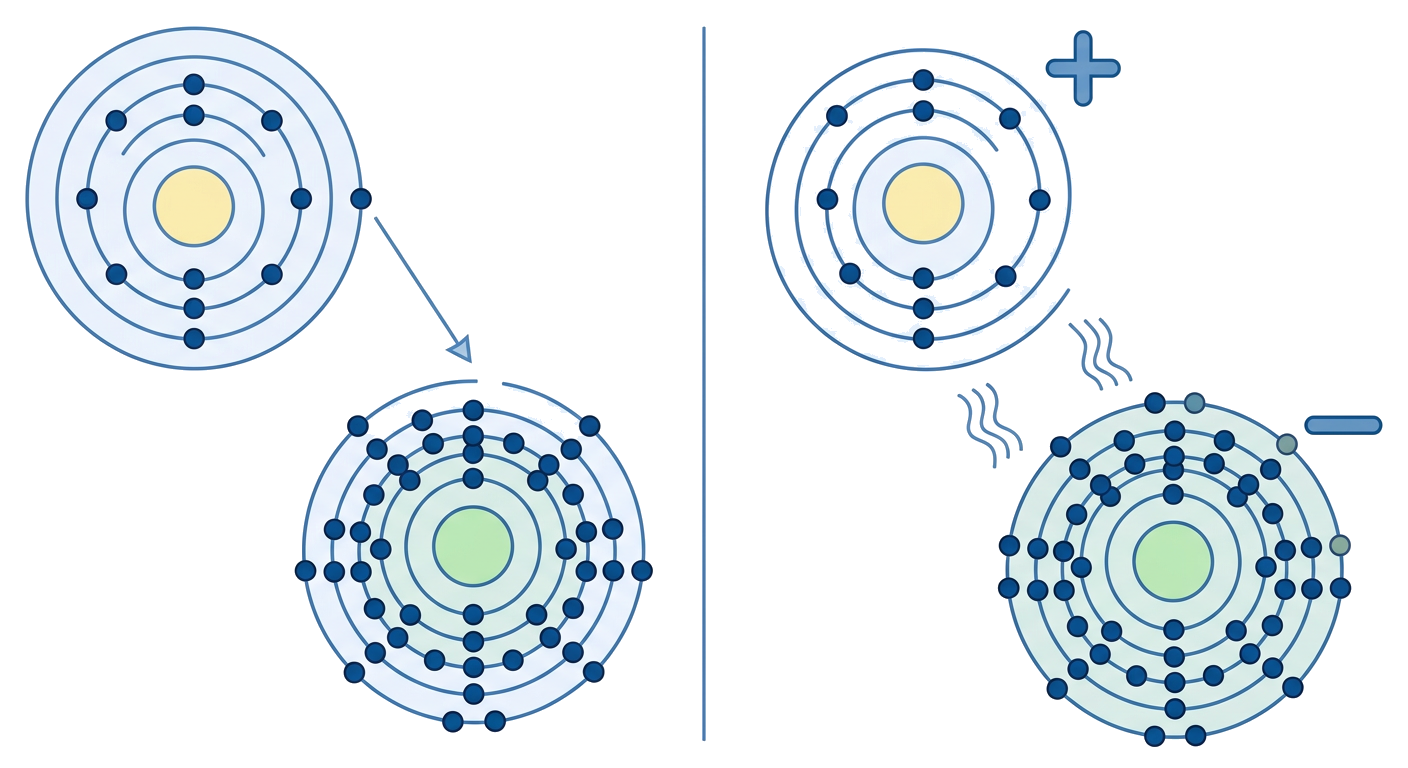
9. Observe the diagram below showing ionic bond formation. Identify the atoms involved and explain what is happening to their electrons.
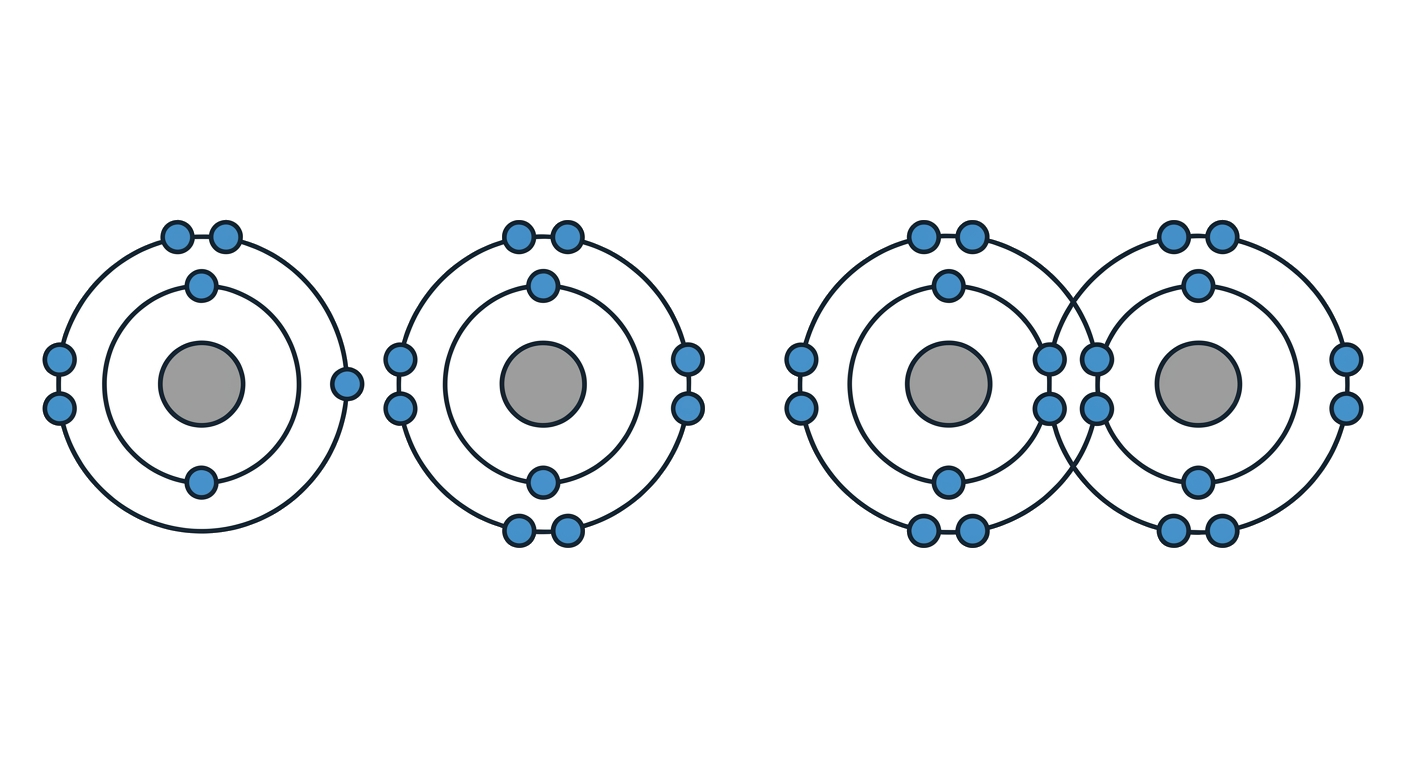
10. Observe the diagram below illustrating covalent bond formation. Identify the atoms involved and explain how they achieve stability.
Related Worksheets
Hydrocarbons Worksheet
A Grade 9 science worksheet covering the basics of hydrocarbons, including their definition, types, and properties.
Grade 9 Chemistry: Word Equations Worksheet
This worksheet focuses on writing and interpreting word equations for chemical reactions, covering reactants, products, and states of matter for Grade 9 Science students.