Chemistry Conversion Factors Worksheet
This worksheet helps grade 9 students practice using conversion factors in chemistry, including unit conversions and dimensional analysis.
Includes
Standards
Chemistry Conversion Factors
Name:
Date:
Score:
Read each question carefully and use dimensional analysis to solve the problems. Show all your work for full credit. Remember to include units in your final answers.
1. A conversion factor is a ratio of equivalent measurements used to convert a quantity from one to another.
2. Dimensional analysis is a problem-solving method that uses factors to move from one unit to another.
3. There are milliliters in 1 liter.
4. The number of significant figures in a conversion factor derived from a definition (e.g., 1 m = 100 cm) is considered .
1. How many seconds are in 3.5 minutes?
35 seconds
60 seconds
210 seconds
350 seconds
2. Which of the following is an example of a conversion factor?
100 g
1 kg / 1000 g
5 moles
25 mL
1. Convert 450 grams to kilograms.
2. A reaction requires 0.75 liters of a solution. How many milliliters is this?
3. The density of a substance is 2.5 g/cm³. What is this density in kg/m³?
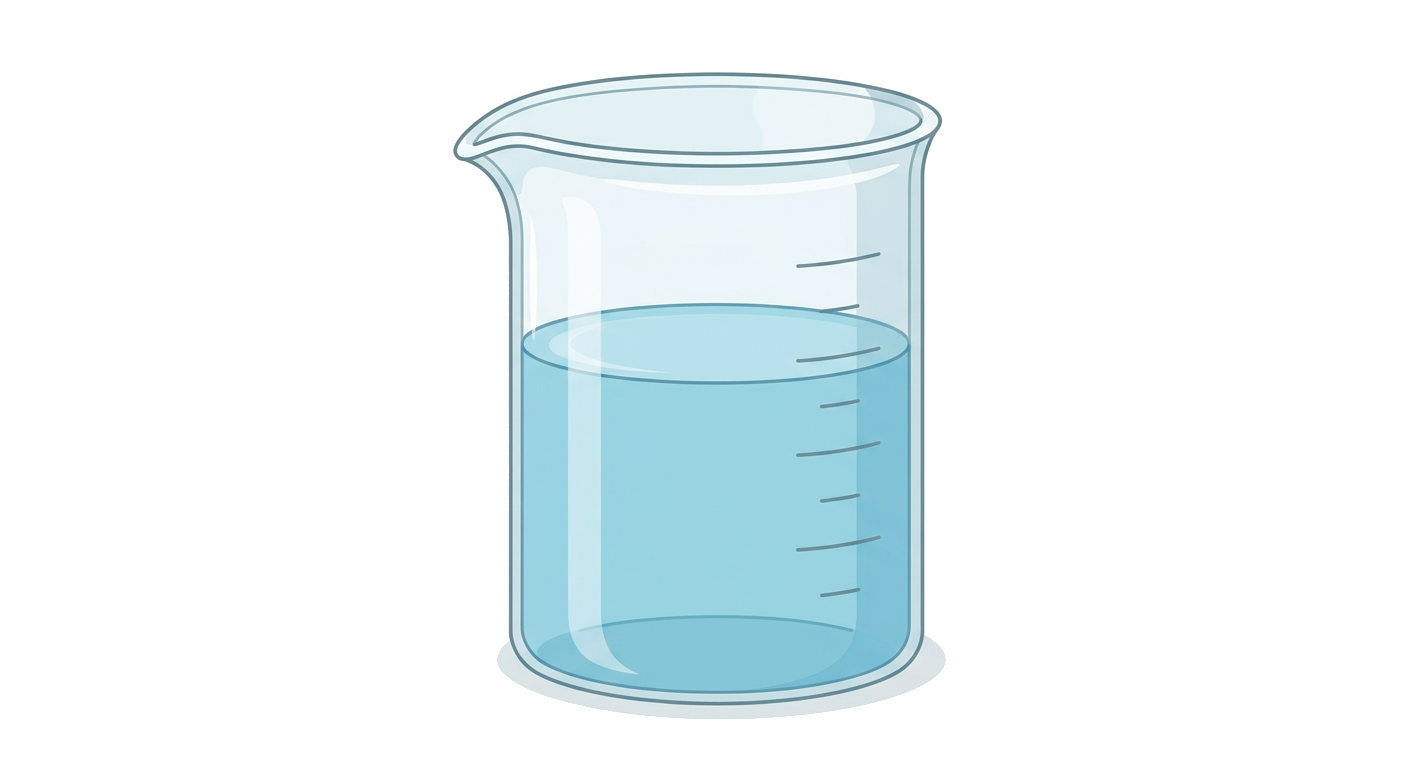
Consider the beaker below containing a liquid. If the volume of the liquid in the beaker is 150 mL, what is this volume in liters?
1. When converting units, the numerical value always changes, but the actual quantity remains the same.
True
False
2. A conversion factor like (12 inches / 1 foot) is considered to have one significant figure.
True
False
Related Worksheets
Single Replacement Reactions
Explore the principles of single replacement reactions in chemistry with this comprehensive worksheet for Grade 9 students.
History of Chemistry Timeline
Explore key discoveries and scientists that shaped the field of chemistry over time.
Hydrocarbons Worksheet
A Grade 9 science worksheet covering the basics of hydrocarbons, including their definition, types, and properties.
Nuclear Changes: Grade 9 Science
Explore the fundamentals of nuclear changes, including radioactivity, nuclear fission, and nuclear fusion, with this comprehensive Grade 9 science worksheet.
Molecular Compound Naming Worksheet
Practice naming molecular compounds using prefixes and suffixes.
Empirical and Molecular Formula Worksheet
Grade 9 Chemistry worksheet focusing on understanding and calculating empirical and molecular formulas.
VSEPR Theory Worksheet
Explore VSEPR theory with this worksheet, covering molecular geometries, electron domains, and bond angles for various molecules.
Acid Base Nomenclature Worksheet
A Grade 9 science worksheet on acid and base nomenclature, covering common acids, bases, and pH concepts.