Ionic and Covalent Bonding Worksheet
Explore the fundamental differences and characteristics of ionic and covalent bonds in this Grade 9 science worksheet.
Includes
Standards
Topics
Ionic and Covalent Bonding
Name:
Date:
Score:
Read each question carefully and provide your best answer. This worksheet assesses your understanding of ionic and covalent bonding.
1. Which type of bond involves the transfer of electrons between atoms?
Covalent bond
Ionic bond
Metallic bond
Hydrogen bond
2. Atoms in a covalent bond typically share electrons to achieve a stable electron configuration. What is this concept called?
Ionization
Electron affinity
Octet rule
Electronegativity
1. Ionic compounds are generally good conductors of electricity in their solid state.
True
False
2. Water (H₂O) is an example of a compound formed by ionic bonding.
True
False
1. An ionic bond typically forms between a metal and a .
2. In a covalent bond, electrons are between atoms.
3. The force of attraction between oppositely charged ions is called an bond.
1. Briefly explain the difference in electron behavior between ionic and covalent bonding.
2. Provide two distinct properties of compounds formed by ionic bonds.
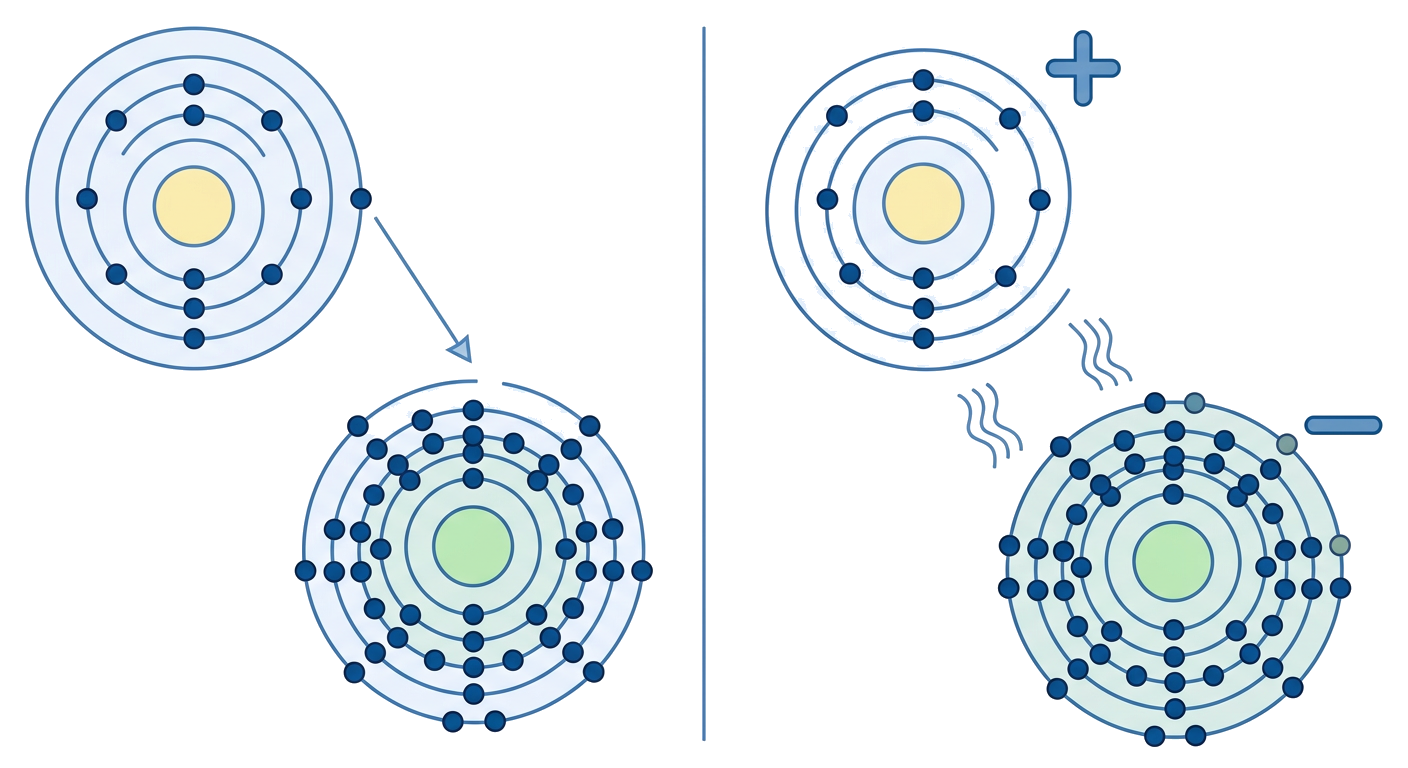
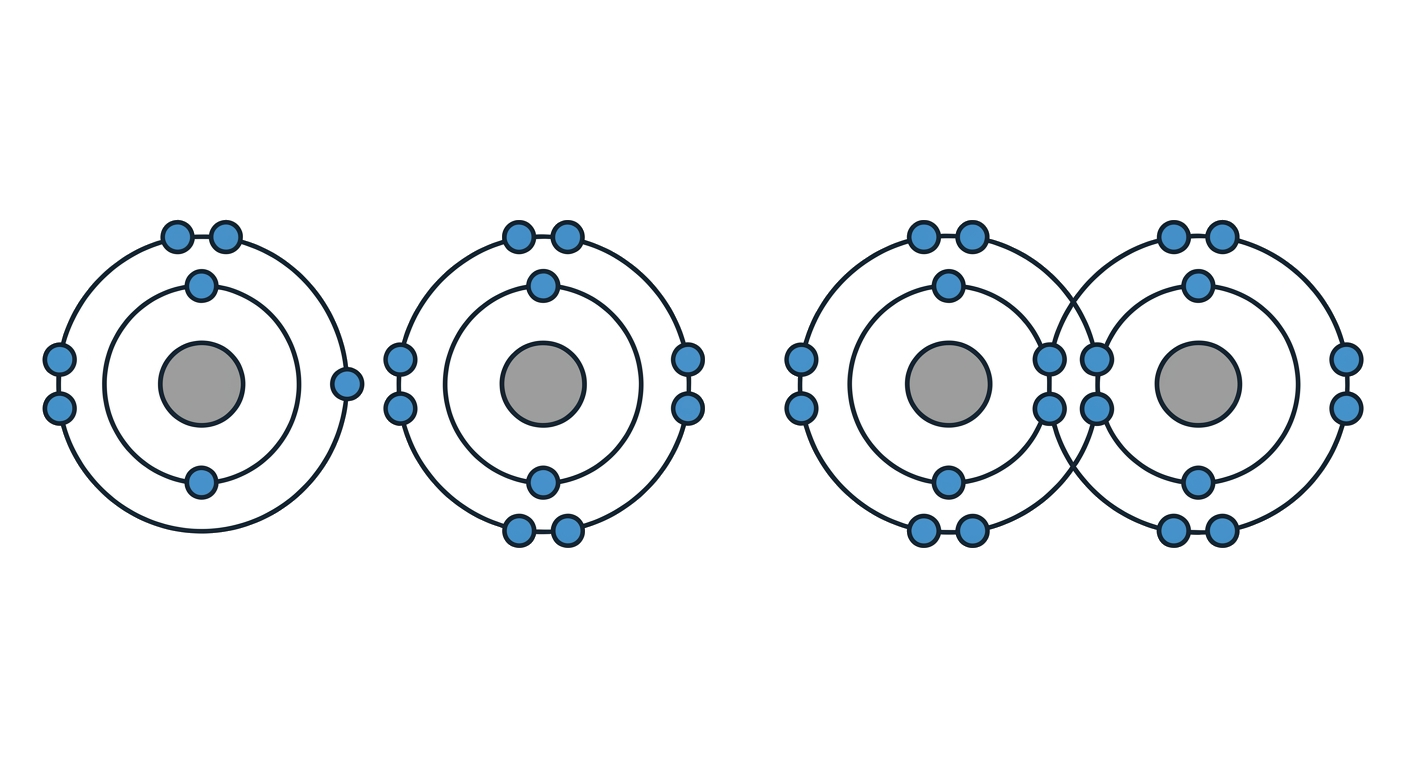
Observe the diagrams below, which illustrate the formation of different types of chemical bonds. Identify each diagram as representing either an ionic bond or a covalent bond.
Related Worksheets
Hydrocarbons Worksheet
A Grade 9 science worksheet covering the basics of hydrocarbons, including their definition, types, and properties.
Grade 9 Chemistry: Word Equations Worksheet
This worksheet focuses on writing and interpreting word equations for chemical reactions, covering reactants, products, and states of matter for Grade 9 Science students.