Naming Covalent Compounds
A Grade 9 science worksheet on naming covalent compounds, including rules, examples, and practice questions.
Includes
Standards
Topics
Naming Covalent Compounds
Name:
Date:
Score:
Read the information and answer the questions that follow. Remember the prefixes used for naming covalent compounds.
Covalent bonds are formed when two nonmetal atoms share electrons to achieve a stable electron configuration. Unlike ionic bonds where electrons are transferred, covalent bonds involve the mutual sharing of electrons. The way we name these compounds follows a specific set of rules.
Prefixes for Covalent Compounds:
1 - mono- 2 - di- 3 - tri- 4 - tetra- 5 - penta- 6 - hexa- 7 - hepta- 8 - octa- 9 - nona- 10 - deca-
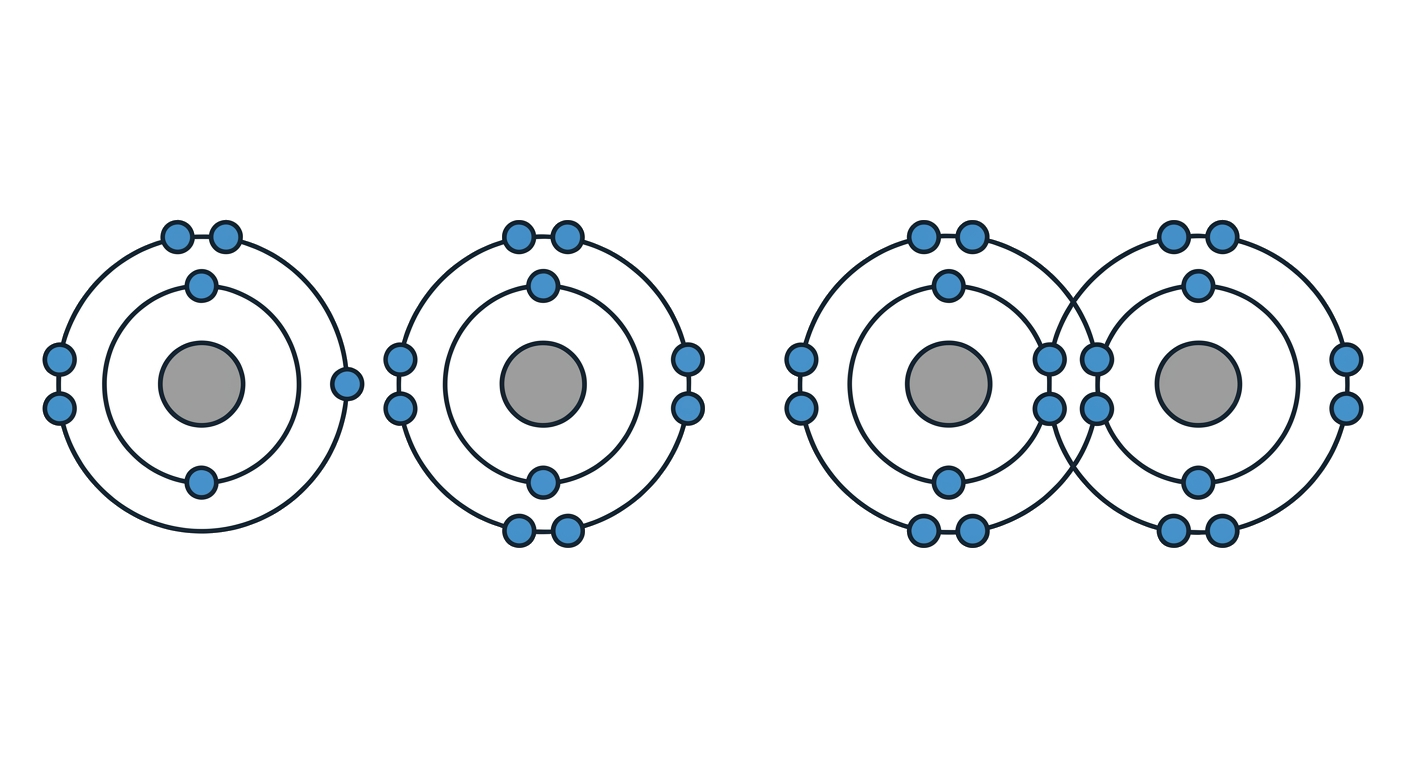
1. Covalent bonds are formed when two atoms electrons.
2. The prefix for two is , and the prefix for five is .
Rules for Naming Binary Covalent Compounds:
1. The first element in the formula is named first using its full element name. 2. The second element is named by taking the root of the element name and adding the suffix -ide. 3. Prefixes are used to indicate the number of atoms of each element. The prefix 'mono-' is usually omitted for the first element. 4. If the prefix ends in 'a' or 'o' and the element name begins with a vowel, the 'a' or 'o' of the prefix is often dropped (e.g., carbon monoxide, not carbon monooxide).
3. What is the main difference between naming ionic and covalent compounds?
4. What is the correct name for the compound N₂O₄?
Dinitrogen tetraoxide
Nitrogen oxide
Dinitrogen oxide
Tetranitrogen dioxide
5. What is the chemical formula for sulfur hexafluoride?
SF₅
S₆F
SF₆
S₅F₆
Match the chemical formula with its correct covalent compound name.
6. CO
a. Carbon dioxide
7. PCl₃
b. Dihydrogen monoxide
8. H₂O
c. Carbon monoxide
9. CCl₄
d. Phosphorus trichloride
10. CO₂
e. Carbon tetrachloride
Give the chemical name for the following formulas:
11. SO₃
12. N₂O₅
Write the chemical formula for the following names:
13. Diphosphorus pentoxide
14. Silicon dioxide
Related Worksheets
Hydrocarbons Worksheet
A Grade 9 science worksheet covering the basics of hydrocarbons, including their definition, types, and properties.
Grade 9 Chemistry: Word Equations Worksheet
This worksheet focuses on writing and interpreting word equations for chemical reactions, covering reactants, products, and states of matter for Grade 9 Science students.