Polarity of Molecules Worksheet
Explore the concepts of polar and nonpolar molecules, electronegativity, and molecular geometry in this Grade 9 science worksheet.
Includes
Standards
Topics
Polarity of Molecules
Name:
Date:
Score:
Read each question carefully and answer to the best of your ability. Show all your work for calculations.
1. The unequal sharing of electrons between two atoms results in a bond.
2. A molecule with a net dipole moment is considered a molecule.
3. is a measure of an atom's ability to attract electrons in a chemical bond.
4. If a molecule has symmetrical geometry and identical terminal atoms, it is likely to be .
1. Which of the following molecules is generally considered nonpolar?
H2O
CO2
NH3
HCl
2. What is the primary factor determining the polarity of a bond?
Atomic mass
Electronegativity difference
Number of valence electrons
Molecular size
1. All molecules containing polar bonds are polar molecules.
True
False
2. Carbon tetrachloride (CCl4) is a polar molecule due to the electronegativity difference between carbon and chlorine.
True
False
1. Explain the difference between a polar covalent bond and a nonpolar covalent bond.
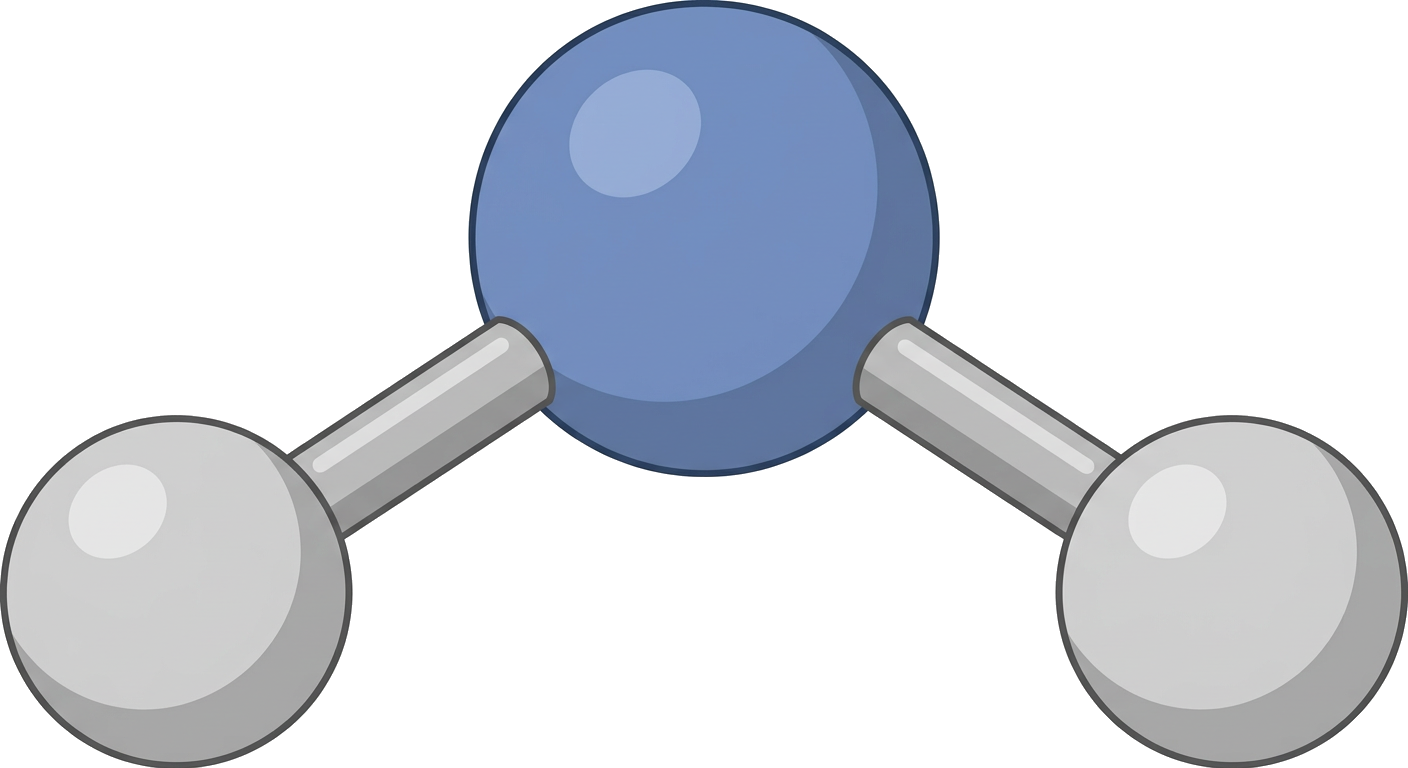
2. Consider the water molecule (H2O) shown below. Explain why it is a polar molecule despite having polar bonds. Refer to its molecular geometry.
Match the molecule type on the left with its characteristic on the right.
1. Polar molecule
a. Symmetrical charge distribution
2. Nonpolar molecule
b. Unequal sharing of electrons leading to a net dipole
3. Electronegativity difference of 0
c. Nonpolar covalent bond
Related Worksheets
Hydrocarbons Worksheet
A Grade 9 science worksheet covering the basics of hydrocarbons, including their definition, types, and properties.
Grade 9 Chemistry: Word Equations Worksheet
This worksheet focuses on writing and interpreting word equations for chemical reactions, covering reactants, products, and states of matter for Grade 9 Science students.