Claim, Evidence, Reasoning (CER) in Science
A Grade 9 science worksheet focusing on developing skills in Claim, Evidence, and Reasoning (CER) for scientific arguments.
Includes
Standards
Topics
Claim, Evidence, Reasoning (CER) in Science
Name:
Date:
Score:
Read each scenario carefully and identify the Claim, Evidence, and Reasoning. Remember: • **Claim:** A statement or conclusion that answers the original question/problem. • **Evidence:** Scientific data that supports the claim. This can be qualitative or quantitative observations. • **Reasoning:** A justification that links the evidence to the claim. It shows why the data counts as evidence to support the claim, using scientific principles.
Scenario: A scientist observes that a plant grown in a dark room does not grow as tall or produce as many leaves as an identical plant grown in a sunny room. The scientist concludes that light is necessary for plant growth.
1. What is the scientist's claim?
2. What evidence supports this claim?
3. What reasoning connects the evidence to the claim?
Read the following statement and fill in the blanks with 'Claim', 'Evidence', or 'Reasoning'.
4. "The beaker with sugar dissolved faster because sugar molecules are smaller than salt molecules, allowing them to disperse more quickly in water." The statement 'The beaker with sugar dissolved faster' is the .
5. "The data showed that the average temperature increased by 2 degrees Celsius over the last decade." This sentence represents .
6. "Therefore, global warming is occurring due to increased greenhouse gas emissions, which trap more heat in the atmosphere." This part of the argument is the .
Indicate whether each statement is True or False regarding CER.
7. Evidence must always be quantitative (numbers).
True
False
8. Reasoning explains how the evidence supports the claim.
True
False
Scenario: A student observes different types of seeds. Some seeds have 'wings' or 'fluff' and are found far from the parent plant, while others are heavy and drop directly to the ground. The student proposes that the structure of a seed influences its dispersal method.
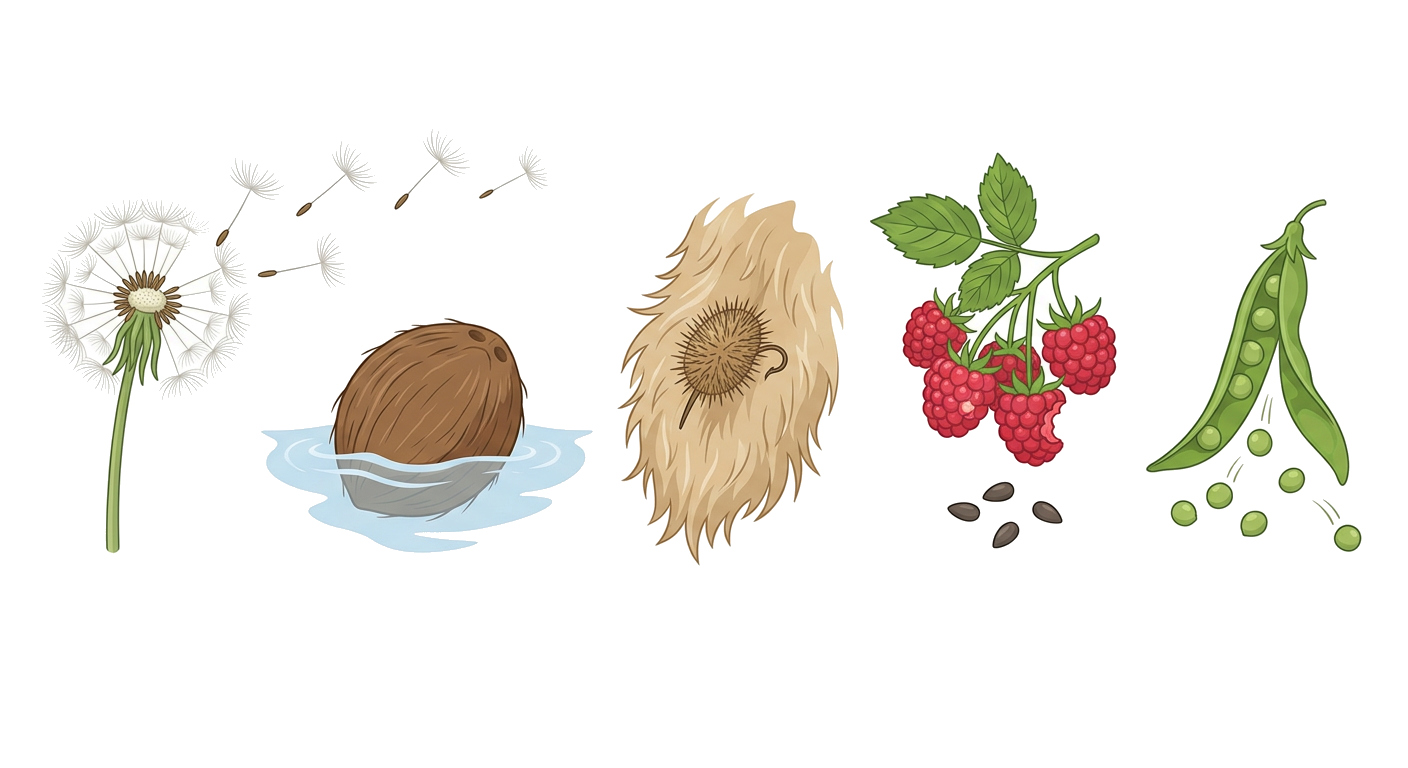
9. Formulate a claim based on the student's observation.
10. What evidence from the scenario supports your claim?
11. Provide reasoning that links the evidence to your claim, referencing scientific principles (e.g., forces, adaptations).