Antibiotic Resistance Worksheet
Explore the causes, mechanisms, and implications of antibiotic resistance in bacteria.
Includes
Standards
Antibiotic Resistance Worksheet
Name:
Date:
Score:
Read each question carefully and provide thoughtful answers. This worksheet will assess your understanding of antibiotic resistance.
1. Which of the following best describes antibiotic resistance?
The ability of the human body to fight off bacterial infections.
The ability of bacteria to survive and grow in the presence of antibiotics.
The process by which antibiotics kill all bacteria in the body.
The development of new antibiotics to combat bacterial infections.
2. Which of the following is a key mechanism by which bacteria develop antibiotic resistance?
Increased production of antibiotics by the bacteria.
Mutation in bacterial genes that alter antibiotic targets.
Reduced replication rate of bacterial cells.
Increased susceptibility to antibiotics over time.
3. The overuse and misuse of is a primary driver of antibiotic resistance.
4. Bacteria can transfer resistance genes to other bacteria through a process called .
5. Explain how natural selection contributes to the rise of antibiotic-resistant bacteria.
6. Antibiotic resistance only affects humans and not animals.
True
False
7. Taking antibiotics for viral infections can contribute to antibiotic resistance.
True
False
Match each term with its definition.
8. Plasmid
a. The process of bacteria acquiring foreign genetic material.
9. Conjugation
b. A small, circular DNA molecule in bacteria that can carry resistance genes.
10. Horizontal Gene Transfer
c. The transfer of genetic material between bacterial cells through direct contact.
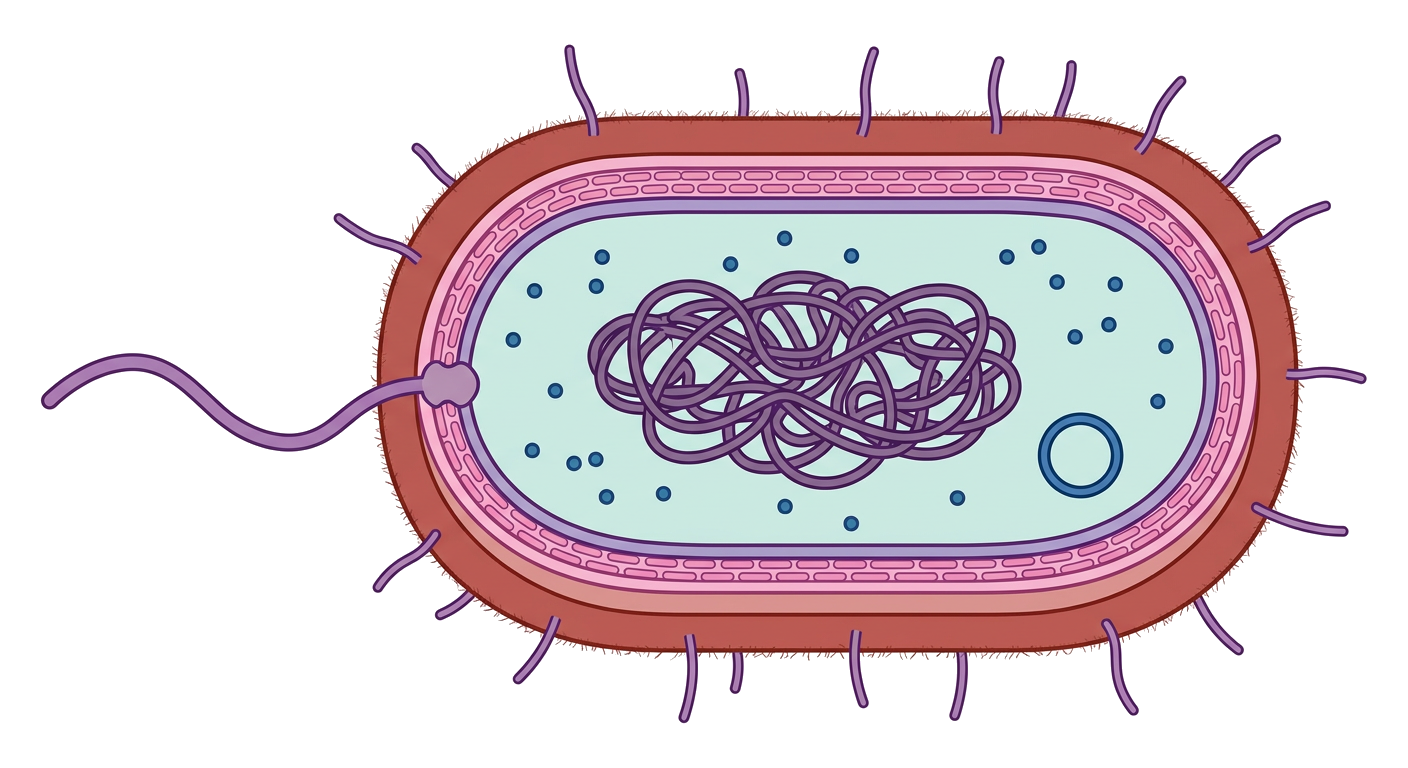
11. Observe the diagram of a bacterial cell below. Identify two structures that could be involved in antibiotic resistance and explain their role.
Related Worksheets
The Cell Membrane: Structure and Function
An 11th-grade science worksheet focusing on the structure, components, and functions of the cell membrane, including transport mechanisms.
Human Skull Anatomy Worksheet
Explore the complex anatomy and functions of the human skull with this Grade 11 science worksheet.