DNA Structure and Replication Worksheet
An 11th-grade science worksheet covering the fundamental structure of DNA and the process of DNA replication.
Includes
Standards
Topics
DNA Structure and Replication
Name:
Date:
Score:
Read each question carefully and answer to the best of your knowledge. For multiple-choice questions, circle the letter corresponding to the correct answer.
1. Which of the following is NOT a component of a DNA nucleotide?
Deoxyribose sugar
Phosphate group
Ribose sugar
Nitrogenous base
2. What type of bond holds together the two strands of a DNA molecule?
Covalent bonds
Ionic bonds
Hydrogen bonds
Peptide bonds
3. The process of DNA replication is described as semi-conservative because:
One new strand is formed and one old strand is conserved.
Both new strands are formed from scratch.
Both old strands are conserved.
DNA replication only occurs in half of the cell.
1. The two strands of DNA run in opposite directions, a characteristic known as .
2. During DNA replication, the enzyme unwinds the DNA double helix.
3. The enzyme responsible for adding new nucleotides to the growing DNA strand is .
1. Adenine (A) always pairs with Guanine (G) in DNA.
True
False
2. Okazaki fragments are found on the leading strand during DNA replication.
True
False
1. Label the following diagram of DNA structure:
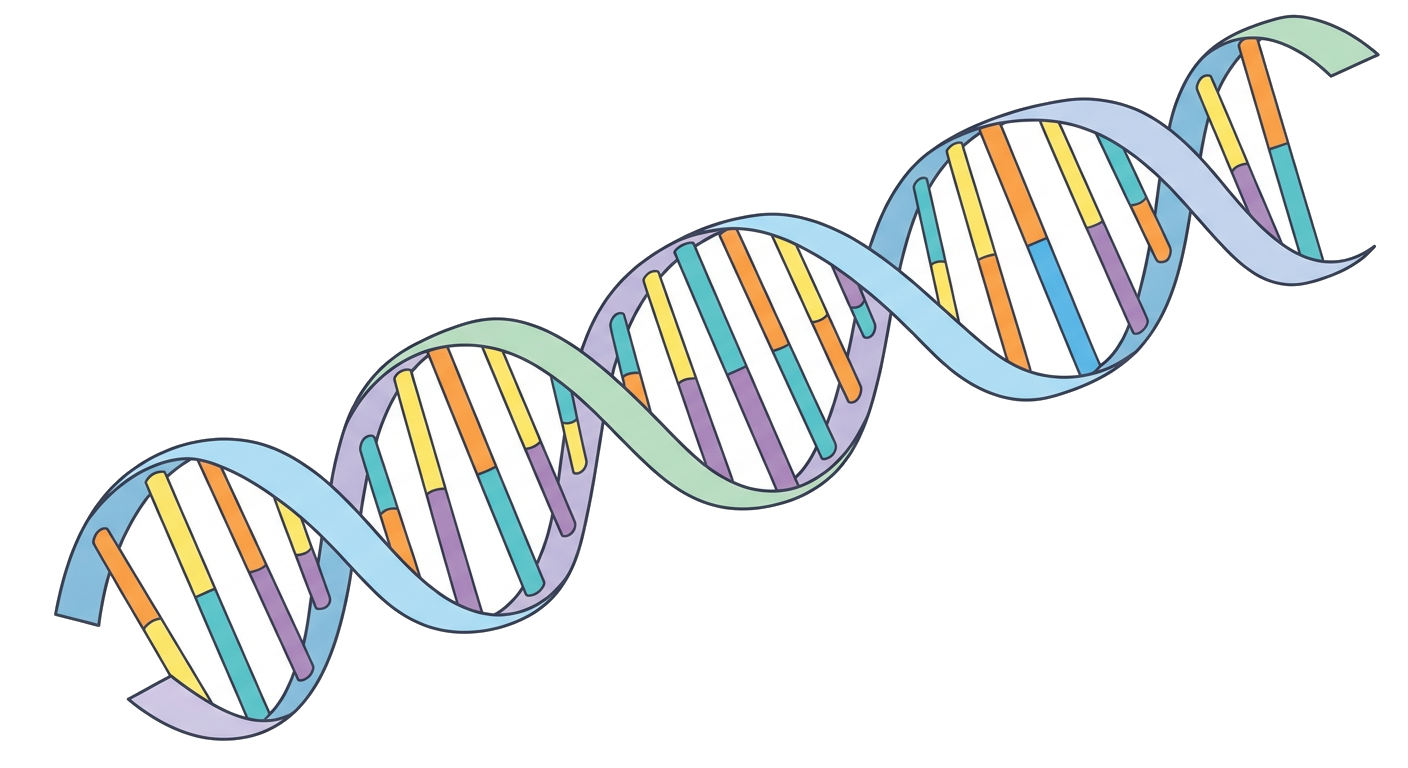
2. Briefly describe the role of DNA ligase in DNA replication.
Match the enzyme with its function in DNA replication.
1. Helicase
a. Joins Okazaki fragments
2. DNA Polymerase
b. Unwinds the DNA double helix
3. Primase
c. Synthesizes new DNA strands
4. DNA Ligase
d. Synthesizes RNA primers
Use the words below to complete the sentences.
1. The two strands of DNA are to each other, meaning that the sequence of one strand determines the sequence of the other.
2. DNA replication is a process, resulting in two new DNA molecules, each with one original and one new strand.
3. The Y-shaped region where DNA is unwound during replication is called the .
Related Worksheets
The Cell Membrane: Structure and Function
An 11th-grade science worksheet focusing on the structure, components, and functions of the cell membrane, including transport mechanisms.
Human Skull Anatomy Worksheet
Explore the complex anatomy and functions of the human skull with this Grade 11 science worksheet.