Forensic Entomology Worksheet
Explore the role of insects in forensic investigations with this Grade 11 science worksheet on forensic entomology.
Includes
Standards
Topics
Forensic Entomology Worksheet
Name:
Date:
Score:
Read each question carefully and answer to the best of your ability. Refer to your knowledge of forensic entomology.
1. Which of the following insect orders is typically the first to arrive at a decaying corpse?
Coleoptera (beetles)
Diptera (flies)
Hymenoptera (ants, bees, wasps)
Lepidoptera (moths, butterflies)
2. What is the primary method forensic entomologists use to estimate the Post Mortem Interval (PMI)?
Measuring the decomposition rate of the body
Analyzing the stomach contents of the deceased
Studying insect succession patterns and larval development
Examining the presence of rigor mortis
3. The study of insects and other arthropods in a legal context is known as .
4. The accumulated degree hours (ADH) or accumulated degree days (ADD) are used to calculate the of insect development.
5. The presence of specific insect species can provide clues about the of death or if a body has been moved.
6. Describe the role of blowflies in forensic investigations. Why are they particularly important?
7. Explain how environmental factors such as temperature and humidity can affect insect development and, consequently, PMI estimations.
8. All insects found on a decaying body feed directly on the corpse.
True
False
9. The presence of specific drug residues in insect larvae can be used to detect toxins in the deceased.
True
False
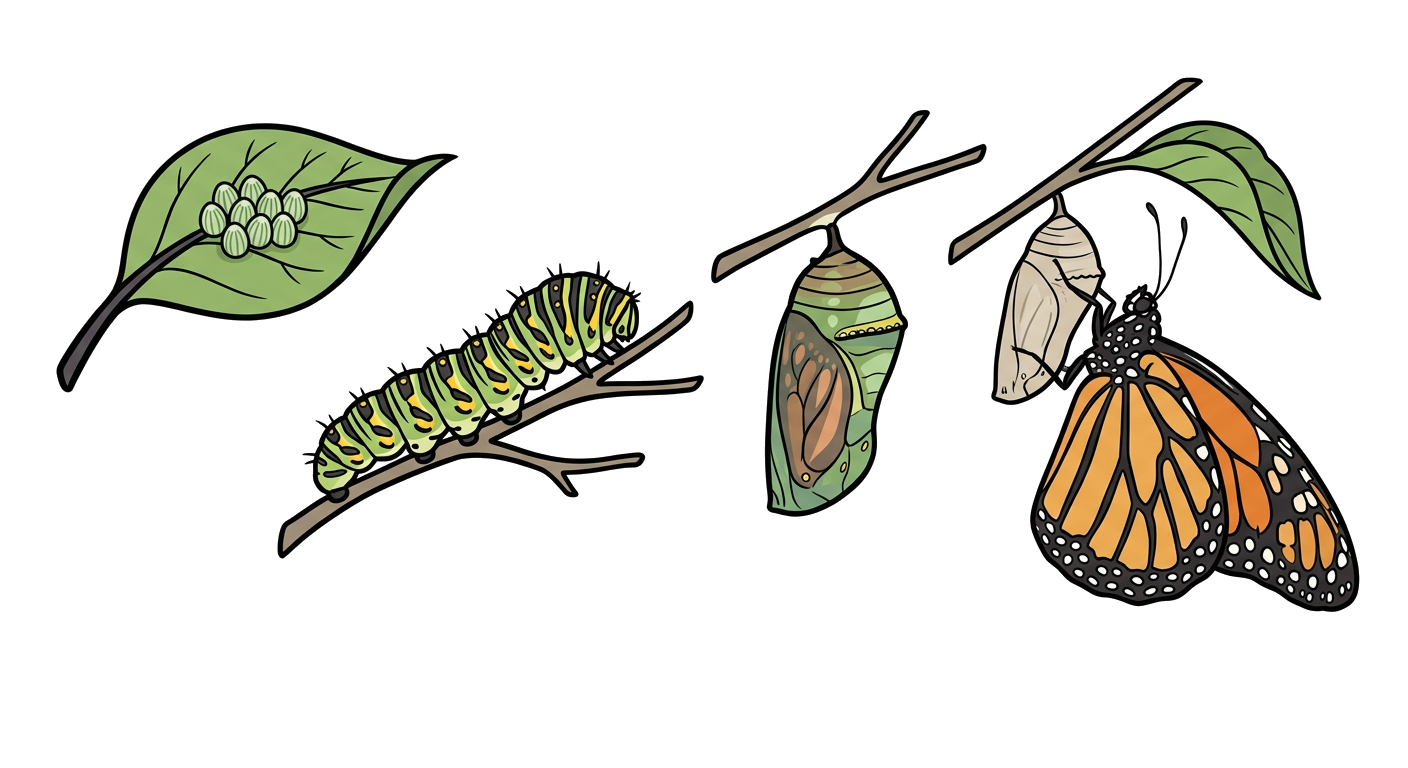
10. Observe the generalized insect life cycle below. In the context of forensic entomology, explain how understanding these stages helps in determining the Post Mortem Interval (PMI).
Related Worksheets
The Cell Membrane: Structure and Function
An 11th-grade science worksheet focusing on the structure, components, and functions of the cell membrane, including transport mechanisms.
Human Skull Anatomy Worksheet
Explore the complex anatomy and functions of the human skull with this Grade 11 science worksheet.