Types of Reproduction
Explore the diverse world of reproduction, from asexual to sexual, and understand the biological mechanisms behind each.
Includes
Standards
Topics
Types of Reproduction
Name:
Date:
Score:
Read each question carefully and provide your best answer. For multiple choice questions, circle the letter corresponding to your chosen answer.
1. Which of the following is NOT a form of asexual reproduction?
Binary fission
Budding
Fertilization
Fragmentation
2. Meiosis results in:
Two diploid cells
Four haploid cells
Two haploid cells
Four diploid cells
3. The process by which a single parent produces offspring that are genetically identical to itself is called reproduction.
4. In sexual reproduction, two parents contribute to form a new individual.
5. Mitosis is primarily involved in growth and , while meiosis is involved in the formation of gametes.
6. All sexually reproducing organisms produce offspring that are genetically diverse.
True
False
7. Budding is a form of asexual reproduction where a new organism grows out of the parent's body.
True
False
8. Compare and contrast the advantages and disadvantages of asexual and sexual reproduction.
9. Describe the role of meiosis in ensuring genetic diversity.
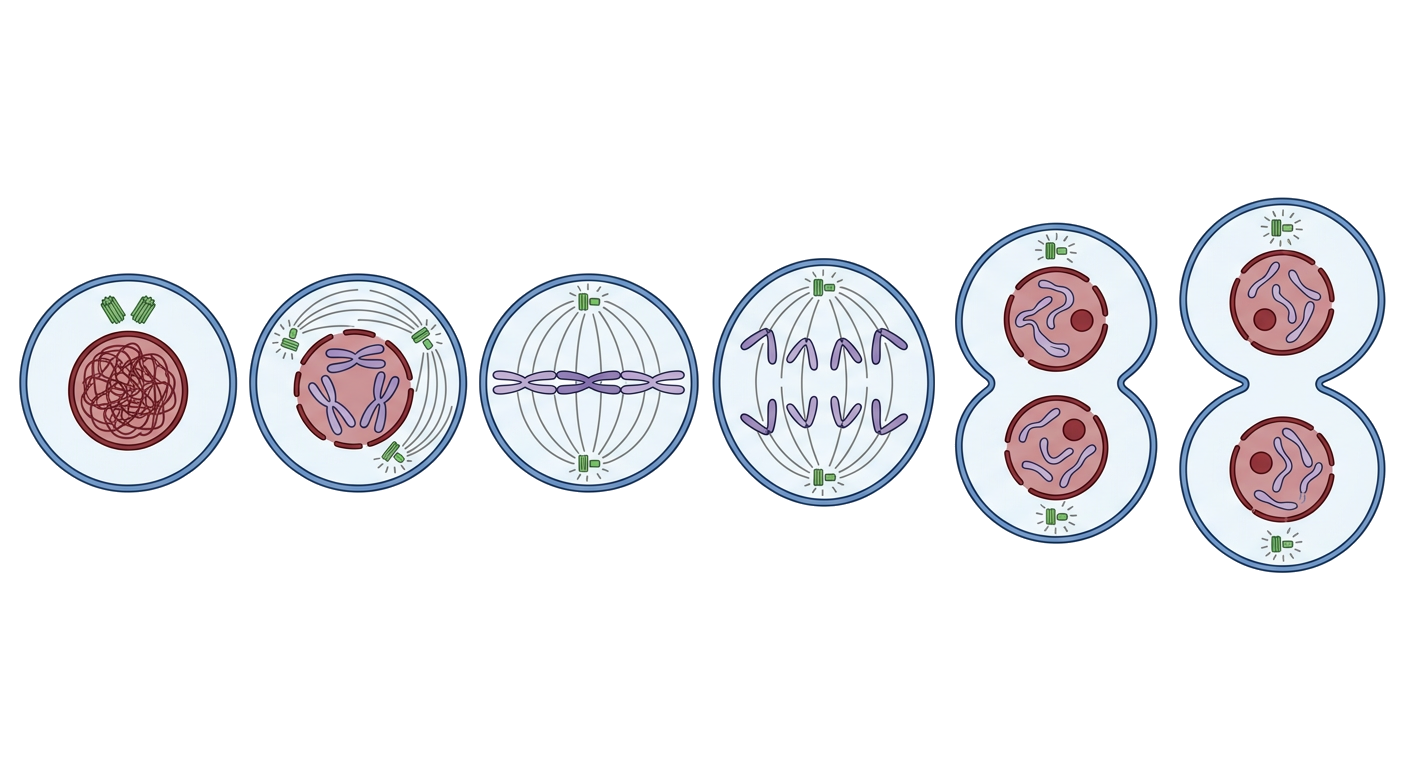
10. Observe the following diagram of mitosis. Identify and briefly describe the stage shown in the image.
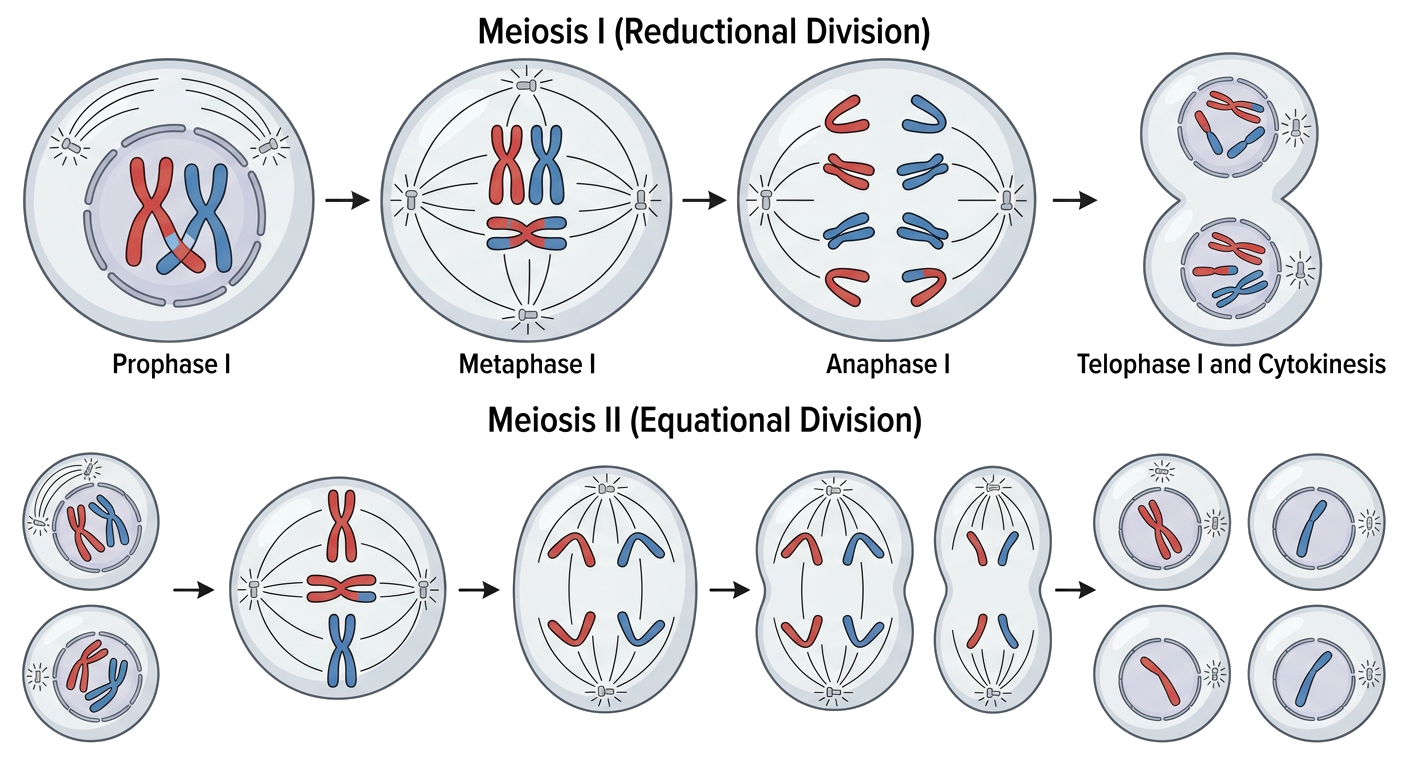
11. Observe the following diagram of meiosis. Identify and briefly describe the stage shown in the image.
Related Worksheets
The Cell Membrane: Structure and Function
An 11th-grade science worksheet focusing on the structure, components, and functions of the cell membrane, including transport mechanisms.
Human Skull Anatomy Worksheet
Explore the complex anatomy and functions of the human skull with this Grade 11 science worksheet.