Nuclear Fission and Fusion
An 11th-grade science worksheet exploring the principles of nuclear fission and fusion, their applications, and their environmental impacts.
Includes
Standards
Topics
Nuclear Fission and Fusion
Name:
Date:
Score:
Read each question carefully and provide your best answer. Show all work where applicable.
1. Which of the following best describes nuclear fission?
The combining of two light nuclei to form a heavier nucleus.
The splitting of a heavy nucleus into two or more smaller nuclei.
The emission of alpha particles from a radioactive nucleus.
The spontaneous decay of an unstable atomic nucleus.
2. What is a primary challenge in achieving controlled nuclear fusion on Earth?
The lack of available fuel sources.
The difficulty in maintaining extremely high temperatures and pressures.
The production of large amounts of radioactive waste.
The limited energy output compared to fission reactions.
3. Nuclear fission is initiated when a heavy atomic nucleus, such as Uranium-235, absorbs a , causing it to become unstable and split.
4. The process of nuclear fusion releases a tremendous amount of energy because some of the mass of the reacting nuclei is converted into energy, as described by Einstein's famous equation, E = .
5. Nuclear fusion reactions produce highly radioactive waste products that remain dangerous for thousands of years.
True
False
6. The sun's energy is primarily generated through nuclear fission reactions occurring in its core.
True
False
7. Briefly explain the concept of a chain reaction in the context of nuclear fission.
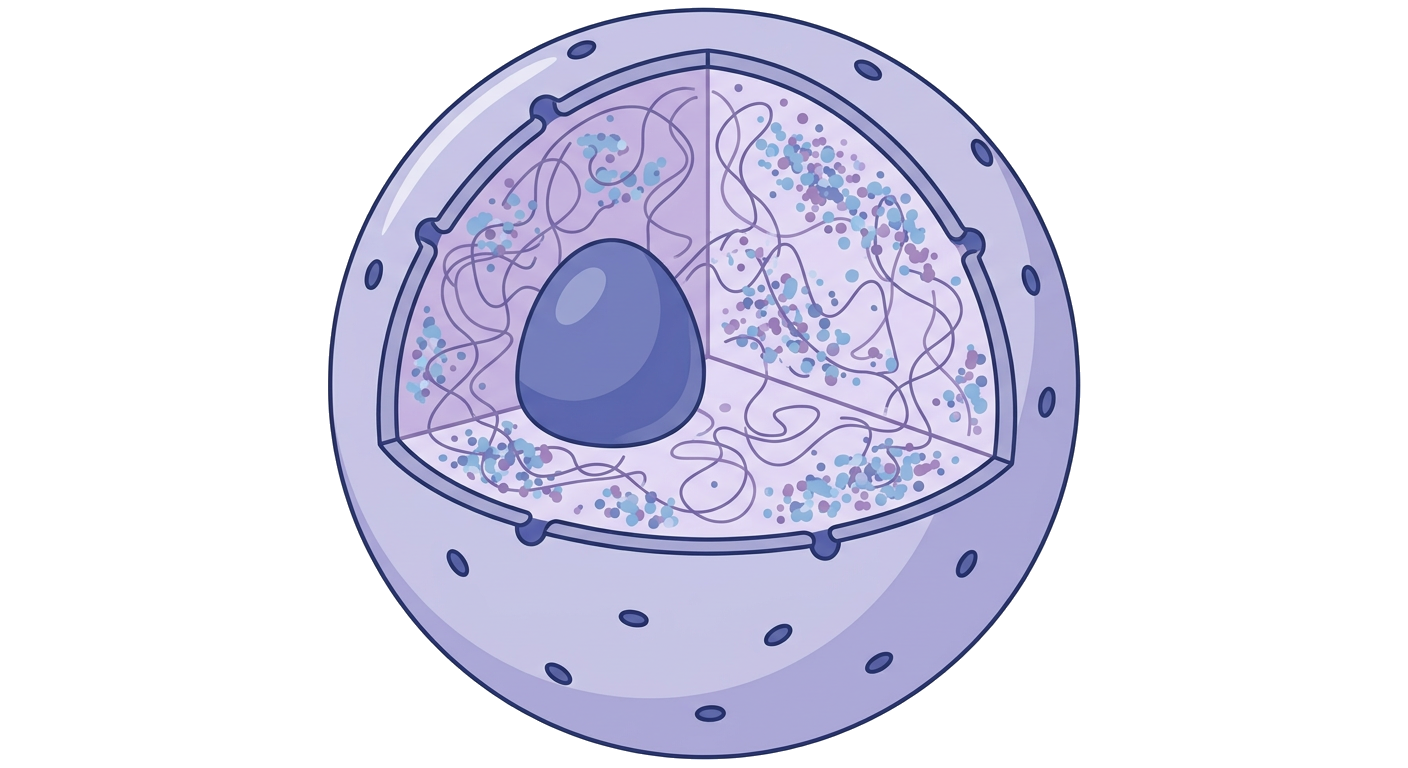
8. Observe the diagram below, which illustrates a simplified atomic nucleus. If this nucleus were to undergo fission, what would be the expected outcome in terms of its constituent parts?
Related Worksheets
Conservation of Charge Worksheet
An 11th-grade physics worksheet focusing on the principle of conservation of electric charge, including conceptual questions and problem-solving.
Spring Potential Energy and Hooke's Law Worksheet
Explore Hooke's Law and calculate spring potential energy with this Grade 11 physics worksheet.
Static Electricity Worksheet
Grade 11 Science worksheet covering fundamental concepts of static electricity, charging methods, and applications.
Law of Conservation of Energy Worksheet
Understand and apply the Law of Conservation of Energy with this Grade 11 Physics worksheet, featuring various question types.
Electric Charge, Field, and Potential Worksheet
This worksheet covers fundamental concepts of electric charge, electric fields, and electric potential for Grade 11 Physics students.
Newton's First Law of Motion Worksheet
Explore Newton's First Law of Motion, also known as the Law of Inertia, through various questions and scenarios for Grade 11 science students.