Addiction and the Brain: Grade 12 Biology
Explore the neurobiological mechanisms of addiction, including neurotransmission, reward pathways, and the long-term effects of substance abuse on brain function.
Includes
Standards
Topics
Addiction and the Brain: Grade 12 Biology
Name:
Date:
Score:
Read each question carefully and answer to the best of your ability. Refer to your knowledge of neurobiology and addiction.
1. Describe the role of the mesolimbic dopamine pathway in the brain's reward system and how it is affected by addictive substances.
2. Explain the concept of neuroadaptation in the context of addiction, providing examples of how neurons change in response to chronic drug exposure.
3. Which of the following neurotransmitters is most directly associated with the immediate pleasurable effects of many addictive drugs?
Serotonin
Dopamine
GABA
Acetylcholine
4. The prefrontal cortex plays a crucial role in impulse control and decision-making. How does chronic substance abuse generally impact the function of this brain region?
Enhances its ability to regulate behavior
Impairs its executive functions
Has no significant effect on its function
Increases grey matter volume
5. The phenomenon where an individual needs increasing amounts of a substance to achieve the desired effect is known as .
6. Long-term changes in the brain's reward circuitry due to chronic drug use can lead to a reduced capacity to experience pleasure from natural rewards, a condition called .
7. Addiction is solely a lack of willpower and has no biological basis.
True
False
8. The brain's ability to recover from the effects of addiction is limited, and complete reversal of changes is impossible.
True
False
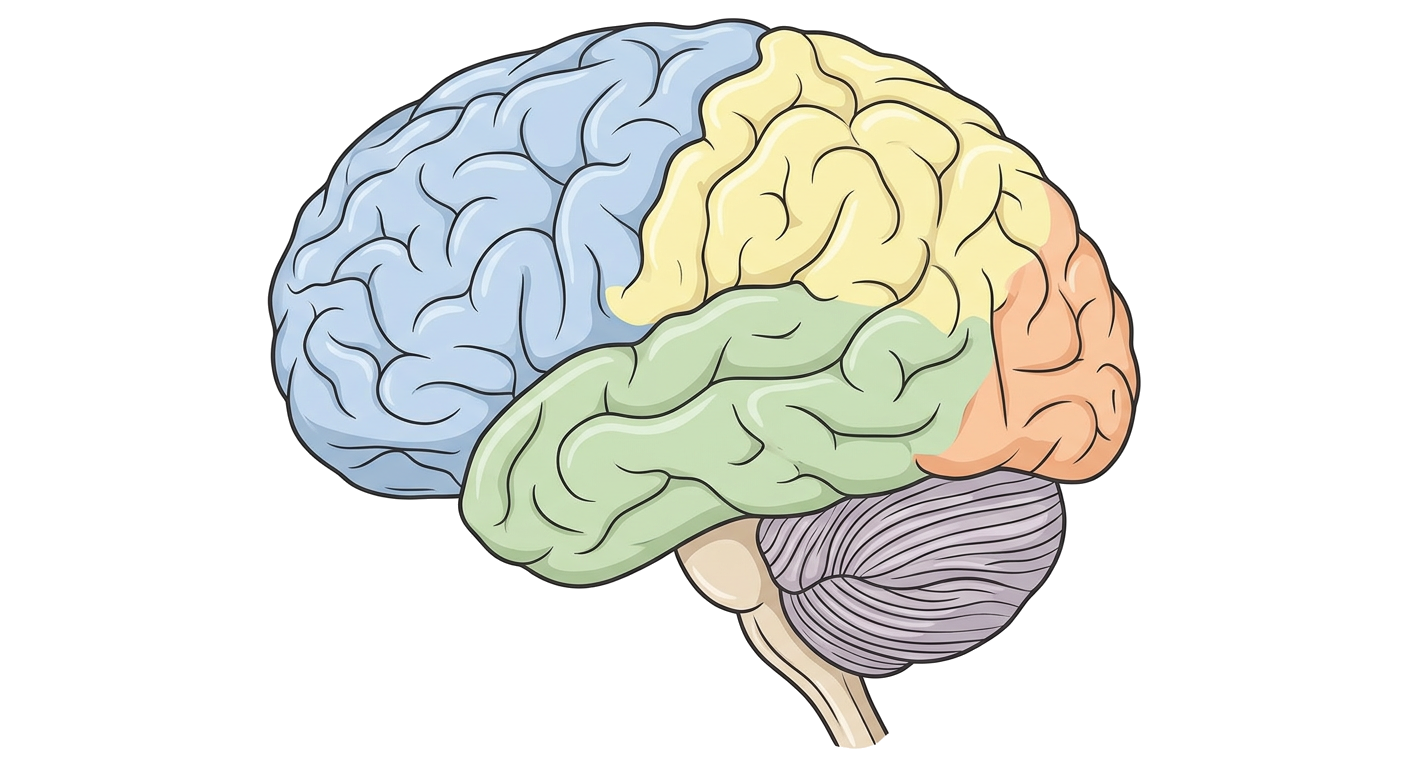
9. Examine the diagram of the human brain below. Identify and label two regions that are significantly impacted by substance abuse and explain the function of each region in relation to addiction.
Related Worksheets
Grade 12 Biology: Dissection Fundamentals
This worksheet covers essential concepts and practices in biological dissection, including safety, tool identification, and ethical considerations for Grade 12 Biology students.
Grade 12 Biology: The Integumentary System
This worksheet covers the structure, function, and common conditions of the human integumentary system for Grade 12 Biology students.
Grade 12 Biology: Heart Rate
This worksheet explores the physiological mechanisms regulating heart rate, factors influencing it, and methods of measurement for Grade 12 Biology students.
Grade 12 Non-Mendelian Inheritance Worksheet
Explore advanced concepts in genetics beyond simple Mendelian patterns, including incomplete dominance, codominance, multiple alleles, and polygenic inheritance.